
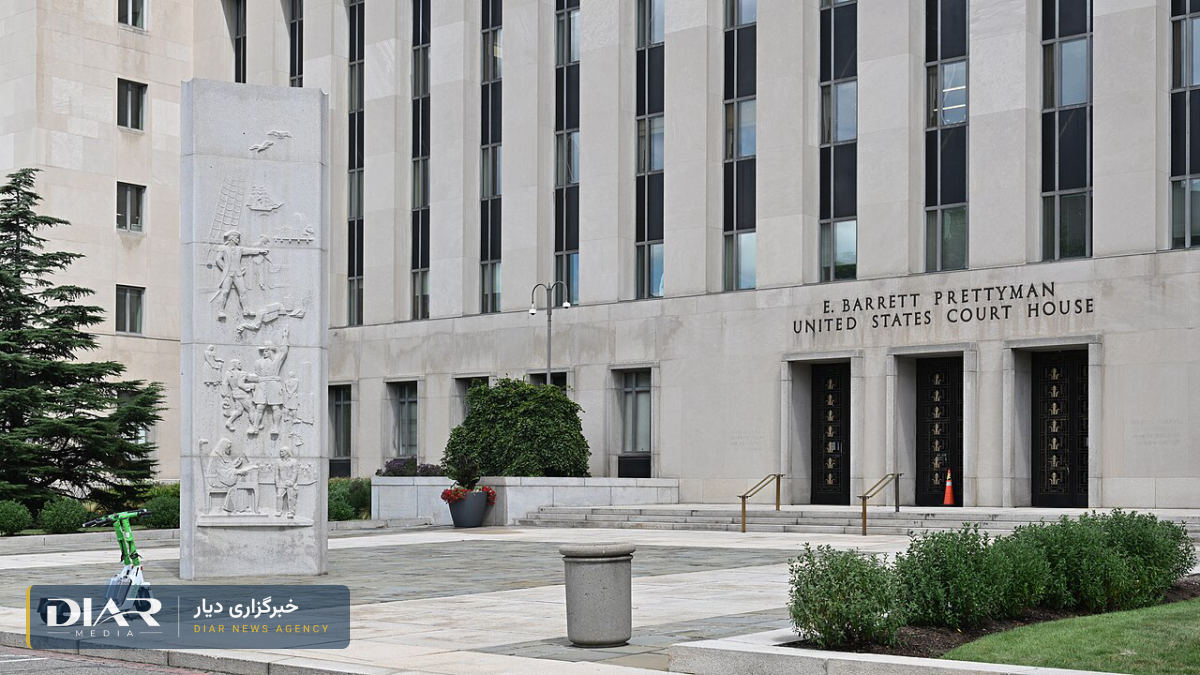
Over the past three decades, US federal courts have become one of the most important arenas for holding the Islamic Republic to account. Victims of the government's terrorism, hostage-taking and torture have been able to win compensation judgments in these courts and collect part of them from the Islamic Republic's seized assets. But in the assessment of DIAR analysts, a new case in Washington shows that this just mechanism can, without transparency, turn into a route for exploiting the property of the Iranian nation.
The mechanism for compensation from the Islamic Republic
In 1996, by amending the Foreign Sovereign Immunities Act, the US Congress opened the way for American victims of terrorism to sue governments on the list of state sponsors of terrorism; the Islamic Republic is one of the first and foremost of them. Later amendments made these judgments easier to enforce, and the US Victims of State Sponsored Terrorism Fund was also created to pay part of this compensation.
The Islamic Republic almost never appears in these courts and does not pay the judgments. As a result, the compensation money in practice comes from seized assets and sanctions penalties; that is, from wealth that essentially belongs to the people of Iran and that the Islamic Republic has taken hostage.
This mechanism has served justice in many cases. Afsaneh Azadeh, a political prisoner who was tortured for months in the Islamic Republic's prisons, went to court under her own name and in 2018 won a judgment of more than $36 million against the Islamic Republic. Families of American service members killed in attacks by the government's proxy groups have also won judgments worth billions. Such cases, with clear names, documented claims and public proceedings, put the Islamic Republic's crimes on record.
A case with anonymous plaintiffs
The new case is of a different kind. In the assessment of DIAR analysts, its plaintiffs are a mother and daughter who emigrated to the United States in 2020, became citizens in 2025 and this year went to court seeking compensation of several hundred million dollars from the Islamic Republic. The claims made in the case, as its critics describe them, go back to a physical altercation in the street and the fear the daughter experienced as a child of being photographed.
James E. Boasberg, a judge of the federal court in Washington, has granted the two women's request to proceed with the case under pseudonyms, a decision that the next judge on the case can review. All parties must use only the pseudonyms given in the complaint in the case documents.
The use of a pseudonym in court is an accepted right for victims whose lives, or whose families' lives, are in danger in Iran. But in practice this same tool removes any possibility of public scrutiny: the media cannot examine the claims, the real victims of repression cannot see who is receiving compensation in their name, and Iranians do not know what share of their country's property is being paid to whom.
Why this matters to Iranians
The Islamic Republic's frozen assets will, on the day after Iran's liberation, be part of the capital for rebuilding the country. Every dollar paid out today, without transparency, to a case with unverified claims is taken from the share of a nation that has been the victim of this very government more than anyone else. In the assessment of DIAR analysts, figures who for years held positions within the structure of the Islamic Republic or alongside its reformist faction must now, before anyone else, answer for how they came to occupy the position of “victim”.
Another danger is that the mechanism itself loses credibility. If weak, anonymous cases multiply, American courts and public opinion will grow suspicious of all lawsuits against the Islamic Republic, and this will end up harming the real victims, from the families of those killed in the Dey (January 2026) uprising to tortured political prisoners.
This debate is part of the same larger question that DIAR raised earlier about transparency in the ranks of the Islamic Republic's opponents: only through transparency can the national opposition keep the people's trust in the face of a government built on secrecy.
Conclusion
Holding the Islamic Republic to account in the world's courts is essential and must continue. But paying compensation from the property of the Iranian nation must come with the greatest possible transparency: documented claims, public proceedings as far as the victims' safety allows, and a clear audit of to whom and for what this money goes. Iranians' property must not be quietly divided among claimants before Iran is free.
Compensation from the Islamic Republic is the right of its victims, but the frozen assets of the Iranian nation must not be paid out to anonymous cases without transparency.
Comments
No comments yet. Be the first.