
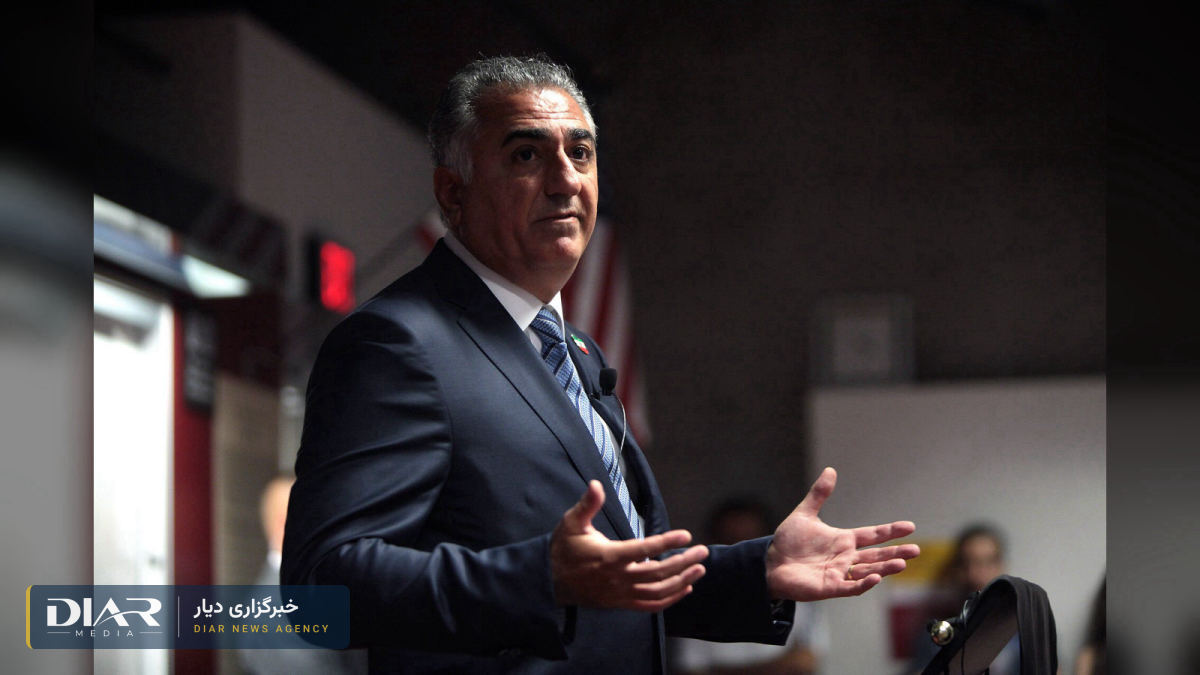
Prince Reza Pahlavi's trip to Belgium in November has turned into a political battleground in Brussels. The French-speaking liberal party MR, led by Georges-Louis Bouchez, proposed formally inviting him to the Belgian Chamber of Representatives, but after a cautious recommendation from Foreign Minister Maxime Prévot, the official meeting on 5 November 2026 was cancelled. In the days before this decision, several Iranian groups called for the invitation to be withdrawn, and an open letter coordinated by Pierre Galand, a former Belgian senator, urged the government not to recommend hosting the Prince. Even so, Belgian Defence Minister Theo Francken has invited him to speak at the Royal Military Academy on 6 November 2026, and Prince Reza Pahlavi has accepted the invitation.
In the assessment of DIAR analysts, among the voices that opposed this invitation, the current linked to the People's Mojahedin Organization (MEK) and the National Council of Resistance of Iran (NCRI) has been the loudest. One of the council's websites in the United States, in a commentary on the Belgian parliament's invitation, called the Prince a media figure rather than an opposition leader. This opposition raises a simple question: with what kind of record does an organisation that presents itself as the democratic alternative pass judgement on the legitimacy of others?
The 1985 ideological revolution and control over members' lives
In 1985, the MEK leadership announced what it called an “ideological revolution”. In the course of it, Maryam Azodanlu separated from her husband Mehdi Abrishamchi, a senior member of the organisation, married Massoud Rajavi, the organisation's leader, and rose to become his equal in the leadership. Abrishamchi not only did not leave the organisation but remained one of its senior figures for years. This episode was the beginning of a process that in later years led to the forced separation of couples, the handing over of members' children to others and total control over members' personal lives in the camps in Iraq.
A 2009 RAND Corporation report on Camp Ashraf described the organisation's structure as having the characteristics of a cult: control over members' marriages and relationships, compulsory confession sessions and isolating them from their families. Human Rights Watch also reported in 2005 on accounts by former members of mistreatment and of prisons inside the organisation.
Collaboration with Saddam and war against Iran
The MEK's political record cannot be separated from its internal record. During the Iran-Iraq war, the organisation was based on Iraqi soil and fought against Iran with the backing of Saddam Hussein's government. In July 1988, a few days after the ceasefire was accepted, the organisation's forces attacked western Iran with Iraqi air support. For many Iranians, this collaboration with an army that was bombing Iranian cities is impossible to forget.
It is only natural that an organisation with such a history has no base among the people of Iran. That is why its strength is seen mostly in lobbying Western parliaments and winning the support of figures such as former Belgian Prime Minister Guy Verhofstadt, who has attended NCRI gatherings for years and has backed Maryam Rajavi's programme.
Why the invitation to the Prince is a threat to this current
In recent months, from the December–January uprising to the “Javid Shah” (Long live the Shah) slogans written on the streets of Iran, the name of Prince Reza Pahlavi has become the rallying point inside the country for opponents of the Islamic Republic. Invitations to him from European parliaments and governments recognise this reality on the international stage as well, and challenge the position that the MEK sought for itself through decades of lobbying in Europe.
In the assessment of DIAR analysts, the cancellation of the official meeting in the Belgian parliament is less a sign of weakness in the Prince's standing than a sign that international support for him has become serious enough to push his opponents into a coordinated effort. The conservatism of the Belgian foreign ministry is not unrelated to this sensitivity either.
Conclusion
The opposition to the invitation of Prince Reza Pahlavi by a current that placed its members' private lives at the disposal of its leadership and stood alongside Saddam's army in war is, above all, a test for European public opinion. The key question for European lawmakers is which voice has roots in Iranian society; the speech on 6 November 2026 at the Royal Military Academy in Brussels is an opportunity for that voice to be heard directly.
The MEK's opposition to inviting Prince Reza Pahlavi is a sign that Europe's support for him has become serious.
Comments
No comments yet. Be the first.