
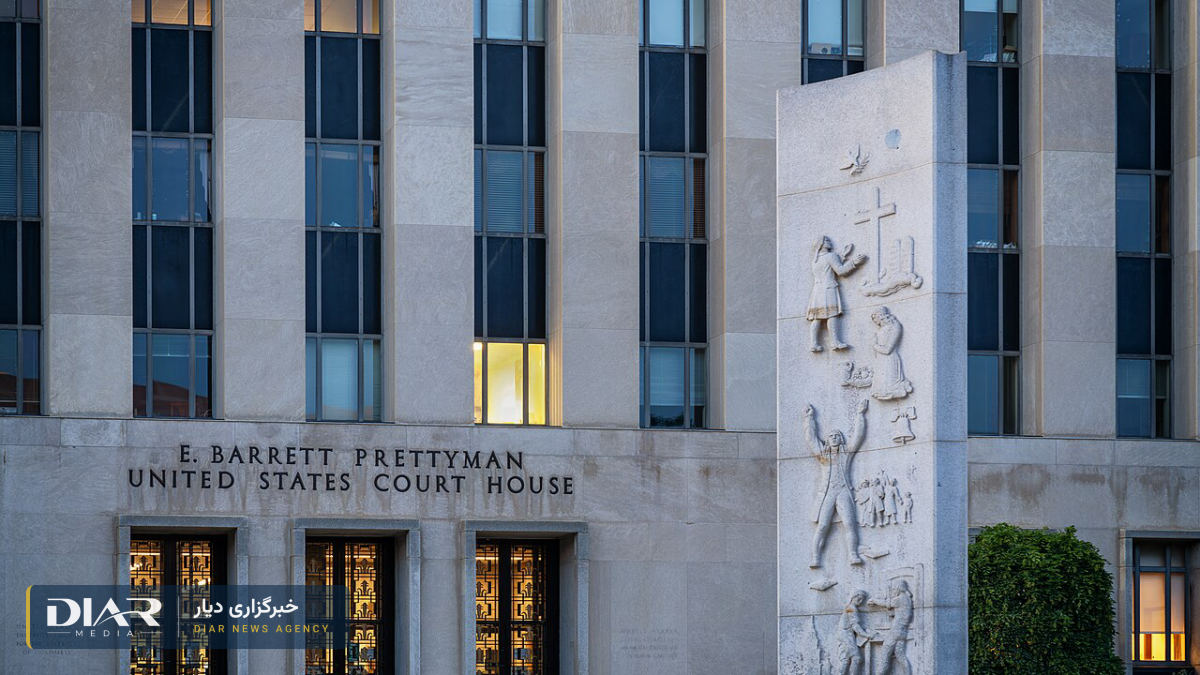
A new case in the federal court in Washington has once again raised a question that DIAR previously posed in its analysis of anonymous lawsuits against the Islamic Republic: who is receiving compensation, on what claims and with what transparency, from assets that ultimately belong to the Iranian nation. This time the plaintiffs are a mother and daughter, both of whom have appeared in court under pseudonyms.
The "Doe" case in the Washington court
According to the ruling of 8 August 2026 by James Boasberg, Chief Judge of the US District Court for the District of Columbia, in case no. 26-2507, the lead plaintiff is a journalist who began her career at a reformist newspaper in Iran and was placed under surveillance and interrogated after the 2009 Green Movement. She moved to the United States in 2020 and became a US citizen in 2025. Her young daughter is the second plaintiff in the case.
The plaintiff says she was attacked three times: her hair was pulled, she was kicked in the back, and in one of the attacks her nose was broken and she had to undergo reconstructive surgery. She says her brother was arrested and abused in Iran, and that her daughter was followed and photographed, which is why she moved her from a public school to a private school with security measures. The defendants in the case are the Islamic Republic, the Islamic Revolutionary Guard Corps and the Ministry of Intelligence, and the plaintiffs are seeking compensatory and economic damages under the US Foreign Sovereign Immunities Act. The court granted the request to use pseudonyms, and the plaintiffs' real names and address are made available to the judge only under seal.
Secrecy in cases that target public money
Concern for the safety of genuine victims of the Islamic Republic's transnational repression is serious, and DIAR has documented this repression many times. But the issue in these cases is not only the plaintiff's safety. When the plaintiff's name, the details of the claim and parts of the documents are hidden from public view, and the Islamic Republic does not appear in court to challenge the claims, almost no one other than the plaintiff and their lawyer tests the account. Default judgments are common in such cases, and compensation is paid from sources that are funded in part by seized Iran-linked assets.
In the assessment of DIAR's analysts, a number of these cases feature figures who emerged from within the reformist camp or the fringes of the Green Movement, a camp that for years held a share in the structure of the Islamic Republic and today, abroad, presents itself as a victim of that same structure. By contrast, the share of supporters of Prince Reza Pahlavi in these lawsuits is very small.
From Algiers to today
The roots of this story go back to the Algiers Accords of January 1981, the agreement that ended the 444-day hostage-taking of US embassy staff and in which the Islamic Republic's delegation was led by Behzad Nabavi. A large part of Iran's assets under that agreement went to debts, guarantees and the Hague arbitration mechanism, leaving the way open to decades of legal disputes. The price of the hostage-taking was paid by the Iranian nation, not by those who carried it out.
The experience of other countries shows that these cases are not closed by the fall of a regime. After the overthrow of Omar al-Bashir, Sudan had to pay $335 million to the victims of the 1998 bombings of the US embassies in Nairobi and Dar es Salaam in order to be removed from the list of state sponsors of terrorism; Abdalla Hamdok's transitional government paid the price even though it had played no part in that crime.
Consequences for a future Iran
Every compensation ruling issued today will be a debt of a free Iran tomorrow. Any government that comes to power after the Islamic Republic will have to face a mass of these rulings in order to return to the global financial system, oil exports and free trade. That is why transparency in these cases is a national issue, not a personal dispute.
The real victims of the Islamic Republic, from the families of the fallen (javidnaman) of the Dey uprising to political prisoners and children who have lost their parents, are inside Iran, and no court has awarded them any compensation. The assets of the Iranian nation must be preserved to make good exactly these losses and to rebuild the country. In DIAR's assessment, the minimum step is full transparency about the plaintiffs, the amounts and the source of payment in every case that reaches into Iran's assets.
Every compensation ruling issued behind closed doors today will be a debt of a free Iran tomorrow.
Comments
No comments yet. Be the first.