
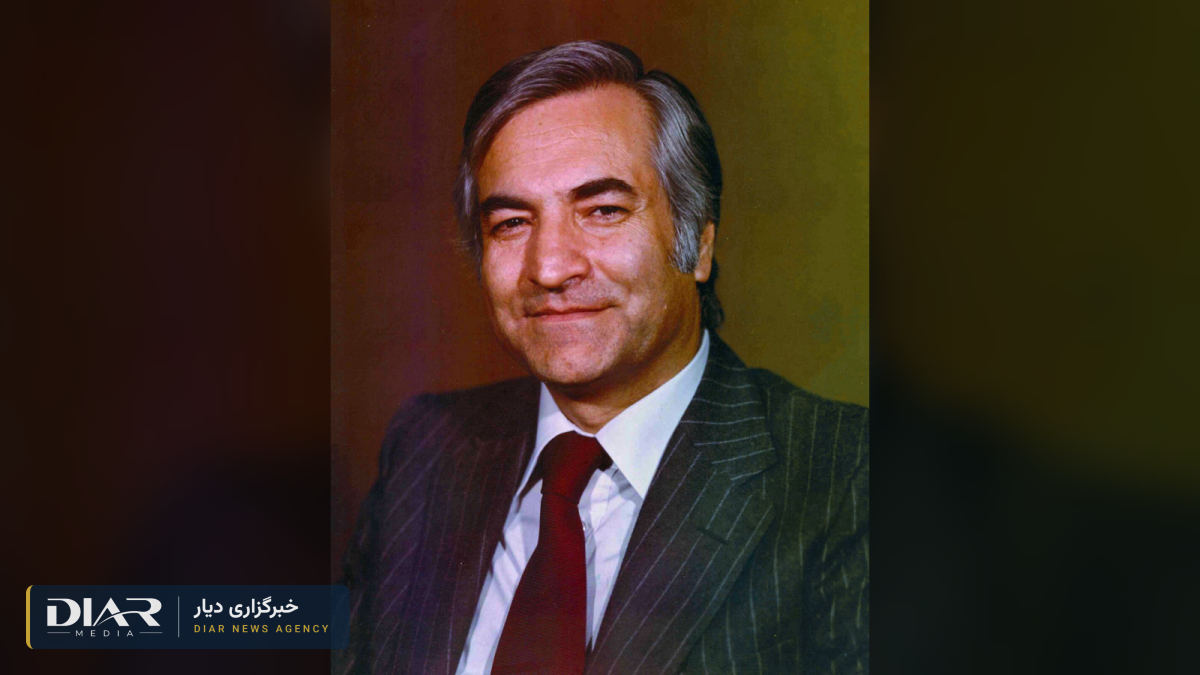
In the summer of 2023, a US federal court in Washington ordered the Islamic Republic and the Islamic Revolutionary Guard Corps (IRGC) to pay nearly $20 million to the three children of Abbas Amir-Entezam, deputy prime minister and spokesman of Mehdi Bazargan's provisional government. The money is to be paid from Iranian assets in the United States that have been set aside to compensate victims of terrorism. In the assessment of DIAR's analysts, the case is not just a family lawsuit: it raises serious questions about the political legacy of the National Front and the Freedom Movement and their relationship to the wealth of the Iranian nation.
The ruling and the source of payment
Under the ruling, each of Amir-Entezam's three children, Ardeshir, Anoush and Elham, receives $3,250,000 in compensatory damages and the same amount in punitive damages, or $6.5 million each. The suit was filed by the law firm Herischi & Associates in mid-2019, and the Islamic Republic did not appear in court.
Amir-Entezam's suffering was real. He was arrested at Mehrabad airport in December 1979, a few weeks after the seizure of the US embassy, spent more than 550 days in solitary confinement on espionage charges, and was sentenced to death, a sentence later commuted to life imprisonment. Years later he was jailed again for criticising the rule of the jurist (velayat-e faqih) and proposing a referendum, and until his death in July 2018 he was not allowed to leave Iran. But the question raised here is not about his suffering; it is about whose pocket pays the compensation for it.
Who owns the frozen assets
Iran's assets frozen in the United States and Europe come from oil sales and the national wealth of Iranians, not from the pockets of the Islamic Republic's leaders. Every dollar taken from these assets through a default judgment is subtracted from the share of a future Iran, an Iran that after the Islamic Republic will have to rebuild hospitals, schools and ruined infrastructure. The regime's leaders lose nothing through these rulings; they keep their personal fortunes elsewhere, as the case of Ali Ansari's assets in Europe showed.
In the assessment of DIAR's analysts, those who present themselves as nationalists and patriots should, more than anyone, hold to this distinction: between the Islamic Republic, which must be held to account, and the Iranian nation, which owns these assets. The silence of political circles close to the National Front abroad about these rulings is inconsistent with their claim to defend the national interest.
A record that goes unmentioned
The case is a reminder of a record that Mohammad Mosaddegh's political heirs rarely talk about. Karim Sanjabi, leader of the National Front, met Ruhollah Khomeini in Paris in November 1978 and signed a statement declaring the monarchy illegitimate, opening the way for the National Front to side with Khomeini. Bazargan's provisional government, of which Amir-Entezam was spokesman, was formed by Khomeini's decree and managed the first months of the Islamic Republic's consolidation. The founders of the People's Mojahedin (MEK) also emerged from within the Freedom Movement in the 1960s; an organisation that later chose terrorism and collaboration with Saddam Hussein.
Years later Amir-Entezam himself became a victim of the very regime his government had helped establish. That is a personal tragedy, but it does not lessen the historical responsibility of the movement he belonged to. Today part of that same movement, in Los Angeles and other American cities, prescribes remedies for Iran's future without ever having accounted for its role in 1979.
What it means for Iran's national revolution
Iran's national revolution under the Lion and Sun flag rests on a simple principle: Iran and its wealth belong to all Iranians. Cases that divide these assets among private claimants before the regime collapses make that capital smaller.
Transparency is the first step. The families and groups that receive compensation from these funds, and the political circles linked to them, should tell Iranians how much they have received, from which assets and on what basis. DIAR is following the case of compensation paid out of the Iranian nation's assets.
Compensation for the suffering the Islamic Republic caused is paid from the wealth of a nation that is itself that regime's first victim.
Comments
No comments yet. Be the first.