
Exclusive report by DIAR news agency, written by Jalal Jannati
The Islamic Republic has announced the allocation of more than 110 hectares of land in the port of Chabahar to Afghanistan to develop commercial activities and remove transit barriers; a decision about which a member of parliament's remarks have raised questions concerning the economic, legal and security dimensions of the agreement.
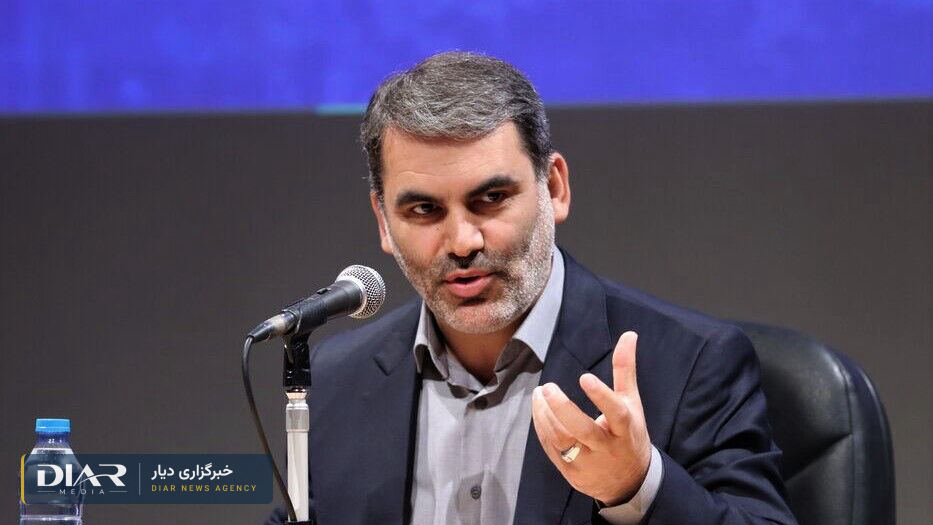
Mohsen Zanganeh, the MP for Torbat-e Heydarieh and head of parliament's special commission on Article 44, has said of the agreement that Afghanistan is to have land at its disposal for its activities in the port of Chabahar, within the free zone.
Zanganeh also said that the Afghan side had asked for more land, but that because of the limited land available in Chabahar, it is not currently possible to allocate a larger area.
What is the land in Chabahar being allocated to Afghanistan for?
According to the published remarks, the stated aim of the decision is to facilitate Afghanistan's commercial and transit activities via the port of Chabahar.
Because of its direct access to the Sea of Oman, Chabahar is considered one of Afghanistan's important transit routes to open waters, and the Islamic Republic has tried in recent years to increase the port's role in regional trade.
However, the full details of the agreement, including the duration of the allocation, the type of usage rights, the extent of the Afghan side's powers and the mutual obligations of the two sides, have not yet been made public in a transparent way.
Does trade with Afghanistan require handing over land?
One of the main questions about this decision is the proportion between the volume of trade between Iran and Afghanistan and the scale of the concession the Islamic Republic has granted to develop the transit route.
According to published figures, trade between Iran and Afghanistan has in recent years been in the range of a few billion dollars a year. Meanwhile, the Islamic Republic and Afghan officials have spoken of plans to increase the volume of trade between the two countries considerably.
Despite the importance of developing regional trade, the question arises whether removing Afghanistan's transit barriers necessarily requires allocating such an extensive amount of land in the port of Chabahar.
Security concerns about Chabahar
Chabahar lies in Sistan and Baluchestan province, in an area of high geopolitical and security importance. The province has faced various security challenges in recent years.
In these circumstances, increased economic activity and the presence of individuals and entities linked to Afghanistan in the port of Chabahar require transparent mechanisms for oversight and control.
One of the concerns raised is that, without sufficient oversight, increased commercial activity and traffic in the area could make it more complicated to manage smuggling routes, the activities of informal networks and other security threats.
Ambiguity about the nature of the allocated land
The phrase "a territory of its own", used in Mohsen Zanganeh's remarks about the agreement with the Afghan side, is among the parts that need precise legal clarification.
It must be made clear whether this phrase means a lease or commercial usage rights over land in the Chabahar free zone, or some other kind of legal concession.
In an independent country, allocating land to a foreign party does not mean transferring sovereignty over that area; however, the lack of transparency about the details of the agreement could give rise to ambiguity and public concern about the extent of the foreign party's powers.
What will Iran gain from the Chabahar agreement?
Developing the port of Chabahar and increasing Afghanistan's use of Iran's transit routes could generate revenue and economic benefits for the country. But any agreement in this area must be accompanied by the publication of the contract's details, a clear term of use, defined limits on the foreign party's access and powers, and a clear system of oversight by Iranian institutions.
The main question now is: exactly what rights does the Islamic Republic's agreement with Afghanistan to allocate land in Chabahar give the Afghan side, and what benefits does it create for Iran in return?
Making the text of the agreement and its legal details public could provide a clear answer to these questions.
Comments
No comments yet. Be the first.