
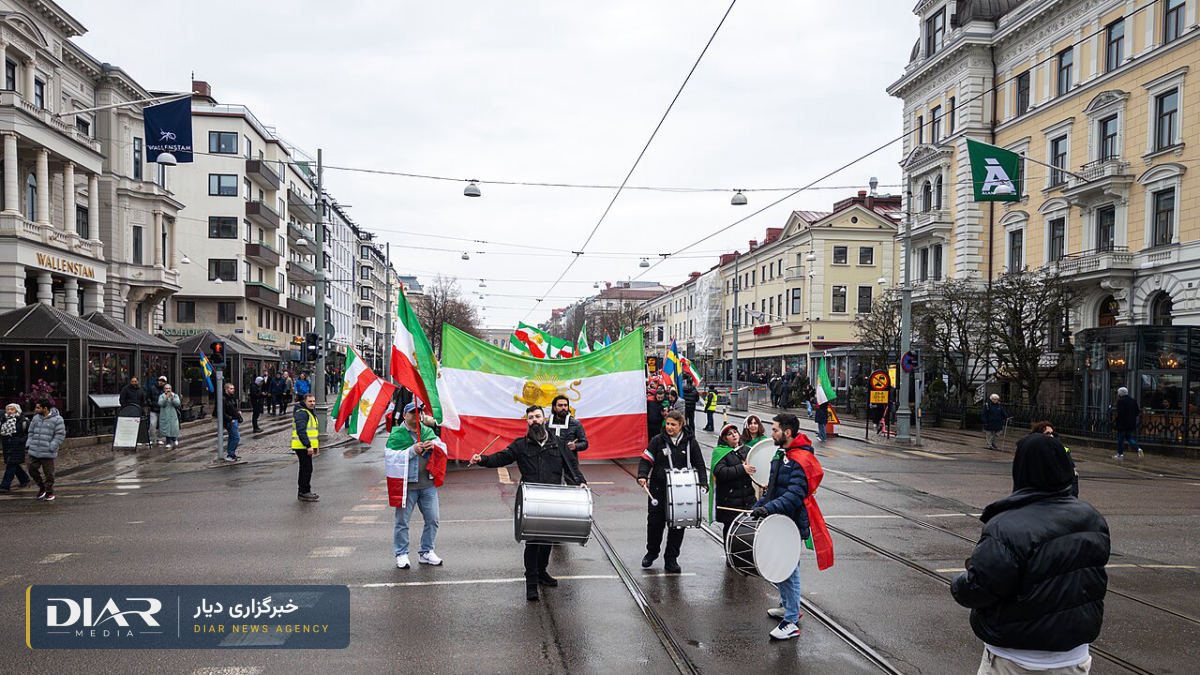
On Sunday, 8 November, one day after a large rally of Prince Reza Pahlavi's supporters in Frankfurt, the Islamic Republic used the "Alaj" system to threaten Iranian protesters abroad with criminal cases, asset seizures and the cutting of consular services. DIAR's report on this threat shows that the message has a clear target: those who take part in rallies abroad. In the assessment of DIAR's analysts, the timing and form of the threat point less to strength than to the regime's concern over the growth of these rallies.
The timing: after Frankfurt
On Saturday, 7 November, Prince Reza Pahlavi received the 2026 Freedom Prize on behalf of the Iranian nation at St. Paul's Church in Frankfurt, while thousands of Iranians gathered with Lion and Sun flags in the city's Ostpark. Before that, Frankfurt police had barred him from attending the rally because of threats attributed to the Islamic Republic, which raised the question of whether Germany was yielding to threats. The rally went ahead despite this pressure and was widely covered by German and international media.
The "Alaj" message arrived a day later. The sequence is telling: a regime that could not stop the rally with a security threat is now trying to raise the cost of attending the next rallies for each individual participant.
What is the "Alaj" system?
The "Alaj" system was launched in August–September 2026, promoted by state media. Users were asked to send the details of opponents of the Islamic Republic abroad through a website and accounts listed on messaging apps; "taking part in a rally abroad" is among the items to be reported. In this way the regime has asked citizens to take part in informing on their compatriots.
The system is part of a wider policy. In recent months the Islamic Republic's judiciary has ordered the identification and seizure of the assets and bank accounts of dozens of Iranians abroad, including staff of independent Persian-language media. Asadollah Jafari, head of the judiciary in Isfahan province, said openly in May–June this year that seizing the assets of Iranians living abroad makes rallies in front of embassies "emptier, weaker and more hopeless". The aim stated by the judicial officials themselves is deterrence, not justice.
Why this threat is a sign of weakness
A regime confident of its people's support does not turn to an informant system and threats to confiscate homes and bank accounts to silence rallies thousands of kilometres away. In the assessment of DIAR's analysts, three factors explain this concern:
- Prince Reza Pahlavi's international legitimacy: his trips to Belgium and Germany, his meetings with lawmakers and ministers and the Freedom Prize have made him the recognised representative of the Iranian people's will in Europe.
- People showing their faces: participants in the rallies, including women wearing the hijab in Frankfurt, appear with their faces uncovered; this shows that the fear of transnational repression has lost its former effect.
- The link between inside and outside: since the massacre of 8 and 9 January, Iranians abroad have carried the voice of protesters inside the country to Western parliaments and media, and the Islamic Republic sees this bridge as a direct threat.
The effect of the threat on future rallies
For many Iranians abroad who have a home, property or family in Iran, the threat of asset seizure is a real cost and should not be underestimated. But the experience of recent months shows that these threats have not reduced turnout: the Frankfurt rally took place months after the asset seizures began and after the "Alaj" system was launched. Since the January massacre, many Iranians abroad consider their assets in Iran a small price compared with the lives of those killed in the uprising.
At the same time, the threat adds weight to the case file of the Islamic Republic's transnational repression in Europe. Threatening citizens and residents of European countries for taking part in a lawful rally is exactly the behaviour European governments have repeatedly condemned, and every new piece of evidence strengthens the argument for tougher action against the Islamic Republic's networks in Europe.
Unable to stop the Frankfurt rally, the Islamic Republic is now raising the cost of attending the next one with threats of asset seizure.
Comments
No comments yet. Be the first.