
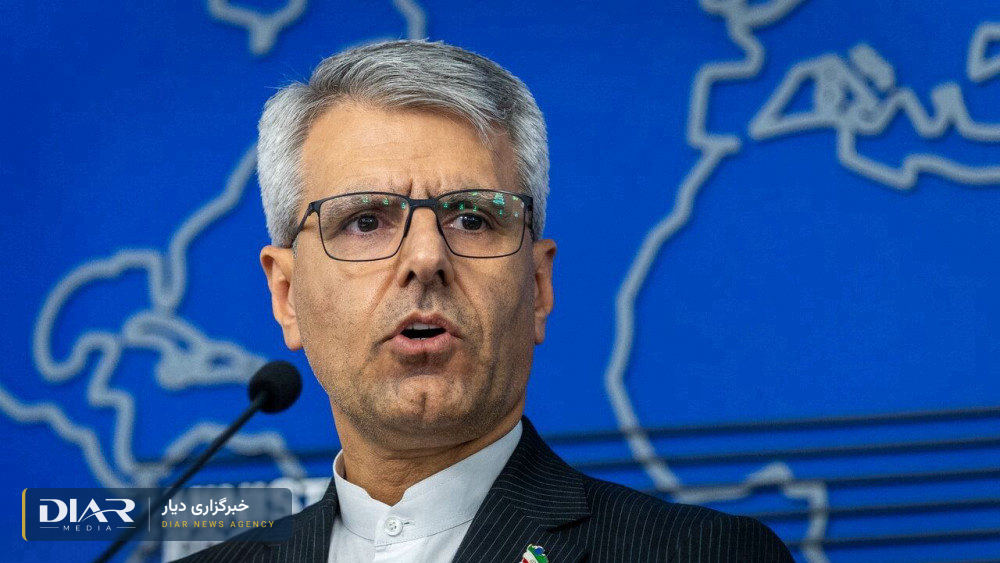
Esmaeil Baghaei, spokesman of the Islamic Republic's foreign ministry, said at his weekly press conference on Monday, 2 November 2026, that because the United States and Israel killed Ali Khamenei, whom he called the author of the fatwa banning nuclear weapons, a change in the Islamic Republic's nuclear doctrine is "a real issue" and should not stay confined to domestic debate.
Baghaei's statement rests on the assumption that the Islamic Republic's nuclear programme has so far stayed away from building a bomb because of a religious fatwa, and that with the death of the man who issued it this obstacle has been removed. The evidence does not support that assumption.
A fatwa that was never written down
No written text by Ali Khamenei titled as a fatwa banning the production of nuclear weapons has been published in the official collection of his religious rulings. Research by the Atlantic Council think tank shows that what the Islamic Republic's diplomats presented for years as a "fatwa" was the final paragraph of his message to a conference in Tehran in 2010, which called the "use" of these weapons forbidden but did not declare their production and stockpiling forbidden. According to the same research, the idea of the fatwa was first raised in 2004 in negotiations with three European countries, and Hassan Rouhani, the chief negotiator at the time, later said he had not coordinated it in advance with the Islamic Republic's leader.
60% enrichment and missing uranium
In the very years when the "fatwa" was being invoked, the Islamic Republic raised uranium enrichment to 60%, a level no civilian power plant needs. Rafael Grossi, director general of the International Atomic Energy Agency, told the Security Council on 27 October that the agency cannot confirm that nuclear material has not been diverted and that 440 kilograms of highly enriched uranium are still unaccounted for. Inspectors have been unable to return to the bombed sites since the strikes began in June 2025.
Conclusion
Baghaei's statement blames the threat of building a bomb on the "assassination of the fatwa's author", when there was no written fatwa and the Islamic Republic's nuclear behaviour never followed one. The claim is misleading. A few days earlier, Tehran's interim Friday prayer leader had also claimed 70% public support for changing the nuclear doctrine.
The fatwa banning nuclear weapons was never written down, but the Islamic Republic raised enrichment to 60%.
Comments
No comments yet. Be the first.