
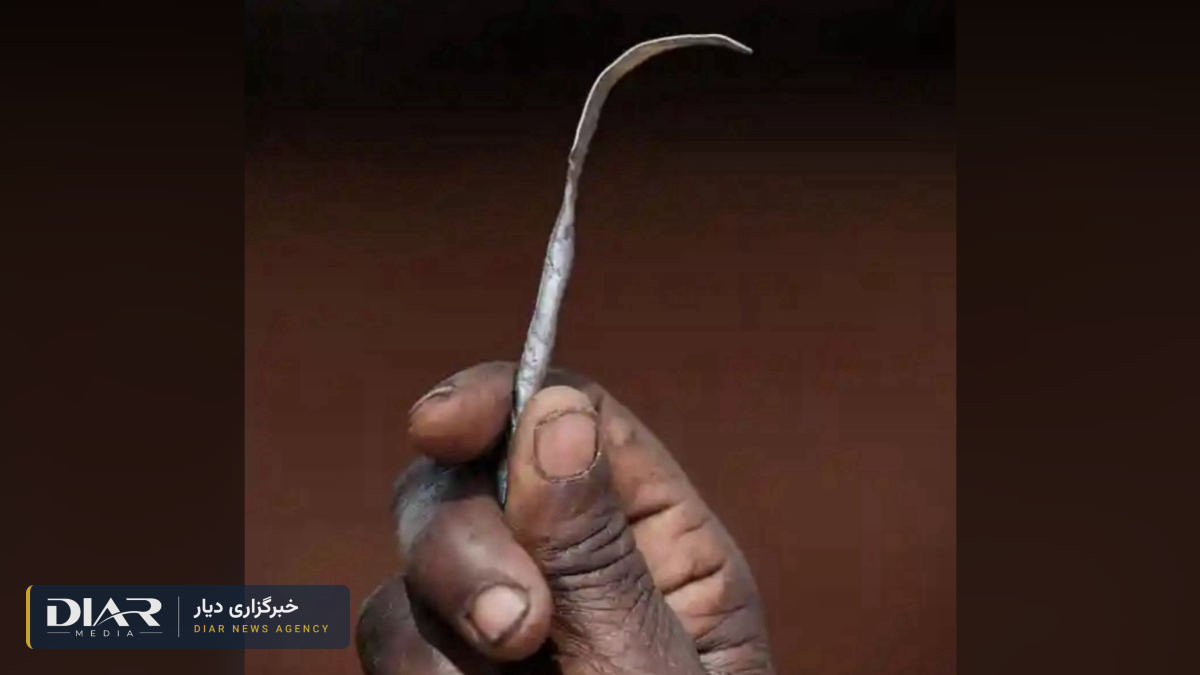
Female genital mutilation, the cutting of part of girls' genitals in childhood, is still carried out in parts of Iran. The practice survives in villages and traditional communities in several western and southern provinces and each year leaves a number of young girls with physical and psychological harm that stays with them for life. Yet the issue has almost no place in the discourse of many activists and journalists who present themselves as the voice of women in these regions.
The extent of FGM in Iran
The most comprehensive data on the practice come from field research by Kameel Ahmady, an Iranian-British anthropologist. In a study published in 2015, he and his colleagues interviewed about 4,000 people. According to this research, the FGM rate was about 60 percent in Hormozgan province, 21 percent in West Azarbaijan, 18 percent in Kermanshah and 16 percent in Kurdistan.
According to Ahmady, the spread of the practice in Kurdistan is not uniform and varies sharply from one area to another; it is seen mostly in villages and some traditional communities and less in cities. His follow-up report in 2021 showed that the practice is declining among the younger generation but remains widespread in some areas.
The research came at a heavy price for Ahmady himself. He was arrested in Iran in 2019, sentenced to prison and eventually forced to leave the country. The Islamic Republic punished the researcher who exposed this crime, not those who take a blade to young girls and mutilate them.
A law that does not exist
The Islamic Republic's laws contain no explicit ban on female genital mutilation. A government that arrests women and takes them to court for a strand of hair outside their headscarf has passed no clear law to protect girls' bodies from this practice. This indifference is no accident: the Islamic Republic sees women's bodies as an instrument of control, not as a right to be protected.
Selective silence
In the assessment of DIAR's analysts, the problem is not only the government's silence. A number of journalists and activists who present themselves in media outside the country as the voice of Kurdistan and defenders of the "Woman, Life, Freedom" slogan have so far published no serious report on FGM in the very regions they speak about. The same silence can be seen among some other well-known figures who present themselves as defenders of women's freedom.
In the assessment of DIAR's analysts, one reason for this silence is the ties some of these activists have to parties and groups that have a base in these same communities and do not want to clash with the traditional customs of their supporters. When the defence of women's rights becomes subject to political and factional calculations, the girls most at risk are left without a voice.
This selective silence has a clear consequence. Women's rights are either universal or they are not. One cannot speak out against the repression of compulsory hijab and stay silent about girls who are mutilated at home in the name of tradition. The defence of Iran's women loses its credibility if it is limited to issues that suit the interests of a political group.
FGM and Iran's future
Female genital mutilation is a practice that survives in limited communities in Iran and should not be attributed to the people of any one region; its victims are Iranian girls, and many compatriots from these same regions oppose it. The decline of the practice among the younger generation shows that awareness and education work.
A free Iran needs a clear law that recognises female genital mutilation as a crime, provides medical and psychological support to victims and makes educating families in the affected regions a public health priority. Iran's national revolution is for the freedom of all Iranians; the freedom of a girl in a village in Hormozgan or Kurdistan is no exception.
According to Kameel Ahmady's research, the FGM rate was about 60 percent in Hormozgan and between 16 and 21 percent in West Azarbaijan, Kermanshah and Kurdistan.
Comments
No comments yet. Be the first.