
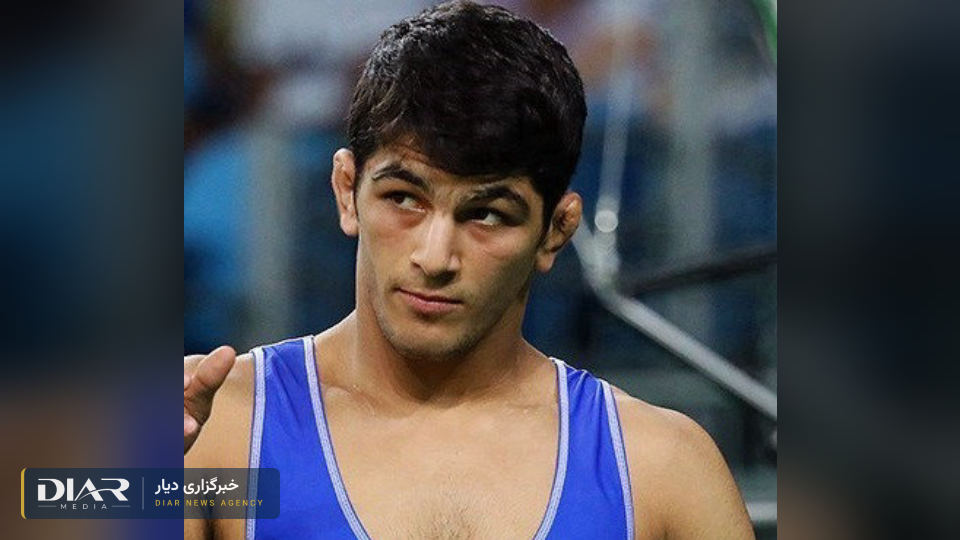
Arash Yoshida, a 22-year-old Japanese wrestler of Iranian descent, beat Hassan Yazdani 7-5 in the 97 kg category of the World Freestyle Wrestling Championships in Astana on Thursday, 29 October 2026. A large share of Iranian social media users reacted to the result with joy and even celebration. In the assessment of DIAR's analysts, the reaction is not about wrestling; it is about the gap that has opened between the people and athletes who have defined themselves as standing alongside the Islamic Republic.
A bout decided in the final second
According to the official report of United World Wrestling, Yazdani led by three points in the second period. Yoshida narrowed the gap in the final minute and took the lead with a takedown about one second before the end. The Islamic Republic's team challenged the call; the referees rejected the challenge and Yoshida was awarded one more point.
Yoshida was born in 2003 in Japan's Chiba Prefecture, wrestles for Japan and has previously won a 2025 world bronze medal and three Asian titles. Yazdani is the 2016 Rio Olympic champion and a three-time world champion, and is regarded as one of the most decorated wrestlers in Iran's history.
Why the defeat of a national champion was celebrated
In past decades, the victories of Iranian wrestlers were among the rare moments when all Iranians, whatever their politics, rejoiced together. What was seen this time is a sign of a deep change. In the assessment of DIAR's analysts, a large part of society no longer sees a difference between the "national team" and "the Islamic Republic's team" when well-known athletes themselves erase that line.
Over the years, Hassan Yazdani has repeatedly tied his sporting achievements to the regime's religious symbols, dedicated his medals to religious shrines and attended athletes' meetings with Ali Khamenei and Ebrahim Raisi. In any other country, such conduct would be an athlete's personal choice. In an Iran where the Islamic Republic killed protesters in the streets during the Dey 1404 uprising (December 2025–January 2026) and still hands down death sentences to those detained in it, open alignment with its leaders carries a political meaning for many people.
Users' reactions showed exactly that: they read the result through the names of the two wrestlers — "Arash", a name from the myths of the Shahnameh, and "Hassan", who in their eyes has become a symbol of the bond between sport and religious rule. This symbolic reading may not be fair, but it shows that Iranian identity, the Shahnameh and mythical names have become, for many Iranians, a language of opposition to the Islamic Republic — the same language heard on Cyrus Day and in the slogans of the Lion and Sun national revolution.
The athlete between the people and the regime
For years the Islamic Republic has tried to credit sporting victories to its own legitimacy and to bring athletes to meetings with its officials. By contrast, athletes who stood with the people — from Ali Karimi to the wrestlers and footballers who supported protesters in the recent uprisings — gained a popularity that goes beyond medals. Last week 202 Iranian athletes issued a statement thanking the organisers for awarding the Freedom Prize to Prince Reza Pahlavi on behalf of the Iranian people.
Yazdani's defeat in Astana is above all a mirror for other athletes. Popularity in today's Iran is not won with medals alone; it is won by where an athlete stands in the days of repression.
The central question for the Islamic Republic
A regime that sees even the defeat of its own champions become a source of public joy faces a society that no longer credits national victories to its name. In the assessment of DIAR's analysts, the question this reaction puts to the Islamic Republic is simple: what has it done to the Iranian nation that people are glad when its representatives lose?
The public's joy at Hassan Yazdani's defeat shows that ties to the Islamic Republic carry a social cost for athletes.
Comments
No comments yet. Be the first.