
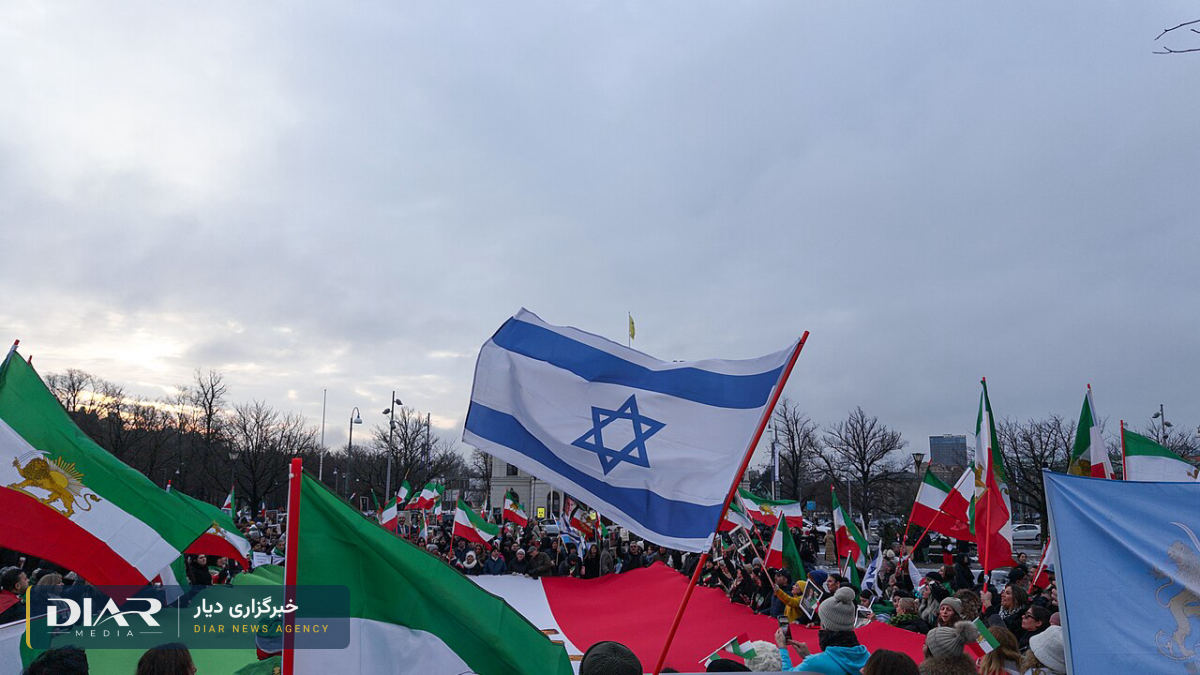
At rallies of Iranians in European and American cities, the Israeli flag can sometimes be seen next to the Lion and Sun flag. That image alone has set off a wave of "traitor" and "mercenary" labels from the Islamic Republic's media and from part of the Iranian left. In the assessment of DIAR's analysts, this anger stems less from concern for Iran than from a double standard: the same currents that raised the Palestinian flag in the name of the Iranian nation for nearly half a century now deny Iranians themselves the right to choose their friends and allies.
Half a century of costs paid by the Iranian people
From its earliest years, the Islamic Republic made the "liberation of Jerusalem" the axis of its foreign policy. In its annual terrorism reports, the US State Department has estimated that Tehran gives up to 100 million dollars a year to Palestinian armed groups, including Hamas and Islamic Jihad, and channels hundreds of millions of dollars a year to Lebanon's Hezbollah. The Quds Force under Qassem Soleimani was the main executor of this network, which carried money, weapons and training from Iran to Gaza, Lebanon, Syria and Yemen.
These costs were spent in an economy that had for years been under sanctions, inflation and capital flight. Every dollar that went to proxy wars was a dollar that did not reach industry, insurance, healthcare or the livelihoods of the Iranian people. People said so many times in the streets: the slogan "Neither Gaza nor Lebanon, I give my life for Iran" has been heard again and again, from the protests of past years to the Dey uprising. Yet to this day no accountable body in the Islamic Republic has been allowed to audit these costs, and their critics have been met with security labels.
A record that ended in failure
In the assessment of DIAR's analysts, this policy brought Iran nothing but isolation. The "axis of resistance", which was meant to be the Islamic Republic's strategic depth, collapsed in the wars of the past two years: Hamas and Hezbollah suffered heavy blows, the Assad government fell, and Iran itself became a battlefield in a war with the United States and Israel. Now that the Islamic Republic is under siege and has run out of cards for its survival, it is clearer than ever that this forty-year investment neither bought security for Iran nor built a future for the Palestinians.
Eyes closed to the Dey massacre, whitewashing 7 October
The double standard becomes even clearer when the reactions of these same currents to two events are set side by side. Hamas's attack of 7 October 2023, which killed about 1,200 people in Israel and took hundreds hostage, was celebrated in the Islamic Republic's media, and part of the Iranian left called it "resistance". By contrast, the killing of protesters in the Dey uprising and on the nights of 8 and 9 January, for which the families of those killed are still seeking justice, was either ignored or passed over in silence by the same voices.
In the assessment of DIAR's analysts, a current that takes to the streets for Gaza but stays silent about the killing of young Iranians can no longer call itself a defender of the "oppressed". Solidarity that works in only one direction is not solidarity; it is an ideological stance.
Iranians' right to choose their allies
Iranians who today raise the Israeli flag next to the Lion and Sun are sending a political message: their enemy is the Islamic Republic, and any country that confronts this regime can be a partner in Iran's freedom. This choice can be criticised, but labels such as "Mossad soldier" and "traitor" are not criticism; they repeat the same security language the Islamic Republic has used against every opponent for four decades.
The main question remains unanswered: why was raising the Palestinian flag in the name of the Iranian nation, with all its cost to the people, counted as an "ideal", while Iranians siding with Israel against a regime that kills them is "treason"? Until the defenders of this double standard answer that question, their claim to defend the oppressed will carry no weight.
In DIAR's assessment, those who made Iranians pay for the Palestinian flag have no right to call Iranians traitors for choosing their allies.
Comments
No comments yet. Be the first.