
During the months of war with the United States and Israel, the Islamic Republic has used the name of Iran and the symbols of ancient Iran in its propaganda more than ever before: from street billboards showing ancient kings to the chant «Iran, Iran» at state-organised rallies. In the assessment of DIAR's analysts, this turn is not a return to national identity but a staged effort by a regime that, until its survival was at stake, denied Cyrus and Darius and took pride in the Arab conquests.
This analysis is published a week before 29 October, Cyrus Day; a day against which the Islamic Republic's record is itself the best measure of how sincere this turn is.
Four decades of hostility to pre-Islamic Iran
The Islamic Republic's record on the heritage of ancient Iran is clear. In the first years after the 1979 revolution, some revolutionary figures, including Sadegh Khalkhali, the religious judge of the Revolutionary Courts, called for the destruction of Persepolis, and only the public's reaction prevented it. Khalkhali wrote that Cyrus was a fraud and a criminal, and this view ran through the regime's official discourse for years.
The hostility was not limited to stones. Morteza Motahhari, one of the regime's chief ideologues, scorned the Chaharshanbe Suri festival; Ferdowsi was officially neglected for years; and in regime circles it was even proposed to rename the Persian Gulf the «Islamic Gulf», a plan dropped after public protest.
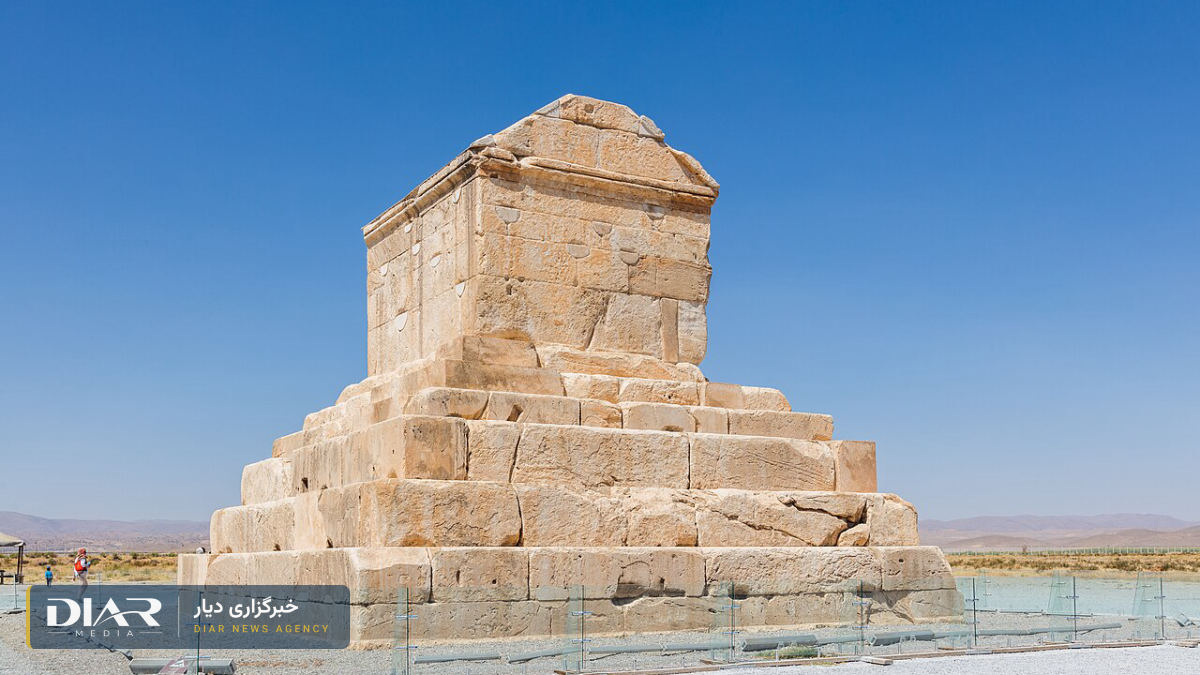
The clearest example is the regime's treatment of Cyrus Day. In recent years, on the eve of 29 October, security forces have blocked the road to Pasargadae with concrete blocks, put up barriers around the tomb of Cyrus and restricted public access. In late October 2025, as in previous years, the roads to Pasargadae were closed. A regime that fears people gathering at the tomb of Cyrus now puts images of ancient kings on city walls.
The turn in the days of war
The first signs of this turn appeared during the twelve-day war of June 2025. On the orders of the office of the Islamic Republic's leader, state eulogists spoke of love for Iran, billboards showing ancient shahs were put up in the streets, and official speakers talked of «Iran's glory». Once the crisis subsided, the same regime closed the road to Pasargadae again.
In the current war the trend has intensified. International analysts say that, unlike in the past, the Islamic Republic's propaganda relies on nationalist themes in order to reach beyond its loyal base, and some see it as a sign of the regime's transition from a religious structure to a military one. At the same time, the regime's warmongering rallies are held with images of Mojtaba Khamenei: the name of Iran for mobilisation, the symbol of velayat for loyalty.
Why the show does not work
In the assessment of DIAR's analysts, at least three reasons show that this turn has nothing behind it.
First, the regime's treatment of living national symbols. The same Islamic Republic that puts images of ancient kings on billboards arrests those who carry the Lion and Sun flag and sentences to death the protesters of the Dey uprising who took to the streets under that very symbol. A nationalism that criminalises Iran's historic flag is not nationalism.
Second, its temporary nature. The experience of the twelve-day war showed that this rhetoric is set aside once the crisis ends and the policy of denial and restriction returns. For the regime, Iran's heritage is a crisis tool, not part of its identity.
Third, the people's awareness. For years Iranians have marked Cyrus Day by gathering at Pasargadae with chants in praise of Iran and of the monarchy; the very gatherings the regime blocked with concrete and barriers. People who have seen this record can tell the difference between preserving a heritage and exploiting it in a crisis.
Cyrus Day: a test of sincerity
Thursday 29 October sets the Islamic Republic a simple test: if the regime has truly come to believe in the heritage of Cyrus and Darius, the road to Pasargadae must stay open and people must be free to gather at the tomb of Cyrus. If concrete blocks and security forces once again take the people's place, the meaning of the billboards of ancient kings will also become clear.
For Iran's national revolution, this turn carries another message: a regime forced, in order to survive, to take refuge in symbols it fought for four decades has accepted that its religious legitimacy no longer mobilises anyone. Iranian identity, from Cyrus to the Lion and Sun, is in the hands of the people who have paid a price for it, not of a regime that remembers it only in days of danger.
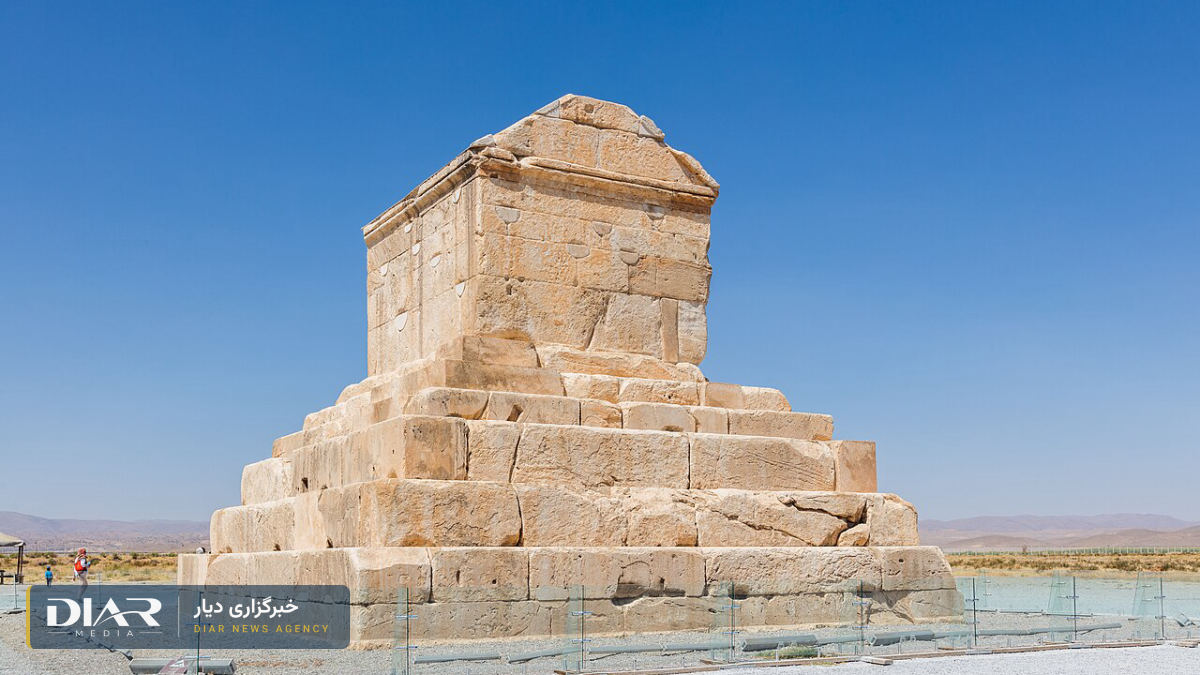
A regime that blocks the road to Pasargadae with concrete does not become the heir of Cyrus by putting up billboards of ancient kings.
Comments
No comments yet. Be the first.