
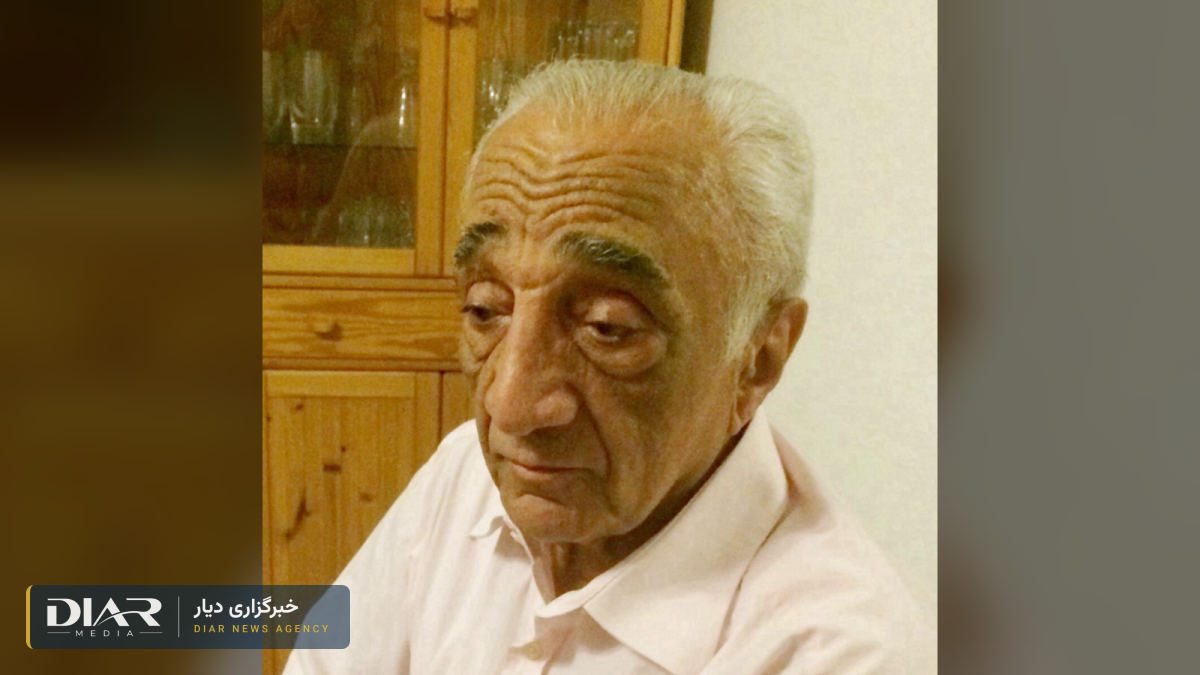
Mehdi Khanbaba Tehrani, one of the founders of the Confederation of Iranian Students abroad and a well-known figure of the Iranian left, has died aged 92; news of his death was published on Tuesday, 20 October 2026. His death is an occasion to revisit the record of a generation of left-wing students who went to Europe with the scholarships and opportunities of the Pahlavi era and for years worked from there against that very government and Iran's monarchy, work that ultimately led to the rise of the Islamic Republic.
From the Tudeh Party to Maoism
Khanbaba Tehrani was born in Tehran on 11 May 1934 and at 18 joined the youth organisation of the Tudeh Party, a party that in those years followed the Soviet Union. After 19 August 1953 he was jailed twice, and in 1956 he went to Munich to study; he first studied dentistry and then law, but political activity left both unfinished. He was one of the founders of the Confederation of Iranian Students, which in the 1960s and 1970s became the most important organisation of the monarchy's opponents abroad.
In those same years a group of Tudeh members in Europe broke with Moscow, turned to Maoism and created the "Revolutionary Organisation of the Tudeh Party", a group that saw its goal as launching a peasant uprising in Iran. Khanbaba Tehrani was one of the figures of this current. Members of the organisation accepted the People's Republic of China's invitation for ideological training and guerrilla warfare training, and some of them also sent students from Iran to China for the same training.
The Confederation: from student union to arena of struggle against the monarchy
On the surface the Confederation was a union of Iranian students abroad, but in practice it became a platform for rivalry among left-wing groups and an arena of propaganda against Mohammad Reza Shah Pahlavi. Khanbaba Tehrani himself admitted taking part in a raid on the Iranian embassy in Switzerland, in which letters were stolen and a forged document was produced.
A clearer example is the Shah's visit to Berlin on 2 June 1967. Bahman Nirumand, another founder of the Confederation and later Khanbaba Tehrani's travel companion, confirmed in his memoirs that in those days there was a plan to assassinate the Shah with a remote-controlled bomb, and by his own account he persuaded the bomb-maker to abandon it. The account of this plan shows how blurred the line between "student activism" and a plot against the life of Iran's king had become in part of these circles.
Return in February 1979 and the fate of his companions
Khanbaba Tehrani returned to Tehran on 10 February 1979, one day before the victory of the revolution, together with Bahman Nirumand and a few others. Many of his generation in the Confederation and the left-wing groups had in the preceding months worked alongside Khomeini and the clergy to overthrow the monarchy.
The fate of Parviz Nikkhah, a leader of the Confederation and the Revolutionary Organisation, is the most telling lesson of that era. Trained in China, he renounced his former beliefs in prison after his arrest in 1965, called them "absurd" and for years worked at National Iranian Radio and Television. The Islamic Republic, the very revolution the left had helped prepare, executed him on 13 March 1979, less than a month after Khomeini's return. A few years later, the Tudeh Party and the left-wing organisations that had sided with the Islamic Republic themselves fell victim to the same government's repression.
A belated admission
In later years, in conversations published under the title "A View from Within the Iranian Left Movement", Khanbaba Tehrani turned to criticism of the past and said the student movement had gradually moved completely away from Iranian society and its real problems. This verdict, however belated, from one of the founders of that very movement, bears witness to what the Confederation's critics had been saying since the 1960s: a generation that put ideologies imported from Moscow, Beijing and Havana in place of an understanding of Iran became, in practice, an instrument for ruining the country it claimed to liberate.
Today's lesson for Iran's national revolution
In the assessment of DIAR's analysts, the Confederation's record is not merely a historical debate. The same logic that in the 1960s and 1970s saw Iran's monarchy and its modernisation as the main enemy and sided with the clergy is still alive today in part of the left abroad: distrust of Prince Reza Pahlavi, equating the monarchy with the Islamic Republic, and slogans such as "neither Shah nor Sheikh". Iran's national revolution, which has taken shape under the Lion and Sun flag, has learned from the experience of 1979 where an alliance with currents that sacrifice Iran to ideology leads. The end of Khanbaba Tehrani's life in exile, four decades after the revolution he helped pave the way for, is a reminder of that same lesson.
Mehdi Khanbaba Tehrani, a founder of the Confederation, has died aged 92; his generation's record is a warning that Iran's national revolution does not forget.
Comments
No comments yet. Be the first.