
In less than 48 hours, from Iranshahr to Karaj and Tehran, a list of events was recorded, each of which could on its own have been the top story in a normal country. Putting them side by side shows that what is happening in Iran is not a set of scattered incidents but the Islamic Republic's way of governing — one in which the lives, freedom and even the jokes of citizens are worth nothing.
The list of a single day
In Iranshahr, Hassan Maksaei, a fuel porter from Kahnouj and father of four, was killed when agents fired without warning. Firing without warning at fuel porters in Sistan and Baluchestan has gone on for years, and our Baluch compatriots, driven to this work by poverty and unemployment, pay the price with their lives.
In Karaj Central Prison, Behzad Rezvanmehr, a political prisoner, died after months in solitary confinement and denial of treatment. The deaths of political prisoners from denial of treatment are a repeated pattern in the Islamic Republic's prisons, and responsibility lies directly with the security and judicial bodies that hold the prisoner.
In Tehran, Babak Moradifar, a monarchist political activist, was summoned to serve a 30-month prison sentence, a sentence handed down for supporting the January uprising. A day earlier, the Tehran prosecutor's office opened a case against Saeed Shakiba, a voice actor and satirist, for imitating Ali Khamenei's voice. A government that is afraid of an impression of a voice admits that it has no legitimacy to defend.
Violence that has seeped into society
Political repression is not the only face of violence in Iran today. Eighteen women were killed in just the first 21 days of the Iranian month of Mehr, and most of the killers were the victim's husband, partner or relative. With laws that do not criminalise domestic violence and that treat the punishment of killers in so-called "honour killings" lightly, the Islamic Republic itself has a share in reproducing this violence.
In the assessment of DIAR's analysts, poverty, inflation, a lack of any future and the promotion of violence from above have put families under a pressure that can also be seen in recent family tragedies. A government that itself rules by force breeds a society that sees violence as the solution.
The execution machine works without pause
Iran Human Rights recorded at least 82 executions in August 2026 alone, and put the number of executions recorded from the start of 2026 to the end of August at no fewer than 532. According to the organisation, only 10 of the August executions were officially announced. These figures are only the cases that have been documented, and the real number is very probably higher.
Among those executed are also protesters from the January uprising, including Majid Nikandish, a 25-year-old who was executed in Mashhad and whose last written words only asked "Why?". Dozens of other young people, including Reza Zangeneh, are still at risk of execution. António Guterres, the UN Secretary-General, also spoke in his latest report of unprecedented repression in Iran and called for an immediate halt to executions.
The shadow of the January massacre
The year 2026 began with the mass killings of 8 and 9 January, a crackdown that took the lives of many protesters in less than 48 hours and that, in the assessment of DIAR's analysts, has few parallels in contemporary history. Its consequences continue: Peyman Ghadiri, a 45-year-old protester from Gharchak, died after nine months in a coma.
Why silence is no longer acceptable
This list is the record of one day and one month, not of a decade. Any attempt to make this situation look normal, whether by foreign governments seeking a deal with Tehran or by those inside who take it for fate, in practice helps to prolong it. The blood of the fallen, of the prisoners who died and of the executed is not wiped away by any negotiation or compromise.
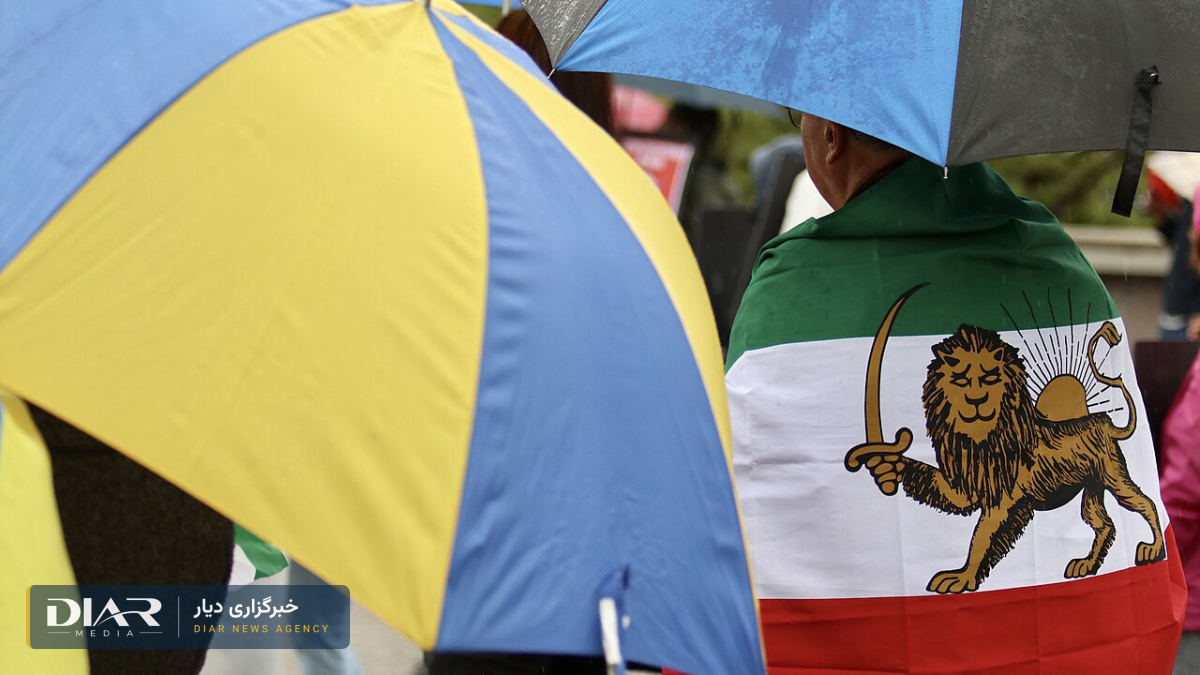
For Iranians, the main question is no longer whether this government can be reformed; it is how the transition from it will happen and under what leadership. Iran's national revolution under the leadership of Prince Reza Pahlavi is the answer that a large part of society has reached: to end a government that has made repression its daily routine, and to build an Iran in which the life and dignity of the citizen have value.
Repression in the Islamic Republic is not the exception but the daily routine, and normalising it only helps it continue.
Comments
No comments yet. Be the first.