
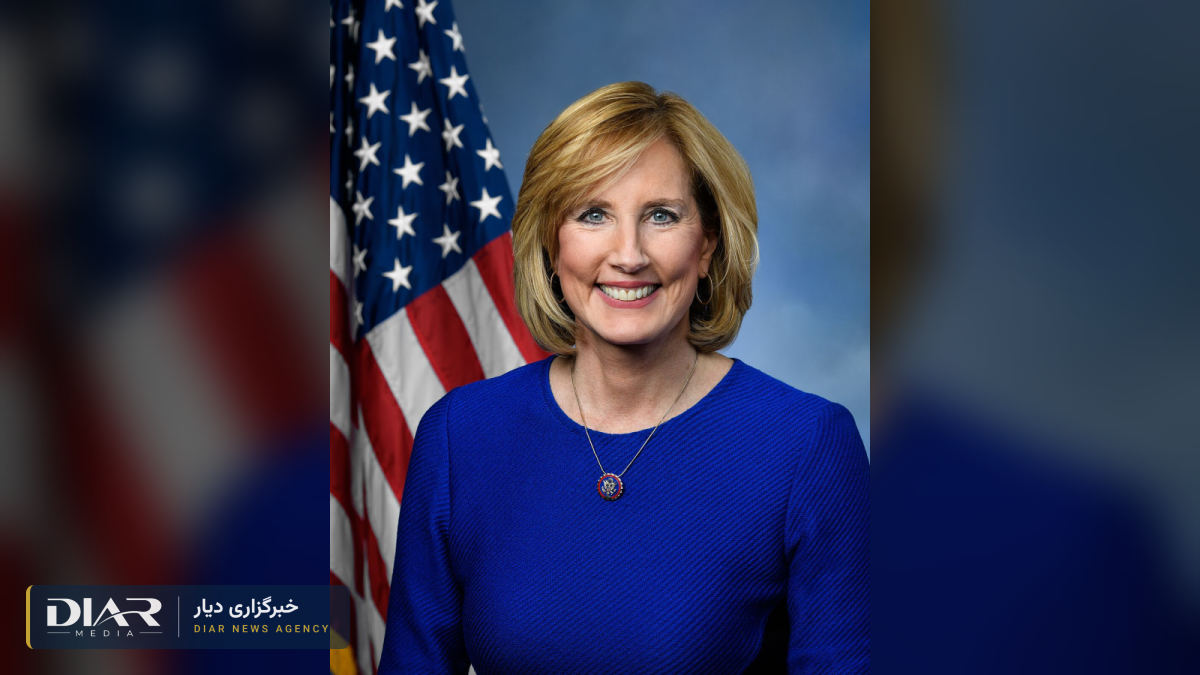
Claudia Tenney, a Republican representative from New York, and Yassamin Ansari, a Democratic representative from Arizona, on Thursday, 15 October 2026, introduced a revised version of the "Internet Access and Network Expansion Act" (IRAN Act) in the US House of Representatives, a bill aimed at expanding Iranian citizens' access to the free internet and defeating the Islamic Republic's internet censorship.
Thirteen other representatives from both parties, including Maria Elvira Salazar, Mike Lawler, Brian Fitzpatrick, Dave Min, Josh Gottheimer and Brad Schneider, have joined the bill as co-sponsors.
What the anti-censorship bill provides
According to the text released by Claudia Tenney's office, the bill requires the US government to regularly review its internet freedom strategy for Iran, assess its implementation and report to Congress. The bill also evaluates emerging technologies, from VPNs and decentralised and peer-to-peer networks to direct satellite-to-mobile connectivity.
Another part of the bill is devoted to cybersecurity training and secure digital tools for journalists, human rights defenders and civil society activists. US federal agencies are also required to coordinate so that US sanctions and export regulations do not unintentionally prevent Iranians from accessing free internet technologies.
The Public Affairs Alliance of Iranian Americans (PAAIA) has said the new version improves coordination between government agencies, keeps the strategy up to date with new technologies and helps preserve satellite access over Iran. The first version of the bill was introduced in the Iranian month of Bahman 1404 (January–February 2026).
Internet shutdown during the Dey uprising
In her statement, Claudia Tenney said the people of Iran have the right to communicate freely with one another and to access independent information. Yassamin Ansari, an Iranian-American member of Congress, called the bill bipartisan, uncontroversial and non-military, and said that the Islamic Republic shuts down or restricts the internet while committing mass atrocities, and that unconditional internet access would help the people immediately.
During its crackdown on the Dey uprising of 1404 (December 2025–January 2026), the Islamic Republic shut down the country's internet to cut Iranians off from the world and hide the scale of the killing of protesters; a crackdown that UN Secretary-General António Guterres called unprecedented in his latest report. Iran remains one of the most restricted digital spaces in the world, and the regime repeatedly restricts internet access to silence its opponents.
Another bill, the "Iran Human Rights, Internet Freedom and Accountability Act", introduced by Mike Lawler and Brad Sherman in the House and by Dave McCormick and Jacky Rosen in the Senate, has already passed the Senate Foreign Relations Committee, clearing the way for a vote on the Senate floor.
The bipartisan "IRAN Act" requires the US government to pursue ways of breaking the Islamic Republic's internet shutdowns, from VPNs to satellites.
Comments
No comments yet. Be the first.