
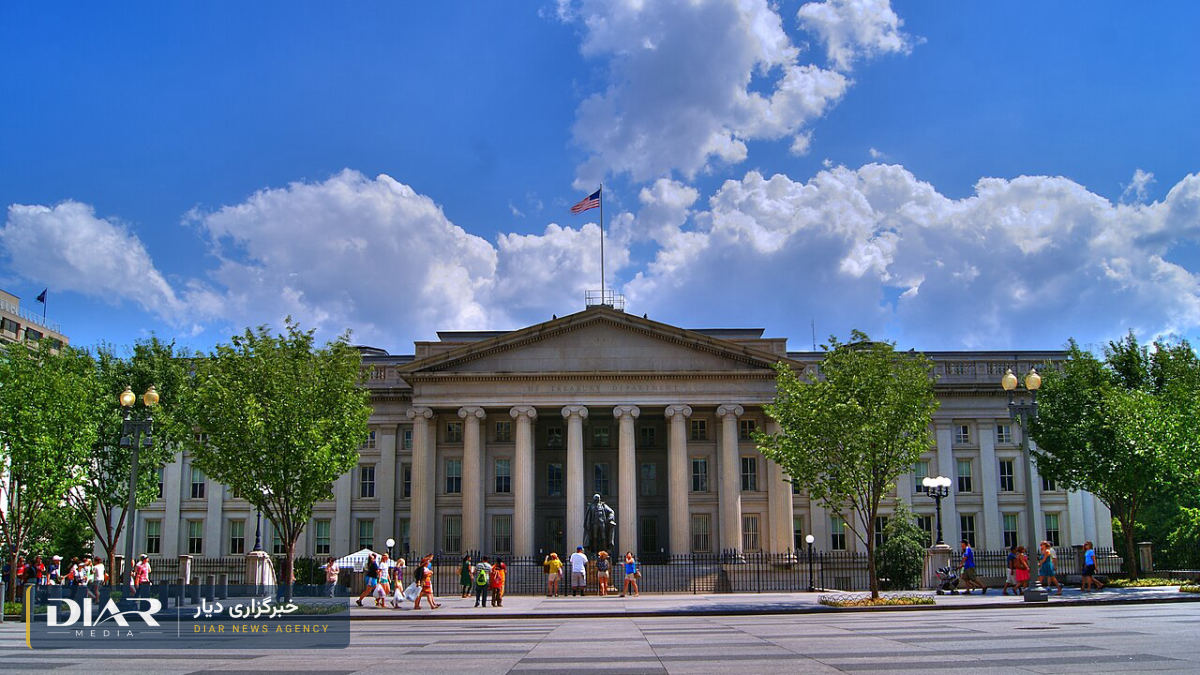
On Thursday 15 October 2026, in a new round of "Operation Economic Expulsion", the US Treasury Department announced sanctions against the Islamic Republic's banking and financial network. The sanctions cover an Iraqi bank, two offshore banks tied to Iranian banks, several exchange houses, front companies and an oil-sales trustee who, according to the Treasury, have moved hundreds of millions of dollars for the Islamic Republic.
Scott Bessent, the US Treasury Secretary, said the noose around the Islamic Republic's economy is tightening and even its allies cannot save it; he added that the department will not let up until the regime's treasury is empty.
The Iraqi bank and the offshore banks
The International Development Bank for Investment and Finance (IDB) in Iraq, according to the Treasury, was founded by Iranian companies, provided the Islamic Republic with access to dollars and sent its profits to Iran in dollars every month. The bank has ties to militia groups affiliated with the Islamic Republic in Iraq and is influenced by an Iranian-Iraqi financier who works for the Quds Force of the Islamic Revolutionary Guard Corps (IRGC). According to the Treasury, the National Bank, which had earlier been shut down alongside it, transferred its capital to this bank.
Jazireh International Bank, tied to Bank Mellat, and Chabahar International Bank, tied to Bank Shahr, were also sanctioned. The Treasury says the Islamic Republic's central bank and Supreme National Security Council allowed these two banks to use foreign currency to circumvent sanctions. The US State Department simultaneously sanctioned a Cuban bank for services to Karafarin Bank.
The oil trustee and the exchange houses
Seyed Ruhollah Razavi, an Iranian national living in Dubai, according to the Treasury, moved millions of barrels of oil a month for the National Iranian Oil Company and Naft Iran Intertrade before the US naval blockade, and transferred the proceeds through front companies and smuggling of gold and cash via Hong Kong, the UAE and Turkey. The exchange houses Hosseini Parsa, Najafzadeh and Jalali, and seven employees of Farab Soroush Qeshm company, tied to Bank Shahr, were also placed on the sanctions list.
A warning about the abuse of khums
The Treasury's Financial Crimes Enforcement Network (FinCEN) warned financial institutions the same day that the Islamic Republic uses ostensibly religious and charitable organisations to enrich regime elites, fund the repression of the Iranian people and support terrorism. According to the agency, part of the khums funds of Shia worldwide, collected for ayatollahs affiliated with the regime, reaches the Islamic Republic and its proxy groups through remittances and cash couriers.
Lebanon revokes Bank Saderat's licence
At the same time, Lebanon's central bank revoked the operating licence of Iran's Bank Saderat in the country. Karim Souaid, governor of Lebanon's central bank, said the aim of the decision was to protect Lebanon's banking system from the risk of sanctions. Bank Saderat had earlier been under US sanctions over its financial ties to Hezbollah.
These moves follow the sanctions on the shadow fleet and the fine on a US bank and Tommy Pigott's remarks on cutting off the financial strength of proxy groups.
The US sanctioned an Iraqi bank and the Islamic Republic's network of exchange houses and its oil trustee, and Lebanon revoked Bank Saderat's licence.
Comments
No comments yet. Be the first.