
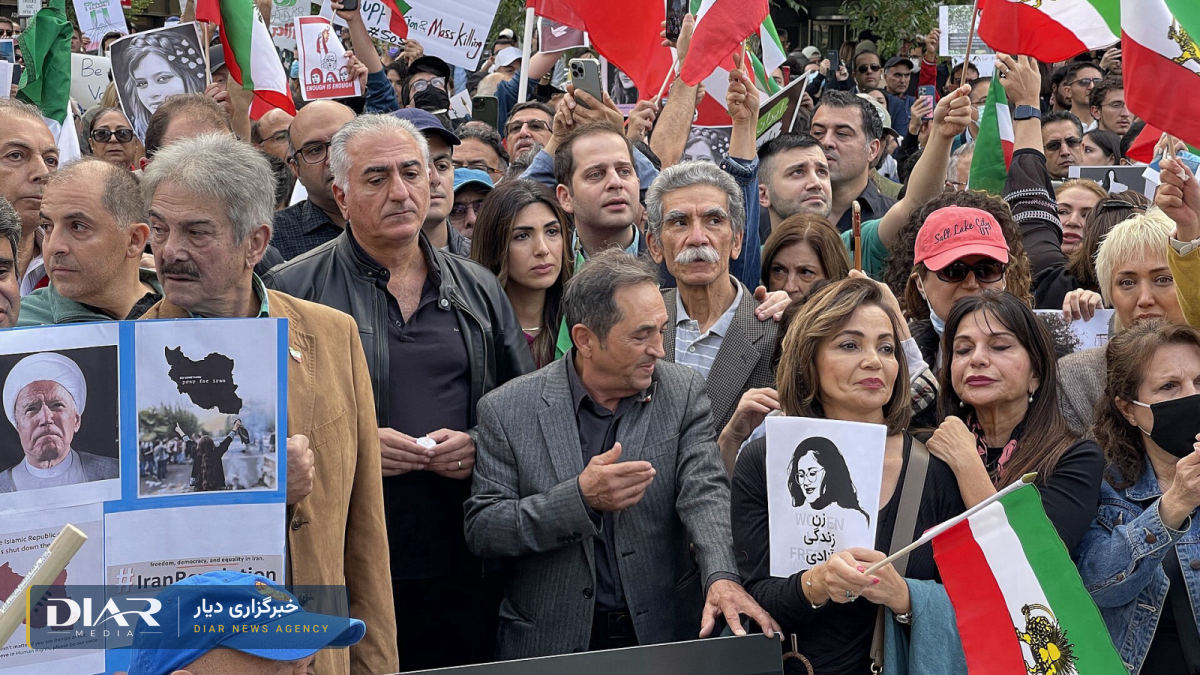
In the months after the January uprising, the question most Iranians are asking is no longer whether the Islamic Republic will survive; it is who, and with what record, can keep Iran united and rebuild it afterwards. In the assessment of DIAR's analysts, the answer to that question lies not in slogans but in the historical record of each movement.
The Pahlavi record: modernisation and the national state
The Pahlavi era began in 1925 with the end of Qajar rule, under which large parts of Iran's territory were lost. The Treaty of Akhal in 1881, under Naser al-Din Shah, was one example: it ceded the Turkmen-populated eastern lands to Russia. By contrast, the Pahlavi era is known for the nationwide railway, the founding of the University of Tehran, the army and a modern bureaucracy, universal education and the presence of women in public life. The second Pahlavi continued on the same path by expanding industry, health care and education, and made the link between today's Iran and the Achaemenid heritage part of national identity.
Criticism of that era, including of its political restrictions, has its place; but compared with what came after 1979, the Pahlavi record is the record of building a country.
The record of the Islamic Republic and its former partners
In four and a half decades, whenever the Islamic Republic has seen its survival threatened, it has turned to massacre. The killings of 8 and 9 January are its latest and bloodiest example, and they are now continuing with the executions of protesters from the January uprising. This record is not limited to one faction: Mir-Hossein Mousavi, whom some today regard as a figure of reform, was prime minister of the Islamic Republic in 1988, the year thousands of political prisoners were executed in the prisons.
The People's Mojahedin Organisation (MEK) is not an alternative for Iran either. In the Iran–Iraq war it fought alongside Saddam Hussein's army against Iran, and it has a cult-like structure in which there is no trace of democracy.
Separatism: a danger to all Iranians
Armed separatist groups that have set their sights on part of Iran's territory, whatever they claim, are in practice doing what the Qajars did by losing territory: weakening Iran's integrity. Fellow countrymen who are Kurds, Baluch, Arabs and Azeris are an inseparable part of the Iranian nation, and no armed group represents them.
Conclusion: the test of the record
The choice between Pahlavi and his alternatives is a choice between two records: one that built Iran and kept it united, and others who either carried out massacres, allied themselves with Iran's enemy, or set their sights on Iranian territory. That is why the Lion and Sun flag has been raised in the streets of Iran, and why Prince Reza Pahlavi, who speaks of the crumbling of the Islamic Republic's structure, has become the focal point of Iran's national revolution. The message of this analysis to everyone concerned about Iran's future is clear: saving Iran from the Islamic Republic requires the cooperation of all patriots, regardless of their political past.
The choice between Pahlavi and his alternatives is a choice between the record of building Iran and the record of massacre, betrayal and partition.
Comments
No comments yet. Be the first.