
New details have emerged from the trial in the Isfahan Shohada Square case, in which 10 protesters of the Dey uprising were sentenced to death. Three sources with knowledge of the court sessions, whose names are withheld for security reasons, say the defendants' confessions were extracted through beatings, electric shocks and threats of rape, and that the sentences were signed by a judge who was not present at any of the sessions.
The case goes back to the protests of 8 January 2026 in Isfahan. The Islamic Republic's prosecutors have accused the defendants of the deaths of Abbas Kamrani, a colonel of the Islamic Revolutionary Guard Corps, and a homeless man that night. In August–September 2026, Branch 1 of the Isfahan Revolutionary Court sentenced 10 of the 16 defendants in the case to death and the other six to prison terms of up to 25 years. The charges were listed as "moharebeh", "aiding moharebeh", "destruction of public property amounting to moharebeh", "assembly and collusion" and "propaganda against the system".
Torture for forced confessions
According to sources present at the sessions, Mohammad Faridani, one of the defendants, told the court that an interrogator had applied electric shocks to his genitals and neck and then beaten him personally. The sources say at least one of the defendants was sexually abused. The defendants retracted their confessions in court, but those same confessions became the basis of the verdict.
According to these sources, Morteza Barati, the presiding judge, did not allow the defendants to use the word "torture", struck it from the record and warned that claims of torture would lead to the IRGC filing complaints against them. Twelve masked men, whom the sources believe to be the case's interrogators, were present at every session, and the lawyers' objections to their presence were ignored.
Taraneh Rahimi and videos that showed nothing
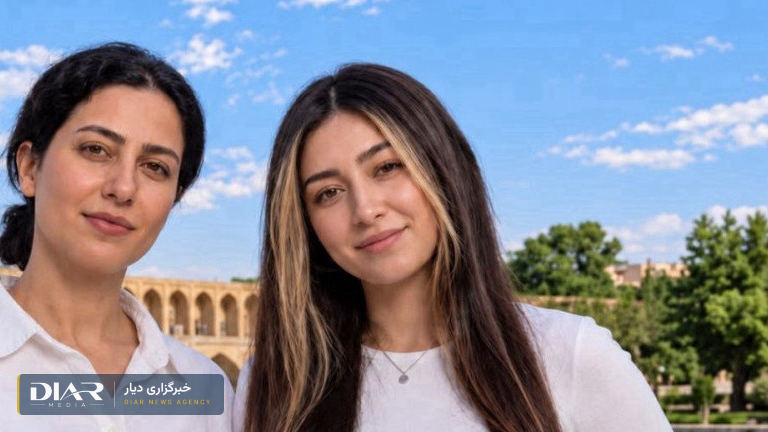
Taraneh Rahimi, a 21-year-old woman from Isfahan, was sentenced to death in the case, and her twin sister Romina to 25 years in prison. A video that the prosecutor said showed Romina handing over a bag containing Molotov cocktails was played three times in court, and according to one source no such scene could be seen in it; it was nevertheless cited in her verdict. A video from Taraneh's phone, which her lawyer says had been taken from social media, also appears in her verdict.
Sentences not issued by the trial judge
According to the same sources, the sentences were issued not under the signatures of Morteza Barati and Mohammadreza Tavakoli, the two judges at the sessions, but under the signature of Mahmoud Kazemzadeh, a judge who did not attend the sessions, and an adviser named Mohammad Vakil. Three jurists and law professors have said that if the verdict was not issued by the judge who heard the case, this is illegal even under the Islamic Republic's own laws. The defendants' lawyers have filed appeals.
These sentences now threaten to be carried out, as the Islamic Republic's judiciary announced on Sunday the execution of three Dey uprising protesters in Karaj.
Ten Isfahan protesters have been sentenced to death on the basis of confessions they say were extracted under electric shocks and threats of rape.
Comments
No comments yet. Be the first.