
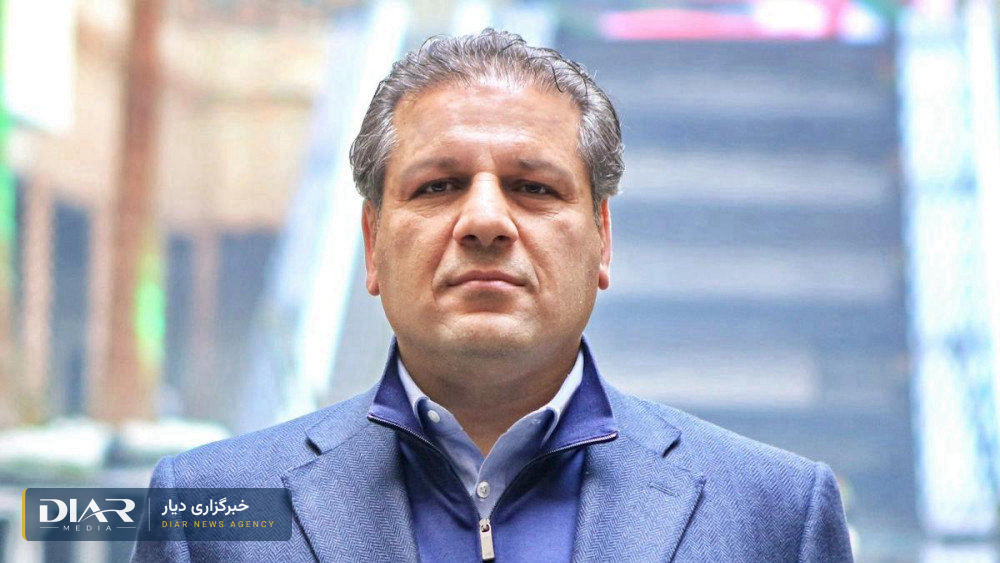
The sale of the five-star Gravenbruch hotel outside Frankfurt, which DIAR reported earlier, was the first complete disposal of one of Ali Ansari's major assets in Europe. Ansari, a sanctioned banker whom the US Treasury describes as a "key financier" of a network of assets benefiting Mojtaba Khamenei, is now seeing his properties in Germany and Britain gradually sold. The central question for Iranians is where this money came from and where it is going.
In the assessment of DIAR's analysts, this case is not just the story of one bankrupt businessman. The capital that was turned into property and hotels in London, Frankfurt and Cyprus came out of Iran's banking system, the same system whose losses the people have paid for through inflation and the collapse of the rial.
From Ayandeh Bank to European property
Ali Ansari, also known as Ali Akbar Ansari, was a shareholder of Ayandeh Bank. After losses reported at more than four billion dollars, the bank was merged into Bank Melli on the government's orders and its licence was revoked. The US Treasury sanctioned Ansari this summer, accusing him of using his position at Ayandeh Bank to issue unsecured loans and move billions of dollars while expanding his foreign businesses. According to the department, his shell companies and bank accounts are spread across Britain, Germany, Luxembourg, Spain and Cyprus.
Britain had already sanctioned Ansari on 30 October 2025 for financially supporting the activities of the Islamic Revolutionary Guard Corps (IRGC): an asset freeze, a travel ban and disqualification from serving as a company director. Ansari has denied all these accusations and called them political.
One sale after another
The Gravenbruch hotel, formerly operated under the Hilton name, stopped taking guests and declared bankruptcy after the Hilton group ended its partnership this summer. On Friday, 31 October, the insolvency administrator confirmed its transfer to the Comer real estate group. Because Ansari, as one of the co-owners, must not profit from the sale under EU sanctions, the deal required the approval of Germany's Federal Office for Economic Affairs and Export Control.
In London, two penthouses overlooking Kensington Palace, registered in Ansari's name and bought for a total of £35.75 million, were placed in the hands of an administrator after the owner failed to keep up with mortgage payments. One of the two units, bought in 2016 for £19 million, is now on sale for around £7 million less. According to reports, the British government has allowed the sale, and any surplus left after the lenders are repaid will remain frozen as long as the sanctions are in place.
Where does the Iranian people's money go
In this chain, the share of the Iranian people is nowhere to be seen. Private lenders take what they are owed, administrators collect their fees, hotel staff receive their unpaid wages, and the rest stays in accounts frozen by European governments. There is no mechanism to return this money one day to its rightful owners: Ayandeh Bank's depositors and the people who bore its losses through inflation.
In the assessment of DIAR's analysts, Ayandeh Bank's losses have been one of the drivers of money creation and inflation in recent years. When a bank with losses of several billion dollars is merged into a state bank, the cost is passed on to households through money printing and pressure on the rial. At the same time, assets bought with those same resources in Europe are now coming onto the market and passing to new buyers.
Scattered coverage of a major case
Despite the scale of this case, its coverage in Persian-language media outside Iran has remained scattered. The main investigative reports on Ansari's properties were published by Western newspapers and investigative journalism networks, and their echo in Persian-language media has mostly been limited to short news items. A case tied to the wealth of the Islamic Republic's leader, the losses of a major bank and the inflation in the lives of millions of Iranians needs sustained follow-up: a full list of the assets, the route the money took, the role of shell companies and the fate of the sale proceeds.
Ali Ansari's assets in Europe are being sold with no mechanism to return the money to the people of Iran.
Why it matters for the national revolution
For Iran's national revolution, this case carries two messages. First, targeted sanctions against the regime's financial network work and have locked up its assets in Europe. Second, without legal follow-up, these assets may be dispersed before an elected government is established in Iran. Documenting these assets precisely and asking European governments to hold the sale proceeds for the benefit of the people of Iran is work that can begin today. DIAR will continue to follow the case of the assets of the Khamenei family and its associates.
Comments
No comments yet. Be the first.