
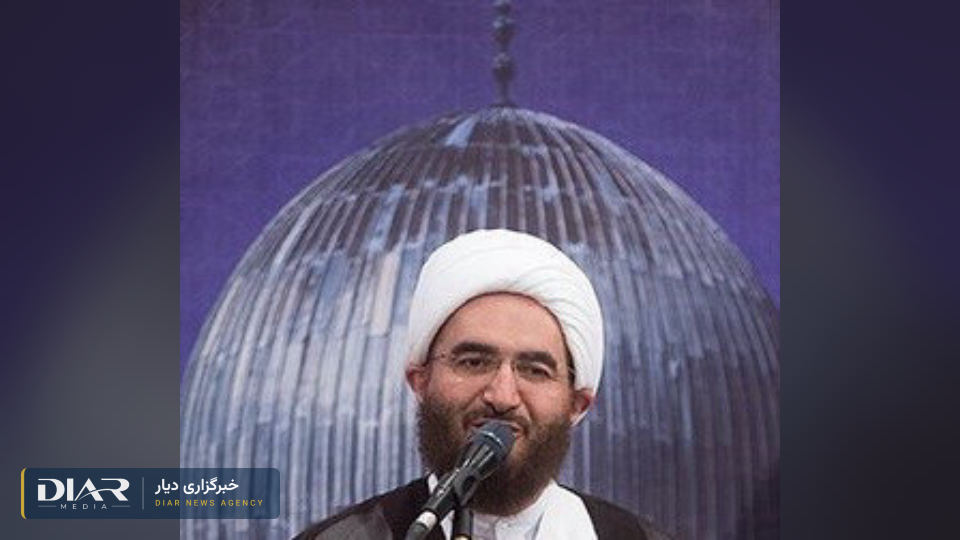
Mohammad Javad Haj Ali Akbari, Tehran's interim Friday prayer leader, claimed in his Friday sermon on 30 October 2026 that in some earlier polls more than 70 percent of respondents had wanted the Islamic Republic's nuclear doctrine revised. He described this demand as a considered decision and a sign of national awareness, and said a change in nuclear doctrine would strengthen deterrence.
Haj Ali Akbari did not say which poll, on what date, by which body, or with what sample and method it had been carried out. The same claim has been repeated from other platforms of the regime in recent days and is part of a campaign launched by a group of members of parliament and state clerics to build an atomic bomb.
Numbers that do not add up
The figures officials use about the "will of the people" for nuclear weapons do not match each other. A poll published in 2024 reported support of close to 70 percent for building nuclear weapons, and a programme on the Islamic Republic's state broadcaster claimed after the 12-day war that nearly 90 percent of people want an atomic bomb built. None of these claims has come with data that can be checked.
In an Iran where expressing opposition to the regime leads to arrest, prison and death sentences, a telephone or face-to-face question about the regime's security policy does not measure people's free opinion. Javad Emam, spokesman of the Reform Front, has also asked who can speak in the name of the nation without evidence, and Mostafa Hashemitaba has called for a referendum.
The atomic bomb campaign from the regime's platforms
Ahmad Alamolhoda, the representative of the Islamic Republic's leader in Razavi Khorasan, called possessing nuclear weapons a religious obligation in order to frighten the enemy. Mahmoud Nabavian, a member of parliament, wrote on X on Thursday 29 October that at a meeting in Qom he had asked the Islamic Republic's leader to allow a bomb to be built. Ahmad Bakhshayesh Ardestani, a member of parliament's national security committee, said the Islamic Republic should first build a bomb and then leave the Treaty on the Non-Proliferation of Nuclear Weapons. Mohammad Taghi Naghdali, the member of parliament for Khomeinishahr, also said the slogan of the regime supporters' nightly rallies has changed from the right to nuclear energy to the right to a nuclear warhead.
Tasnim news agency, which is affiliated with the IRGC, proposed on Saturday 31 October that uranium be enriched to weapons grade without a weapon being built. On the same day Mohsen Rezaei, secretary of the Supreme National Security Council, said no decision had yet been taken to change the nuclear doctrine. The campaign has peaked a few days after Mojtaba Khamenei's order to the armed forces to respond without geographical limits and at the same time as Donald Trump's warning about the Islamic Republic's remaining sites.
DIAR's verdict
The claim that more than 70 percent of Iranians support changing the nuclear doctrine is baseless: the speaker named no specific poll, officials' figures contradict each other, and in a climate of repression and censorship people's free opinion cannot be measured.
Tehran's interim Friday prayer leader did not name even a single poll for his 70 percent claim.
Comments
No comments yet. Be the first.