
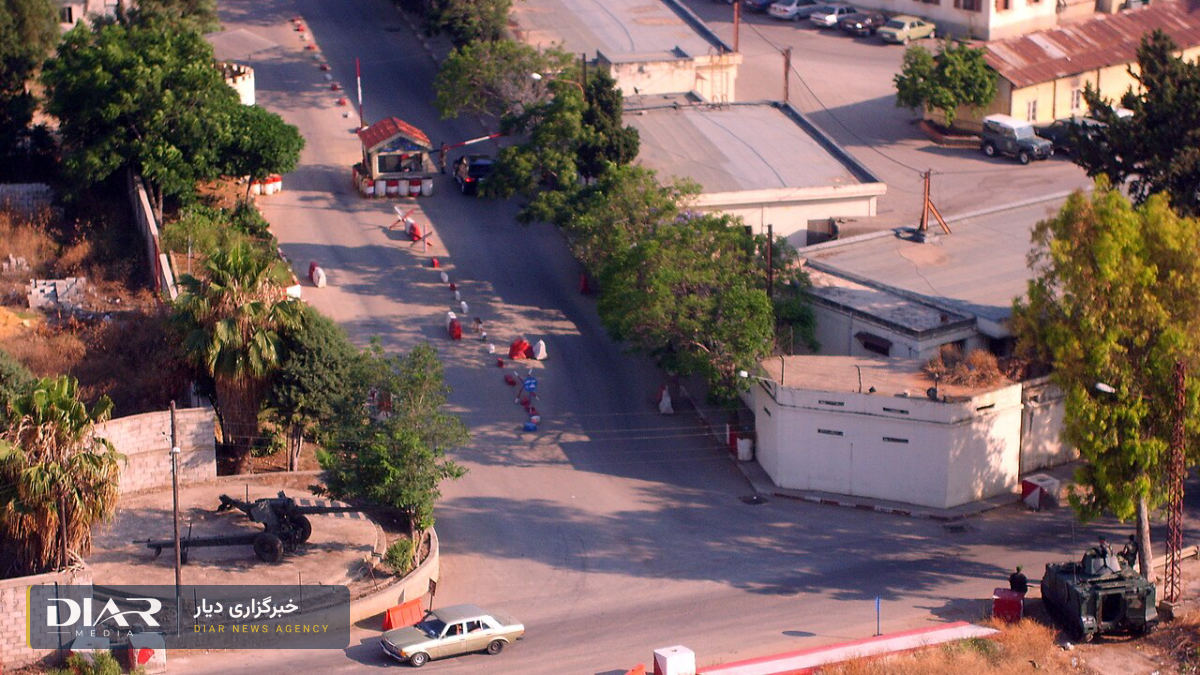
Claude Ghanem, the government commissioner at Lebanon's military court, has filed charges against 13 members of Hezbollah, the Islamic Republic's proxy group, in the case of a truck carrying explosives. The truck was seized on 5 October at the Dahr al-Baidar checkpoint, on the mountain pass linking the Bekaa Valley to Beirut. It was carrying more than half a tonne of explosives and was heading for Beirut.
The 13 are accused of attacking the country's internal security, violating the law and government decisions, possessing weapons and explosives, and forming an illegal group to undermine the authority of the state. Under Lebanese law, these charges carry up to ten years in prison with hard labour. The charge sheet gives the real names of eight of the accused, among them Haitham Amhaz and Ali al-Kurdi, who were in the truck with Mohammad Zeaiter; Mohammad Hazimeh, the truck's owner; and two men known by the aliases "Hajj Sajed" and "Hajj Zulfiqar". The other five defendants are identified only by aliases.
Where the Hezbollah explosives case stands
The charges have not yet led to summonses or arrest warrants, and most of the accused are free; only two had remained in custody before this. Lebanon's prosecutor general, Ahmad Rami al-Hajj, and Claude Ghanem have overseen the investigation. Lebanon's justice minister has asked for the case to be referred to the Supreme Judicial Council, a special court for crimes against state security whose rulings cannot be appealed. After the truck was seized, Lebanon's prime minister promised a full investigation.
Hezbollah has not commented on the charges. The Lebanese Forces party, which holds 19 seats in parliament, said that sending this quantity of explosives to Beirut, rather than to the southern front, points to plans to assassinate opponents in the capital.
Hezbollah and the Islamic Republic
Hezbollah was created in 1982 by the Islamic Revolutionary Guard Corps (IRGC) and still runs on money and weapons from the Islamic Republic. The group has refused to disarm, and the Islamic Republic has backed that position. In recent months the United States has imposed new sanctions on networks that connect Hezbollah to the IRGC's Quds Force. The case is the latest example of pressure from countries in the region on Tehran's proxy networks; a few days ago a court in Kuwait convicted an Iranian citizen of spying for the Islamic Republic and Hezbollah.
Lebanon's judiciary has charged 13 Hezbollah members with attacking state security and possessing explosives.
Comments
No comments yet. Be the first.