
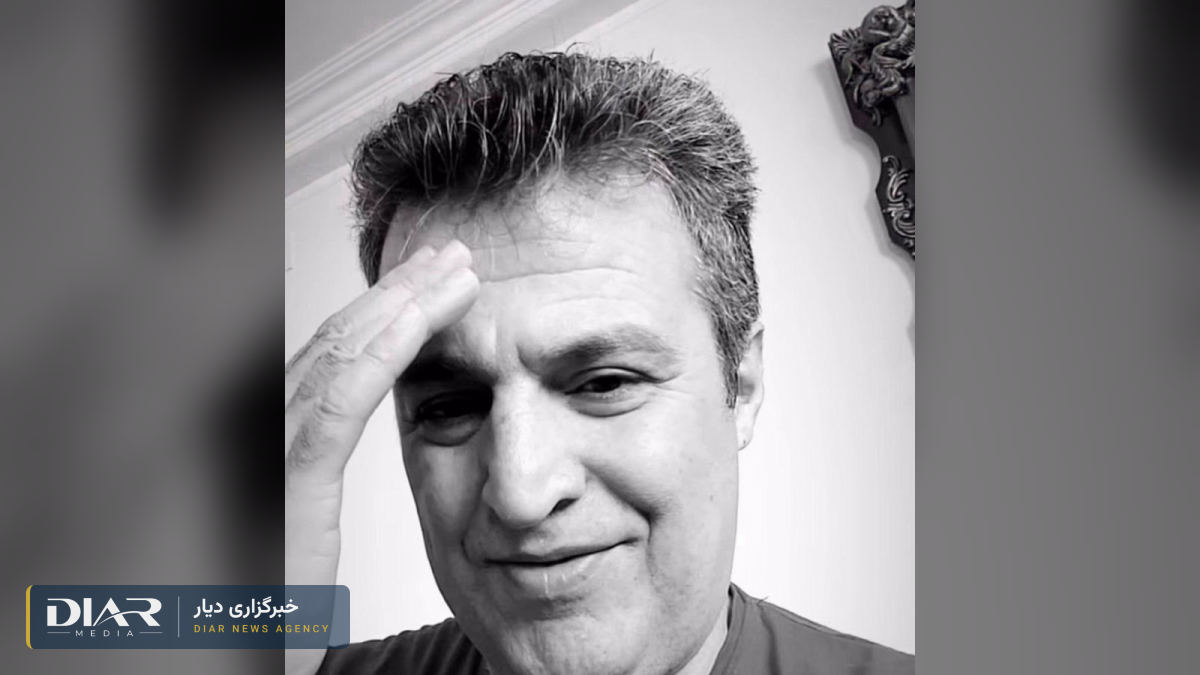
29 October, Cyrus Day, was also the birthday of Jalil Milanluyi, head of the Resalat Bank branch in Esfarayen and a lecturer in economics, who was killed on the evening of Thursday 8 January 2026 during the January uprising in Esfarayen when the repressive forces shot him directly in the chest. A few hours earlier, in a video addressed to Prince Reza Pahlavi, he spoke of the lives being sacrificed on this path and asked him to build an Iran worthy of Cyrus and Darius.
The video, which spread widely after his death, is one of the clearest documents showing what the January protesters took to the streets for, and in whose name.
Who was Jalil Milanluyi
Milanluyi came from Esfarayen in North Khorasan province and was the father of two daughters. His wife had died of cancer a year before the uprising. He headed the Resalat Bank branch in Esfarayen and taught economics at the city's university of medical sciences. According to published accounts of his life, in 2022 he was barred from teaching at the Esfarayen University of Technology because of his protest activity. His last Instagram story was the Lion and Sun flag.
In that final video he says he was religious in his youth, but that seeing how the leaders of the Islamic Republic lived made him break with them and join the people; he also says he had been arrested and harassed several times by the IRGC's intelligence organisation.
The video of his last day
In the video Milanluyi describes a dream he had the night before: Mohammad Reza Shah Pahlavi embraced him, and afterwards a calm child lay in his arms. He interprets the dream himself as a sign that the regime is changing and that he will find a new life, and adds that he may be killed that very day and that it does not matter to him.
The last part of the video is addressed to Prince Reza Pahlavi. He asks the Prince to remember: "Tomorrow, when you take power, know what lives were sacrificed on your path." He then asks that his two daughters be cared for and that an Iran be built that is worthy of the legacy of Cyrus and Darius. Saeed Ghasseminejad, the Prince's economic adviser and director of the Iran Prosperity Project, republished these words after his death.
A few hours before he was killed, Jalil Milanluyi asked Prince Reza Pahlavi to build an Iran worthy of Cyrus and Darius.
The night Esfarayen was drenched in blood
Milanluyi was killed by live ammunition on the evening of 8 January. According to an eyewitness, the shot was fired from the roof of a police station. He was not the only protester killed in Esfarayen that night. His family searched for his body for three days and received it on 11 January. According to informed sources, he was buried under security measures and the family was not allowed to hold a ceremony. A month later, his daughter sang at her father's grave in a video.
The same pattern appears in the cases of other victims of the uprising: shots aimed directly at the upper body, bodies held hostage and mourning blocked. DIAR's reports on the mother of Ahmad Khosravani, a Sharif University student and on Behnam Amirafshari's birthday celebrated at his grave in Fardis tell the same story from other cities. Mai Sato, the UN Special Rapporteur, also said in her latest report that the Islamic Republic has intensified its repression of protesters since January.
What this last testament shows
Milanluyi's words make three things clear about the January uprising.
First, the uprising had a clear political address. A protester who speaks to Prince Reza Pahlavi a few hours before his death, and whose last image is the Lion and Sun flag, took to the streets to change the regime, not for a sectoral demand. The Islamic Republic's narrative, which portrays the protesters as aimless or deceived, does not fit this document.
Second, those who were killed came from the heart of a society the regime had long considered its base. A bank manager and university lecturer in a small town in Khorasan, who by his own account was religious in his youth, belongs to exactly the middle class the Islamic Republic has lost.
Third, these words place a commitment before the leadership of the national revolution. Milanluyi asked the Prince for neither office nor revenge; he asked that the lives sacrificed not be forgotten, that those left behind be cared for, and that a prosperous Iran be built. Seeking justice for the victims of the uprising and supporting their families is part of that commitment.
Jalil Milanluyi's two daughters are now left without father or mother. Nearly ten months after that night, no official of the Islamic Republic has been held to account for his killing or for the deaths of the other victims in Esfarayen.
Comments
No comments yet. Be the first.