
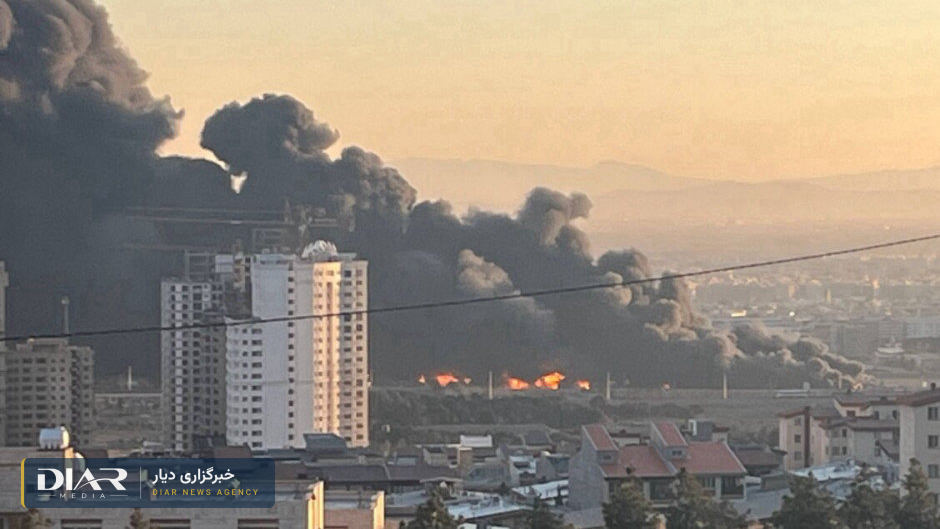
The rebuilding of Tehran homes destroyed in the war with the United States and Israel has been handed to private developers, without the Islamic Republic setting aside any budget for it. Tehran municipality has signed contracts with construction companies under which they pay for the reconstruction and in return build a structure about 50% larger than the previous one, keeping the extra space for themselves.
The Financial Times described this arrangement in a report from Tehran published on Thursday, 29 October 2026. The municipality is focusing on about 500 residential buildings with more than 2,000 units that were completely destroyed. Abbas Khazaei, an urban planning official at Tehran municipality, estimated that reconstruction will take up to two years and said that until residents return, the municipality or the developer will pay their deposits and monthly rent.
Promise of full reconstruction and the sale of building rights
Masoud Pezeshkian's cabinet had promised in the first months of the war to rebuild the homes in full. But Fatemeh Mohajerani, its spokeswoman, said on 15 April that there would be no direct financial aid to rebuild destroyed homes and that developers would instead be given "floating density" — permission to build one or two extra floors for sale. Critics said at the time that extra floor space does not make up for the losses of families who lost their homes, especially as construction costs rise.
Tehran municipality says it has repaired most of more than 50,000 damaged units, from replacing windows to reinforcing structures. No document backing this claim has been published, and the Islamic Republic officials' figures on the number of damaged units do not match one another.
Victims shuttled between offices
Majid Hosseini, the owner of a car showroom whose home and workplace were both damaged, told the Financial Times he has received no help for his business and that different offices pass responsibility to one another. A man pulled alive from the rubble of a building in Jajroudi alley in Tehran lost his home and his motorcycle, which was his work tool, and is now unemployed. He said: "I don't even have the money for a chest of drawers."
The governor of Tehran has said that half of the US and Israeli operations in the first 40 days of the war targeted Tehran province. The Islamic Republic has put the war's death toll at more than 3,500, including about 1,500 civilians.
The Islamic Republic's shortage of money has also shown in other parts of people's lives in recent months; its officials have announced certain gas and power cuts in winter.
Families whose homes were destroyed in the war now depend on private developers' profits to return to them.
Comments
No comments yet. Be the first.