
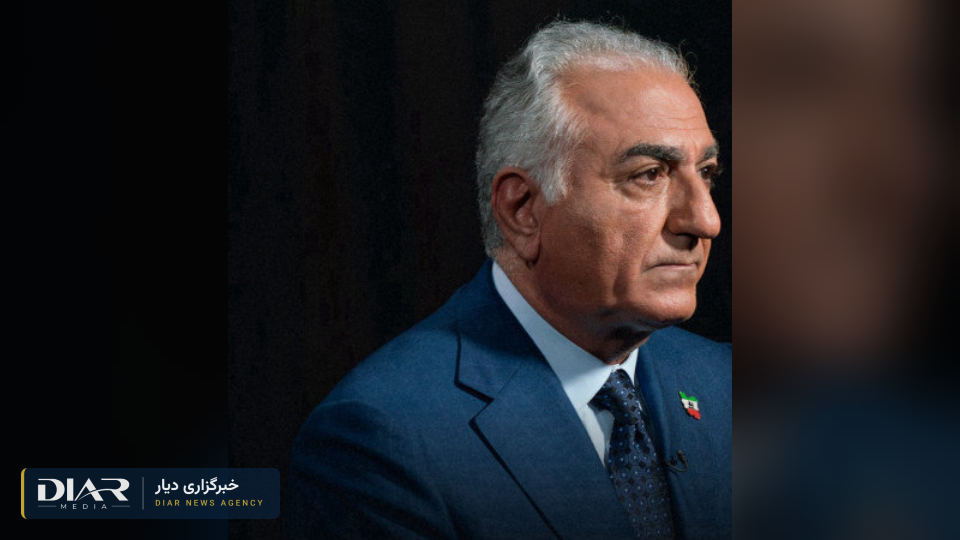
On Tuesday, 27 October, Prince Reza Pahlavi called on all Iranians in a video message to join the national cooperation campaign to save Iran and asked them to contact his team through the Telegram bot "Rise Iran" (Barkhiz Iran). Since then two reactions have appeared side by side: questions about the security of the data of people who message the bot from inside Iran, and a wave of mockery aimed at the campaign itself. The two must be kept apart.
What the national cooperation campaign wants
Prince Reza Pahlavi's message had two parts. In the first, he called on the military, police and security forces to join the people and offered them a guarantee of safety; in the same breath he warned that those who keep taking part in the repression of the people will answer before the law. In the second part, he extended the call to every group in society. His press office said the same day that the campaign had entered a new phase, aimed at making communication, coordination and organisation inside Iran easier.
The campaign is part of the plan for the transition that Prince Reza Pahlavi has been setting out for months: drawing the rank and file of the armed forces and state employees to the people's side before the day the regime falls, so that the transition happens with as little bloodshed as possible.
The security concern and the answer already given
The question about the bot's security is a fair one. The Islamic Republic has a long record of fake accounts, phishing and surveillance of its opponents, and anyone inside Iran who contacts the opposition puts their life and freedom at risk. The main danger for users is fake bots with similar names.
Prince Reza Pahlavi's press office, before these questions reached the media, gave two clear pieces of advice in its very first notice: users should also check the bot's username on its profile page, and "do not send sensitive or identifying information before making sure the communication channel is authentic". This is the same advice any digital security expert gives users. Constructive criticism in this area can help improve the channel: suggestions on encryption, data minimisation and user training.
Mockery does not replace criticism
In the assessment of DIAR's analysts, what was seen on social media in recent days is of a different kind. A number of users outside Iran, including figures who for years were close to the Islamic Republic's reformist camp, mocked the campaign instead of asking questions, by registering fake names in the bot and showing it off. This exposes no security weakness; it only shows that a channel built for people inside Iran can be filled with worthless messages.
The cost is not paid by Prince Reza Pahlavi's opponents. It is paid by the state employee, nurse, worker or soldier who wants to find a way from inside Iran to join the national revolution and now faces a doubt that others have deliberately fuelled. Making people distrust contact with the opposition is the very goal the Islamic Republic's security agencies have pursued for years.
A familiar pattern
This is not the first time an initiative by Prince Reza Pahlavi has met the reaction of the same figures. DIAR showed earlier in its analysis of Prince Reza Pahlavi's 47 years of resistance that many of his critics today took part for years in this same regime's elections and defended the dialogue among civilisations and reform from within. The same camp today offers mockery instead of proposals in the face of every effort to organise the people.
Concern for users' security is answered with security advice; mockery of the campaign only targets the trust of people inside Iran in the channel to the opposition.
What should be done
For users inside Iran, the rule is simple: take the bot's username only from the official channels of Prince Reza Pahlavi and his press office, check it on the bot's profile page, and do not send a real name, address or identifying information until they are sure the channel is authentic. For critics abroad the path is also clear: if they are worried about the security of their compatriots inside Iran, they should make technical proposals. The national cooperation campaign was built to make organising the national revolution inside Iran easier, and its success depends on the trust of these very users.
Comments
No comments yet. Be the first.