
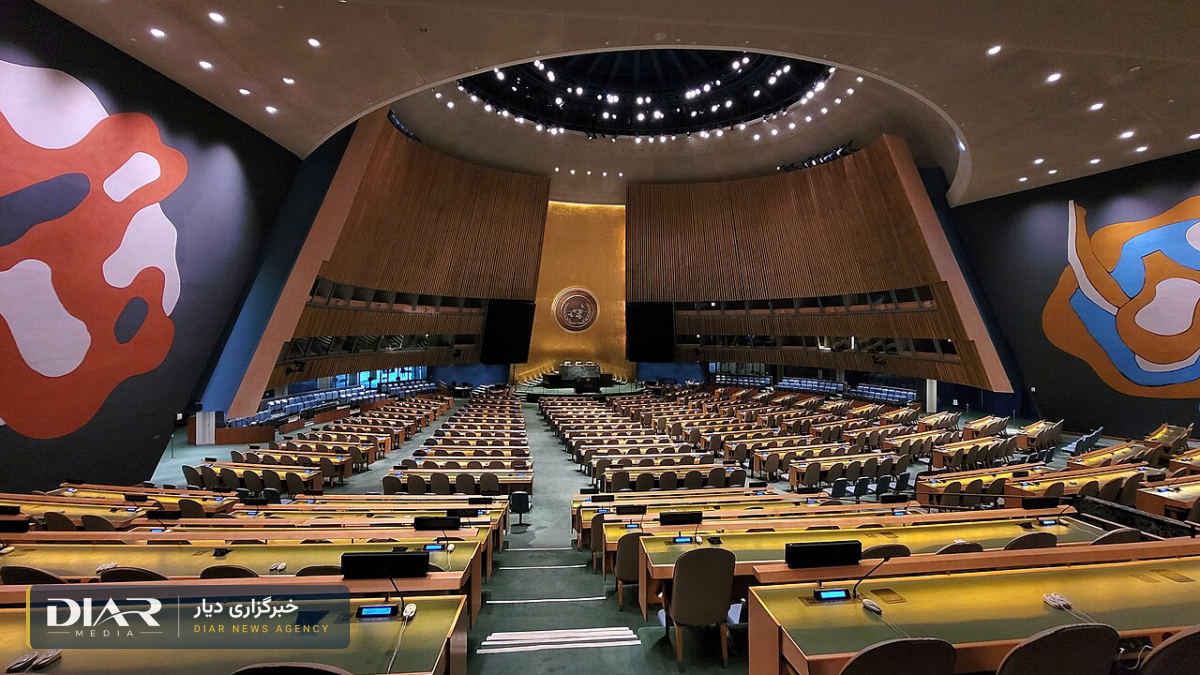
Sun Lei, China's deputy permanent representative to the United Nations, called on Friday, 23 October 2026, at a UN General Assembly session reviewing the annual report of the International Atomic Energy Agency, for an end to the review of the Islamic Republic's nuclear file at the Security Council and the IAEA. He argued that Security Council Resolution 2231, the legal basis of the JCPOA nuclear deal, has expired.
The Chinese representative also said the IAEA Director General should stop reporting on the file and that the dispute over the Islamic Republic's nuclear programme should be resolved only through diplomacy. Pressure, sanctions and force, he said, only heighten tensions. At the same time, he said Tehran, as a party to the Treaty on the Non-Proliferation of Nuclear Weapons, must remain committed to its obligation not to build an atomic weapon.
Dispute over the snapback mechanism
Beijing's position runs counter to that of the United States and three European countries, France, Germany and the United Kingdom. On 28 August 2025 the three countries triggered the snapback mechanism, citing the Islamic Republic's significant non-performance of its JCPOA commitments, and UN sanctions returned on 27 September 2025. In the view of Washington and Europe, that process has kept the Islamic Republic's nuclear file on the Security Council's agenda. China and Russia do not accept the legal validity of the snapback mechanism.
On 9 September 2026 the IAEA Board of Governors, with 23 votes in favour, three against (China, Russia and Niger) and eight abstentions, reported the Islamic Republic's non-compliance with its safeguards obligations to the Security Council. The IAEA says that for more than a year it has been unable to verify the Islamic Republic's stockpile of enriched uranium and has had no access to its facilities.
Beijing's diplomatic shield for Tehran
China's request comes as international observers have no clear picture of what has become of the Islamic Republic's highly enriched uranium. Halting the IAEA's reports would in effect disable the only global tool for monitoring this stockpile. This position, alongside the ever-closer ties between Moscow and Tehran, including Masoud Pezeshkian's imminent trip to Moscow to meet Vladimir Putin, shows that the Islamic Republic is relying more than ever on diplomatic backing from China and Russia in the face of Western pressure.
China has called for an end to IAEA oversight of a file the agency has been unable to verify for more than a year.
Comments
No comments yet. Be the first.