
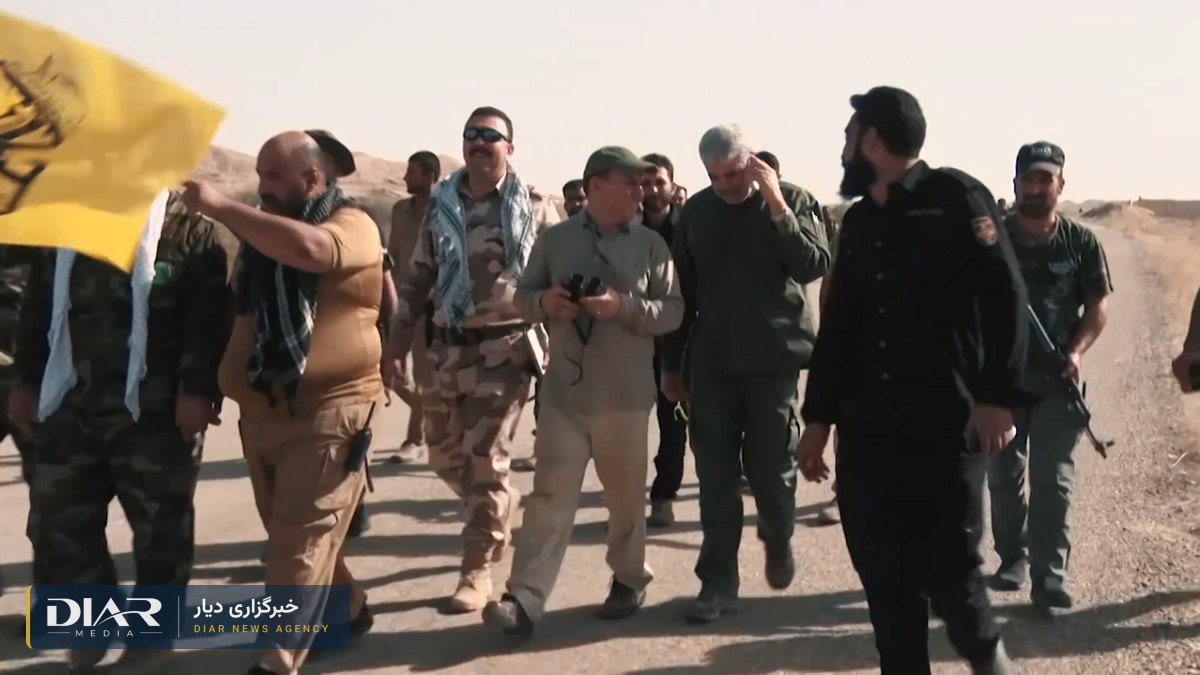
For four decades the Islamic Republic built a network of armed groups in the region and called it the "Axis of Resistance". Hamas's attack on Israel on 7 October 2023 was a clear example of how this network works beyond Iran's borders. Reports published in late December 2025 and January 2026 show that the same network was also brought into Iran's streets during the days of the Dey uprising, including on 8 January. This analysis tries to set these two pictures side by side and show why understanding repression in Iran requires looking at the transnational nature of this regime.
Reports of foreign militias in the crushing of the Dey uprising
In the first days of the Dey 1404 uprising, reports emerged that about 800 members of Iraqi Shia militias, from groups such as Kataib Hezbollah, Nujaba, Sayyid al-Shuhada and the Badr Organisation, had entered Iran through the Shalamcheh, Chazabeh and Khosravi crossings under the cover of pilgrimage to Mashhad and, after gathering at a base in Ahvaz, had been sent to various cities. An Iraqi security source later told CNN that close to five thousand Iraqi militia fighters had gone to Iran in the preceding weeks. Another report spoke of recruitment at a wage of 600 dollars and of more than 60 buses crossing the border by 11 January.
Iran Human Rights also reported, citing sources, that the forces of repression in some cities did not know Persian, and a witness in Karaj said the agents spoke Arabic. The US government warned the Islamic Republic in those same days against using foreign militias against protesters, and on 26 January Kataib Hezbollah openly called on its forces to prepare to defend the Islamic Republic. The Iraqi prime minister's security adviser called these reports "misleading". The exact number of these forces has not yet been independently confirmed, but the scope and consistency of the reports from various sources cannot be ignored.
One network, two fronts
In the assessment of DIAR's analysts, setting 7 October beside 8 January is more than a propaganda comparison. The logic of both is the same: a regime that does not draw its legitimacy from its people relies on forces whose loyalty is not to the Iranian nation but to its ideological and financial structure. The same money and weapons that for years flowed from Iranians' tables to Hamas, Hezbollah and the Iraqi militias came back on the day of crisis to crush those same Iranians.
This pattern is not new. DIAR wrote earlier that the Islamic Republic has entrusted its survival to intimidating the Dey protesters and that those who for four decades paid for the Axis of Resistance from Iranians' tables now apply a double standard. The presence of non-Iranian forces in Iran's streets is the last link in this chain: the transnational ideological army built to "export the revolution" has become a tool for keeping the regime in place against the nation.
What it means for Iran's national revolution
First, this fact turns upside down the regime's narrative that calls protesters "foreign agents"; the foreign force in the streets in Dey was the militias the regime itself brought in. Second, the case of the crushing of the Dey uprising is not only a domestic case and drags in groups that are on Western countries' terrorist lists; this matters for the legal pursuit of the crimes in international forums. Third, it shows that the regime's social base is so worn out that it needs imported forces for repression.
For the international community, too, the message is clear: the threat the world saw on 7 October and the oppression Iranians experienced on 8 January come from one source. The end of the Islamic Republic is a shared solution both for the security of the region and for the freedom of Iranians.
The militias the Islamic Republic built for the region with Iranians' money were, according to various sources, brought in to crush Iranians themselves during the Dey uprising.
Comments
No comments yet. Be the first.