
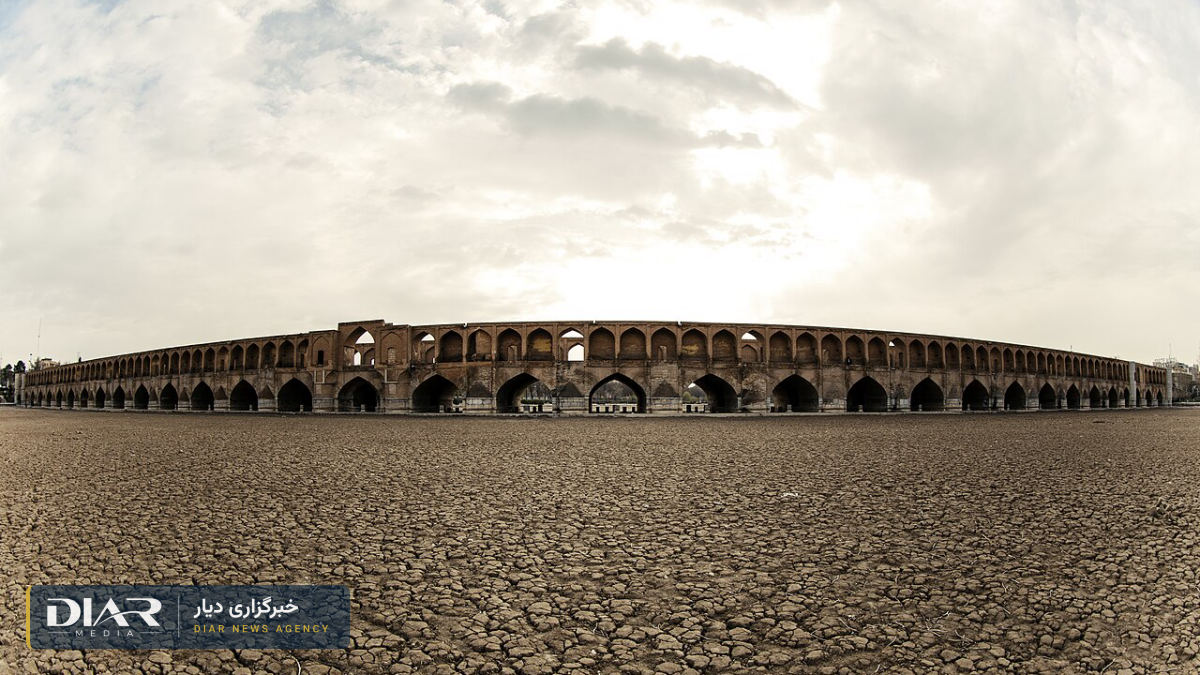
Mehdi Ketabchi, coordinator of the water section of the Iran Prosperity Project, says in an article titled "The rain came, the crisis stayed" that the better rainfall of the 2025-2026 water year should not be mistaken for the end of Iran's water crisis. Prince Reza Pahlavi's media office published the article on Friday 23 October 2026 and wrote that Iran's water crisis is "not only the result of drought" but the outcome of decades of imbalance between natural resources and the development model.
According to Ketabchi, the country's cumulative rainfall up to 18 September 2026 reached about 242 millimetres, close to the long-term average of 246 millimetres and about 62 percent more than last year. The volume of water in the main dams rose from about 18.8 to 26.6 billion cubic metres, but the reservoirs are only 47 percent full and more than half of their capacity remains empty.
Water crisis in Tehran and Mashhad despite more rain
The water resources expert says national averages hide the inequality between basins. Rainfall in Tehran was about 173 millimetres, nearly 37 percent below the province's long-term average, and the dams supplying the capital are about 25 percent full. According to him, Mashhad's dams have fallen to about 2 percent of capacity. Lake Urmia holds about 2.5 billion cubic metres of water, while its restoration needs more than 15 billion cubic metres, and the flow of the Zayandeh Rud was cut off again after only 94 days.
Ketabchi sees the deepest part of the crisis underground: groundwater levels fell by an average of about 29 centimetres a year from 2002 to 2015, the cumulative deficit of non-renewable reserves had passed 150 billion cubic metres by around 2019, and aquifer recharge has fallen by 35 percent. One rainy year does not reverse this trend.
Agriculture, dam-building and water governance
Citing data from the UN Food and Agriculture Organization quoted in the article, more than 92 percent of Iran's roughly 93 billion cubic metres of water withdrawals in 2022 went to agriculture. That is why Ketabchi says household savings or building new dams cannot solve the problem on their own.
His proposals are that water policy be measured by reducing withdrawals from aquifers, guaranteeing the environment's water share and matching each region's development to its water capacity; that cropping patterns and well management be reformed; that flood and drought management be brought into a single policy; and that water data be published transparently and the responsible institutions be held accountable. His conclusion is that Iran has always been short of water, but the shift from scarcity to an all-encompassing crisis is above all the result of water governance.
Mehdi Ketabchi holds a doctorate in water resources engineering from the University of Maryland and is a water resources consultant in the US private sector. The Iran Prosperity Project, with the support of Prince Reza Pahlavi, is drawing up plans for rebuilding Iran after the Islamic Republic, and the water crisis and land subsidence are one of its focus areas.
According to Mehdi Ketabchi, one rainy year cannot make up for decades of deficit in Iran's aquifers; the root of the crisis lies in water governance.
Comments
No comments yet. Be the first.