
In recent months, some activists, media outlets and social media accounts that present themselves as defenders of the "homeland" and of "Iran's integrity" have repeatedly accused Iranians abroad, and supporters of Prince Reza Pahlavi in particular, of warmongering. Now that the Islamic Republic openly speaks of a new war and pushes it forward both on the street and in its military doctrine, these same voices have gone almost silent. In the assessment of DIAR's analysts, this silence shows that their yardstick was never opposition to war, but opposition to Iran's national revolution.
Warmongering on the street, backed by the regime
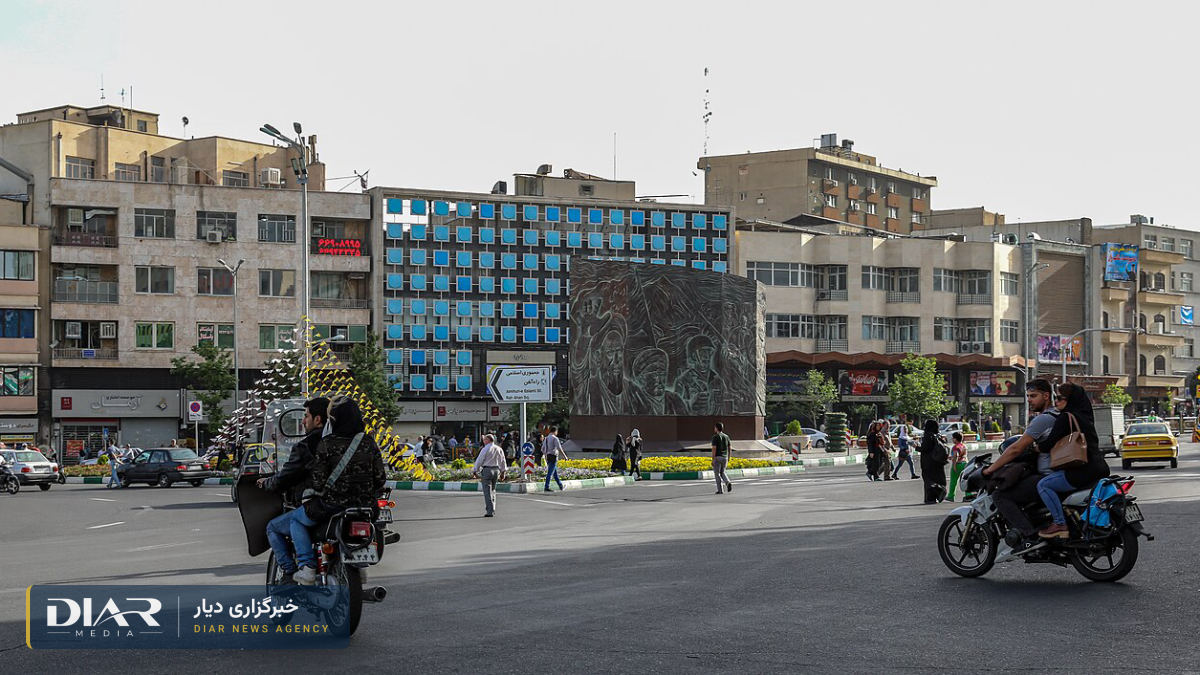
Since the first days of the war of February–March 2026, the regime's supporters have staged nightly rallies in squares in Tehran and other cities. These rallies gradually turned into a platform against any agreement with the United States; participants carried placards calling for battle and revenge and held up images of Mojtaba Khamenei. A government that answers the smallest gathering of protesters with bullets allowed these crowds to assemble and put their faces on state television.
These rallies are not spontaneous. In October, according to residents of Arak, officials in Markazi province threatened municipal street cleaners to make them attend a pro-government rally. The cost of this staging is borne by the ruling system and its institutions, and its security is provided by security forces and plainclothes agents.
From the street to military doctrine
Warmongering is not just a rally slogan. On Wednesday, 21 October 2026, the Islamic Revolutionary Guard Corps (IRGC) announced that the Islamic Republic's defensive doctrine had given way to attack. Mohsen Rezaei, secretary of the Supreme National Security Council, threatened in October that if the war resumed, undersea cables, data centres and artificial intelligence facilities in the Persian Gulf states would be targeted. At the same time, according to three senior officials, Tehran has deliberately dragged out negotiations with the United States.
The decision to seek military confrontation is thus an institutional one, taken at the top of the regime, staged on the street and paid for with the lives and livelihoods of the people of Iran.
A double standard
The same activists and outlets that until yesterday used interviews, articles and tweets to accuse monarchists of inviting foreigners to wage war now do not run even a short headline about the insistence of factions inside the regime on war. If their real concern were the lives of Iranians and Iran's integrity, threats to attack the infrastructure of neighbouring countries and the preparation of the street for war should have been the first target of their criticism.
Among these voices are also some who once supported Prince Reza Pahlavi but whose positions today are no different from the narrative of the Islamic Republic and the MEK (People's Mojahedin), and who praise the IRGC, the force that massacred protesters during the Dey uprising. Iran's history has shown many times that such turnarounds happen at decisive moments.
What this silence means for the national revolution
In the assessment of DIAR's analysts, selective opposition to war is a political tool: wherever responsibility lies with the Islamic Republic, there is silence, and wherever the opposition can be discredited, there is outcry. The people of Iran, who pay the price of war, blockade and repression all at once, see the difference.
The main cause of war and insecurity is a regime that has tied its survival to manufacturing crises. In DIAR's view, the end of this cycle lies in the transition to a free and democratic Iran, which Prince Reza Pahlavi and Iran's national revolution are working towards.
Selective opposition to war that falls silent before the Islamic Republic's warmongering is not opposition to war; it is opposition to the national revolution.
Comments
No comments yet. Be the first.