
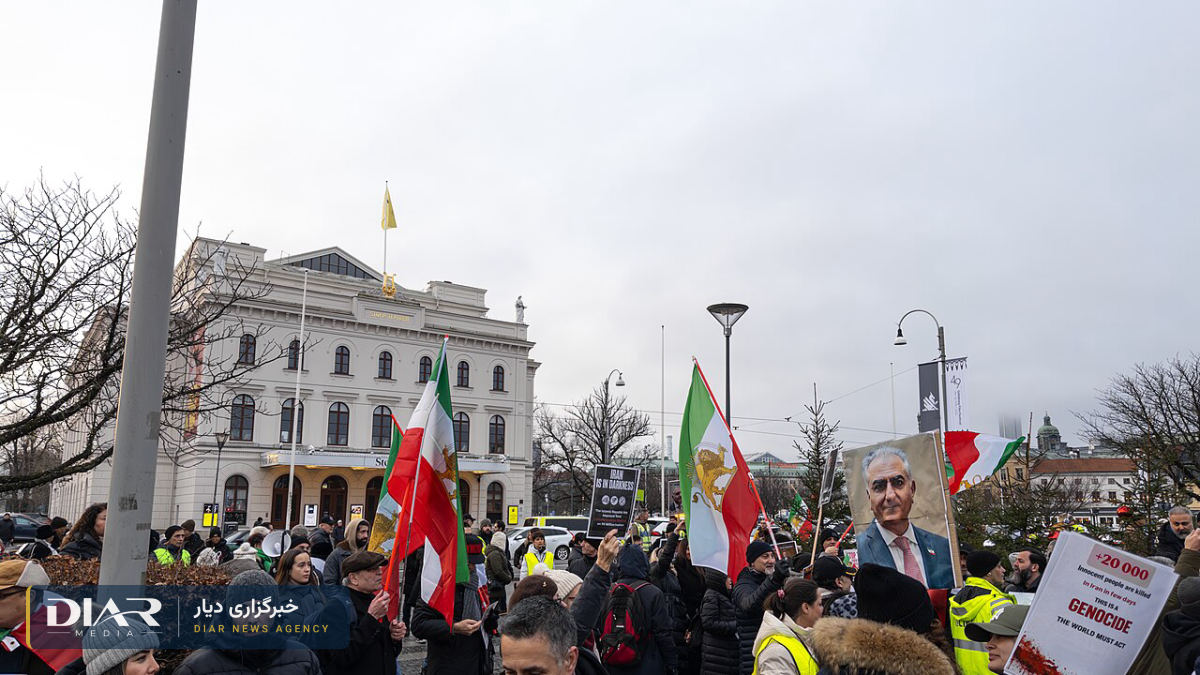
While unrest in France has drawn the attention of the world's media, in Iran the Islamic Republic's judicial and security apparatus has quietly entered one of the harshest periods of repression since the end of the uprising of December 2025–January 2026. Death sentences, long prison terms, flogging, internal exile, dismissal from work, travel bans and threats against grieving families make fresh news almost every day. In the assessment of DIAR's analysts, this wave is a sign not of strength but of a government that has no tool left but fear to hold society in check.
Cases that reveal the pattern
A look at this week's cases reveals a clear pattern. The Revolutionary Court of Isfahan sentenced Ilia Ben-Rashid, a 22-year-old protester from Shahinshahr and one of those detained in the January uprising, to death and to more than four years in prison on the charge of "moharebeh" ("waging war against God"). In Qorveh, Yousef Dehghani, a healthcare worker also detained during the same uprising, was sentenced in two separate cases to prison, 31 lashes, two years of internal exile to Zabol and a fine. The second ruling shows that punishment is not the only aim: exiling a nurse to the farthest corner of the country is a message to all of his colleagues.
At the same time, security agencies have barred the justice-seeking families of the January uprising from visiting the graves of the Javidnam (the "Eternal Ones", those killed in the uprising) and from contacting one another, and are threatening them with summonses — an account that one justice-seeking family recounted. The execution of Alireza Raeisi and Alireza Sepahi, two protesters from Isfahan, and the message from compatriots inside Iran who pledged to continue their path, complete the picture of this equation: the government kills to frighten, and society answers with the memory of the Javidnam.
Why the government has turned to intimidation
The Islamic Republic today is in an unprecedented bind. The US naval blockade has effectively halted oil exports, border crossings with Iraq are closing one after another, the dollar has passed 270,000 tomans on the Tehran market, and the head of the government itself speaks of the "worst" state of no war, no peace. A government that can provide neither bread nor electricity for its people, and has no prospect of ending the war, has only one tool to prevent another uprising: to raise the cost of protest so high that no one dares to return to the streets.
That is why the charge of "moharebeh" is used for acts that no serious legal system treats as grave crimes, and sentences are handed down that bear no proportion to what the defendant is accused of. These sentences are aimed, above all, at their audience: the families, colleagues and neighbours of those dragged before the Revolutionary Court.
The experience of totalitarian governments
The history of the twentieth century shows that mass repression in the final years of totalitarian governments has more often hastened their fall than delayed it. Intimidation can empty the streets for a while, but it cannot restore lost legitimacy; every death sentence, every exile and every family barred from visiting its child's grave adds to the number of those who no longer have anything to lose. The January uprising was itself the result of exactly this accumulation.
What is expected of the international community
Media silence is the repression apparatus's most important ally. Sentences handed down today in the Revolutionary Courts, if they go unseen, will be carried out tomorrow at no cost. The experience of cases halted by international pressure shows that sustained attention from the media, parliaments and governments can save the lives of political prisoners — just as an Italian member of parliament called for European pressure on behalf of Najmeh Amini.
In the assessment of DIAR's analysts, the Islamic Republic, in its final days, believes it can prevent its fall by spreading terror; but this is the very path that brought other totalitarian governments to an earlier end before it. The task of free media is to make sure the name of every one of these prisoners is seen.
Harsh sentences against the January protesters are less a sign of strength than a sign of a government that has no tool left but fear.
Comments
No comments yet. Be the first.