
The Islamic Republic is now cornered on every side: blockaded by the United States at sea, hemmed in on land by borders its neighbours are closing one after another, and defenceless in the air against the US and Israeli air forces. In the assessment of DIAR's analysts, these three fronts, taken together with the regime's loss of its social base, show that the Islamic Republic has also lost its last cards for survival: mediation and dragging out negotiations.
A new war more likely than ever
Reports that Donald Trump had stopped a large-scale Israeli attack on the Islamic Republic looked at first like a sign of calm. But the same week it emerged that the US and Israeli militaries have drawn up specific plans for new strikes after the US midterm elections of 3 November, with the final decision resting with Trump. The White House's open and steady support for Benjamin Netanyahu, the secret meetings of US war secretary Pete Hegseth with Israel's leaders and the flights of Israeli fighter jets to near Iran's border all point in one direction: the attack was postponed, not abandoned.
Some analysts consider a new war certain. Whatever its timing, what is clear is that the Islamic Republic no longer holds the initiative and can only wait for a decision to be made in Washington and Jerusalem.
From naval blockade to land siege
The US naval blockade has for months almost halted the Islamic Republic's oil exports. US Treasury Secretary Scott Bessent has said that no tanker has loaded at Kharg Island since August. Now the siege has reached land: on its government's orders, Iraq closed the Sheeb border crossing, with other crossings next in line, and trade in goods through the Taftan and Rimdan crossings with Pakistan has come to a standstill.
The timing of these events is telling. The borders are closing just after Russian Foreign Minister Sergei Lavrov and Field Marshal Asim Munir, Pakistan's army chief, left Tehran. In the assessment of DIAR's analysts, the two visits brought the Islamic Republic nothing: Moscow spoke only of its readiness to "help resolve the crisis", and Islamabad, itself a mediator, has now closed its border. The two countries the regime looked to as a lifeline left Tehran empty-handed.
In the air, too, the Islamic Republic has nothing to say. The last war showed that its air defences cannot withstand the US and Israeli air forces, and sporadic attacks on ships in the Persian Gulf and the Strait of Hormuz do not make up for this weakness; they have only increased the anger of the region and the world.
A lost social base
More important than all these factors is the rift between the regime and the Iranian nation. For four decades the Islamic Republic spent its resources on the project of an "Islamic ummah" and on building proxy forces in Iraq, Syria, Lebanon and Yemen, while answering society's discontent and anger with repression. The massacre of 8 and 9 January was the point of no return on this path: a regime that shot protesters over two nights can no longer count on the people's support in its hour of danger.
A regime that has no oil money, no open borders, no safe skies, no ally to stand by it and no people to defend it has no card left to bargain with. Dragging out negotiations and pinning hopes on mediators only buys time, and even that time is running out.
The Iranian nation will have the final word
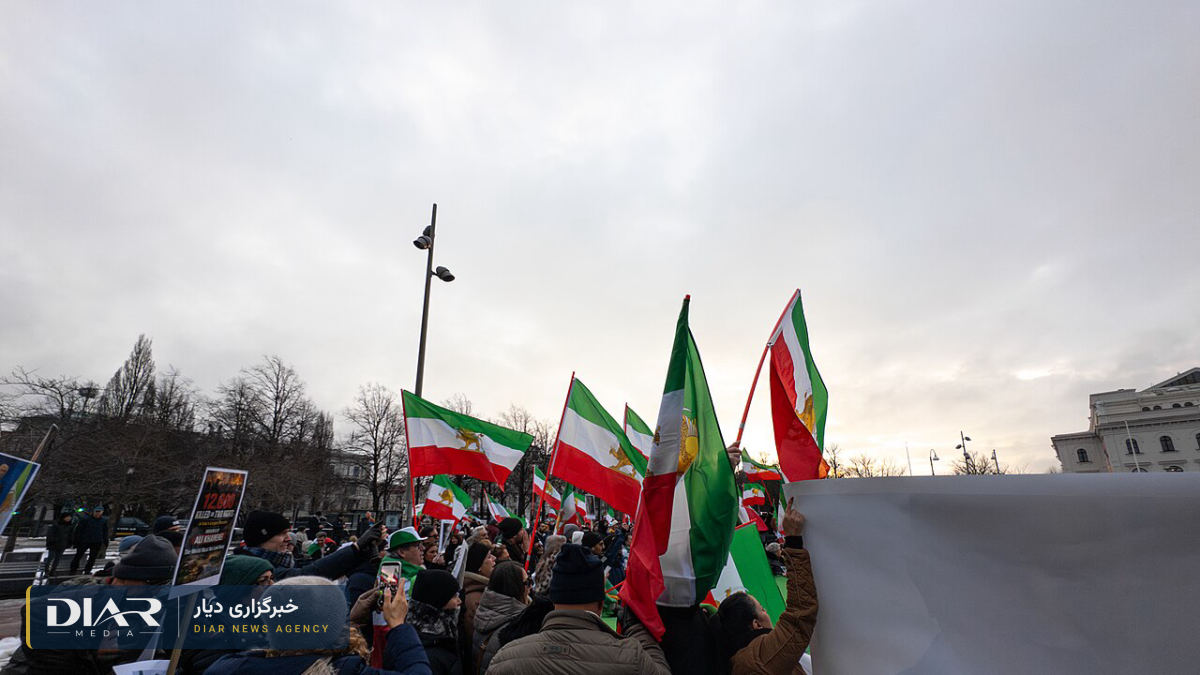
In the assessment of DIAR's analysts, the departure of the Islamic Republic is inevitable, even if the United States and Israel were to abandon their decision to strike today. External pressure can cripple the regime, but it is the Iranian nation that will finally dismantle the system of corruption and repression: the same nation that took to the streets in the Dey uprising with the Lion and Sun flag and the name of Prince Reza Pahlavi.
The days ahead are decisive for Iran's future. The tighter the siege becomes, the more important the readiness of the nation and the cohesion of Iran's national revolution for the day after the Islamic Republic.
The Islamic Republic has lost its mediation and negotiation cards, and the Iranian nation will have the final word.
Comments
No comments yet. Be the first.