
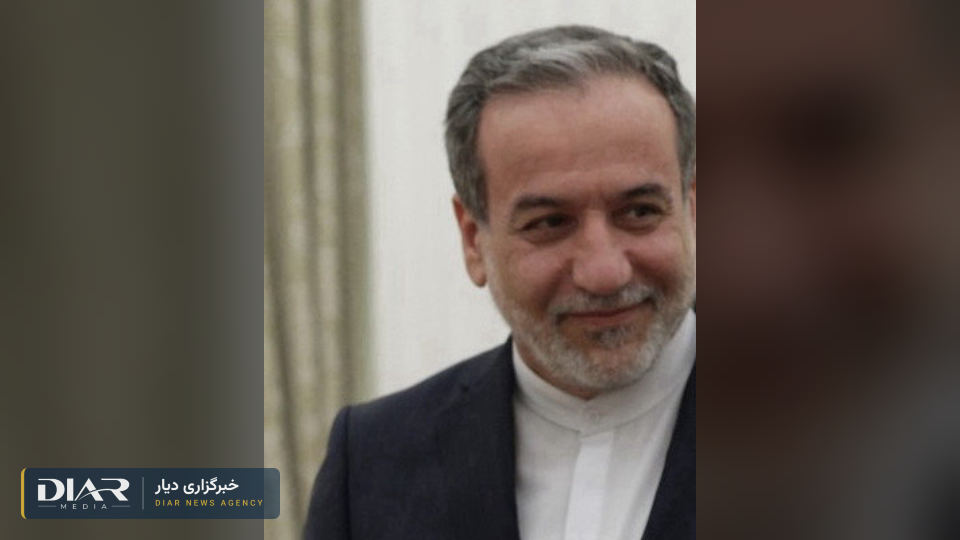
Abbas Araghchi, the Islamic Republic's foreign minister, told the Saudi channel Al-Ekhbariya that the Strait of Hormuz will remain closed until an agreement is reached with the United States, and that before any step Tehran wants the US to implement its commitments under the Islamabad memorandum of understanding. At the same time, Marco Rubio, the US Secretary of State, called reaching an agreement with the Islamic Republic "very difficult".
According to Araghchi, indirect talks with Washington are continuing through Pakistan and Qatar. He claimed that under the Islamic Republic's seven-day plan the Strait of Hormuz would fully reopen on the sixth day, and that the Americans had told Tehran they accepted these conditions but wanted to add several more clauses. The Islamic Republic's foreign minister also said developments in the Red Sea have nothing to do with Tehran; this while the Houthis, allies of the Islamic Republic, have killed dozens of young men in recent days in a missile attack on the Al-Alam camp in Shabwa, Yemen.
Rubio: economic pressure will continue
Marco Rubio told US media that economic pressure on the Islamic Republic will continue as long as attacks on merchant ships in the Strait of Hormuz do not stop. He had earlier compared the Islamic Republic's attacks on merchant ships to the methods of Nazi Germany's U-boats.
Mediators in Tehran one after another
Araghchi's remarks came a day after Field Marshal Asim Munir, Pakistan's army chief, visited Tehran. During that visit Mohsen Rezaei told Munir that not even a particle of enriched uranium will leave Iran. After Munir left, a delegation from Qatar arrived in Tehran. Reuters, citing senior Islamic Republic officials, has reported that Tehran is deliberately dragging out the talks until the US midterm elections on 3 November while preparing for the possibility of new strikes.
The closure of the Strait of Hormuz has for months imposed a heavy cost on Iran's economy: Scott Bessent, the US Treasury Secretary, has said no tanker has loaded at Kharg Island since August, and the Islamic Republic's oil exports have almost stopped under the US naval blockade.
The Islamic Republic holds the Strait of Hormuz hostage to its conditions, while the US blockade has disabled the regime's own oil exports.
Comments
No comments yet. Be the first.