
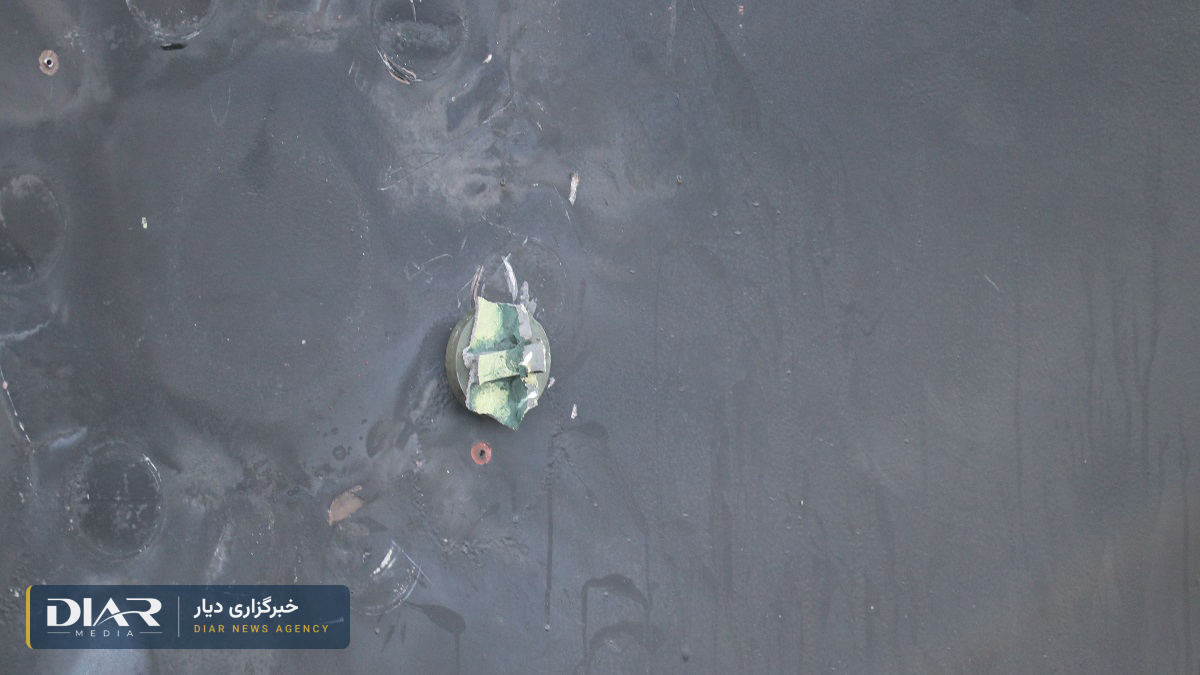
The Islamic Revolutionary Guard Corps (IRGC) claimed in two successive statements on Tuesday, 20 October 2026, that three tankers in the southern part of the Strait of Hormuz had struck naval mines and been disabled. With this claim, the IRGC openly admitted that it has laid mines in one of the most important waterways of world trade. By Wednesday morning, no independent maritime body had confirmed that the ships had hit mines, and the name, flag and owner of none of the tankers had been disclosed.
In its first statement, the IRGC said two "offending" tankers caught fire and came to a halt after mine explosions in what it calls an "illegal passage" in the south of the Strait of Hormuz. In the evening of the same day, a second IRGC statement claimed that a third tanker, which according to the IRGC was carrying more than two million barrels of crude oil, struck a mine in the south of the strait, exploded and caught fire. The IRGC claims that this ship had switched off all its radar and navigation systems. The IRGC also threatened oil companies that if their ships continue on this route, they will pay "a much heavier price". No report has been published on the fate of the crews of these ships.
International Maritime Organization: the Strait of Hormuz is not clear of mines
Arsenio Dominguez, Secretary-General of the International Maritime Organization (IMO), has said the organisation has information that the Islamic Republic still has mines in the traffic separation scheme of the Strait of Hormuz, and that it cannot guarantee that ships passing through the route proposed by Tehran will not hit mines. According to him, the only recognised route is the 1968 traffic separation scheme, and the organisation has not approved the temporary route announced by the Islamic Republic.
The United Kingdom Maritime Trade Operations (UKMTO) on the same day only reported military forces approaching a tanker about 121 nautical miles east of the Omani port of Duqm, and did not say whether the incident was linked to the IRGC's claim.
Mining an international waterway: the Islamic Republic's tool of pressure
This is the latest of several IRGC claims in the past week about tankers hitting mines, most of which have not been independently confirmed. The Islamic Republic is trying to make the passage of ships through the Strait of Hormuz conditional on its own permission, and targets ships that pass along the southern route near the coast of Oman, escorted by US forces. The United States, in turn, has placed the Islamic Republic's ports and ships under a naval blockade.
Marco Rubio, the US Secretary of State, had earlier compared the Islamic Republic's attacks on merchant ships to the methods of Nazi Germany's U-boats, and Islamic Republic officials have themselves said that attacks on ships in the Strait of Hormuz are meant to pressure Trump before the US election. On the same day, Ali Abdollahi, chief of the general staff of the Islamic Republic's armed forces, threatened to use cheap weapons against expensive US equipment.
By claiming that three tankers hit its mines, the IRGC admitted to mining a waterway through which a fifth of the world's oil used to pass.
Comments
No comments yet. Be the first.