
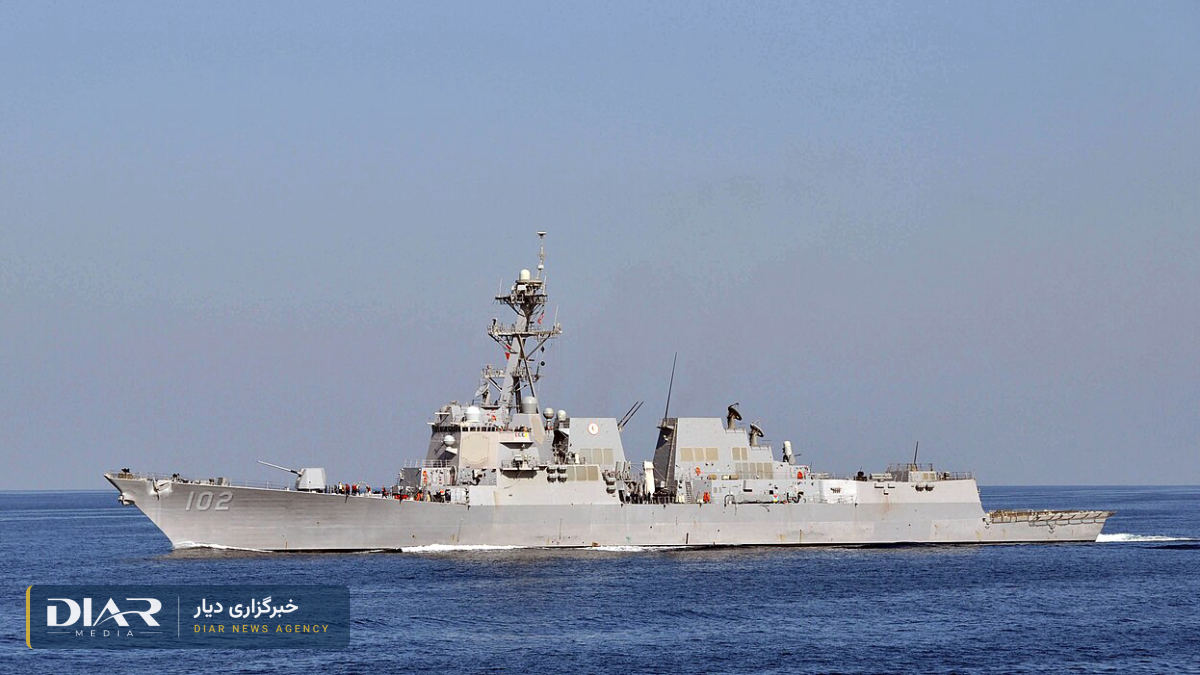
Officials of the Islamic Republic are rejecting the US claim of a cash shortage in the Islamic Revolutionary Guard Corps (IRGC) and of an imminent economic collapse, even as Masoud Pezeshkian, the Islamic Republic's president, has himself admitted that military strikes and the naval blockade of Iran's southern ports have created fundamental problems.
Admiral Brad Cooper, commander of US Central Command (CENTCOM), said in a video message on Friday, 16 October that the naval blockade and US strikes have dealt heavy blows to the Islamic Republic. According to him, the United States has prevented the export of at least 25 billion dollars' worth of Iranian crude oil and, together with the Treasury Department, has frozen about 350 million dollars in cryptocurrency assets linked to Tehran. Cooper also said that, according to reports available to him, proxy groups aligned with the Islamic Republic in the region are withholding their forces' salaries in order to return the money to the IRGC, and that the IRGC itself is not paying its forces' salaries. This part of his remarks rests on reports whose source he did not name.
Response of the Islamic Republic's officials
Abdolnaser Hemmati, head of the Islamic Republic's central bank, in late September or early October called the claim of an Iranian economic collapse a "delusion" and spoke of the economy's resilience. The authorities have also rejected the assessment that economic pressure has destroyed Tehran's ability to support its regional allies.
Nevertheless, Masoud Pezeshkian admitted on Sunday, 18 October that the strikes and the naval blockade have created serious problems. He claimed that managing fuel consumption had eliminated the need to import 12 billion dollars' worth of gasoline, and promised that the revenue from the fuel price increase would be returned to households in the form of a slightly larger electronic coupon.
An economy whose price the people pay
The World Bank forecast in late September or early October that Iran's economy would shrink by about 7.7 percent in the 2026–2027 fiscal year. Runaway inflation, the collapse of the rial's value and shortages of goods have put the lives of 90 million Iranians under pressure, from the closure of trade borders with Pakistan to the destruction of dozens of passenger aircraft in the war.
Michael Knights, a researcher on Middle East military affairs, believes the financing of Hezbollah and the Houthis has come under strain and that Donald Trump hopes a poorer Islamic Republic will be forced to show flexibility. Negar Mortazavi, a researcher at the Center for International Policy, says economic pressure has limited Tehran's military resources but does not change the IRGC's strategy.
A government that calls economic collapse a "delusion" is at the same time promising people a bigger coupon, while an American commander says the IRGC is not paying its forces' salaries.
Comments
No comments yet. Be the first.