
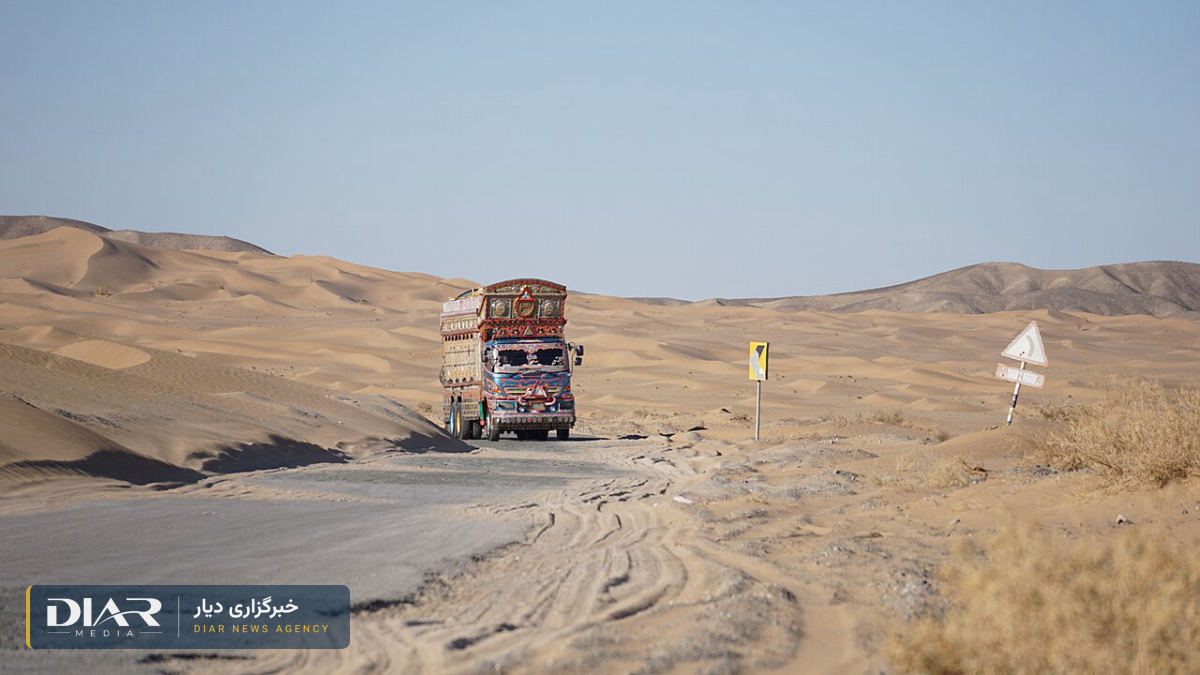
Goods trade at the two main border crossings between Iran and Pakistan, Taftan and Gabd-Rimdan in Sistan and Baluchestan, remained halted as of Tuesday, 20 October 2026, leaving trucks and cargo on both sides of the border in limbo. Passenger traffic at the Rimdan crossing continues, but no date has yet been announced for the resumption of goods exchange.
Pakistani officials have described the halt as a temporary measure to strengthen security and combat smuggling. Pakistan temporarily closed the Taftan passenger crossing on 17 October and imposed security restrictions at other crossings in Balochistan province. Esmaeil Baghaei, spokesman for the Islamic Republic's foreign ministry, however, put the cause down to "technical issues" and the need for precautionary measures, and said the two countries are in contact to resolve the problem. An official in Pakistan's Balochistan province reported progress in the talks and the possibility of a reopening soon.
Queue of trucks before the border closed
Even before this halt, truck drivers at Rimdan were reporting waits of 20 to 30 days. The limited capacity on the Pakistani side and the requirement to transfer cargo from Iranian trucks to Pakistani trucks slowed crossings and made them costly; since August, Iranian trucks had also not been allowed to unload or load inside Pakistani territory. Cargo owners now face the risk of their shipments being stuck for a long time and further losses.
Land routes cannot replace the sea
Before the war and the US naval blockade, more than 80 percent of Iran's foreign trade passed through the ports of Shahid Rajaee and Imam Khomeini. With the sea routes closed, more cargo has poured onto roads and land borders, but these routes cannot replace maritime trade, and the halt at the Pakistani border puts fresh pressure on this very fragile network. The declared goal of raising bilateral trade to 10 billion dollars a year has also moved further out of reach because of banking problems and limited loading capacity.
The halt coincides with intensifying US economic pressure on the Islamic Republic; Washington has threatened to sanction countries and companies that have financial or commercial ties with Tehran. Pakistan is meanwhile mediating between Tehran and Washington, and Asim Munir, the country's army chief, travelled to Tehran on Tuesday. The livelihood crisis resulting from this situation had already become visible earlier in the shortage of medicine and hospital equipment.
The closure of the Pakistani borders has knocked out one of the few remaining land routes for Iran's trade during the naval blockade.
Comments
No comments yet. Be the first.