
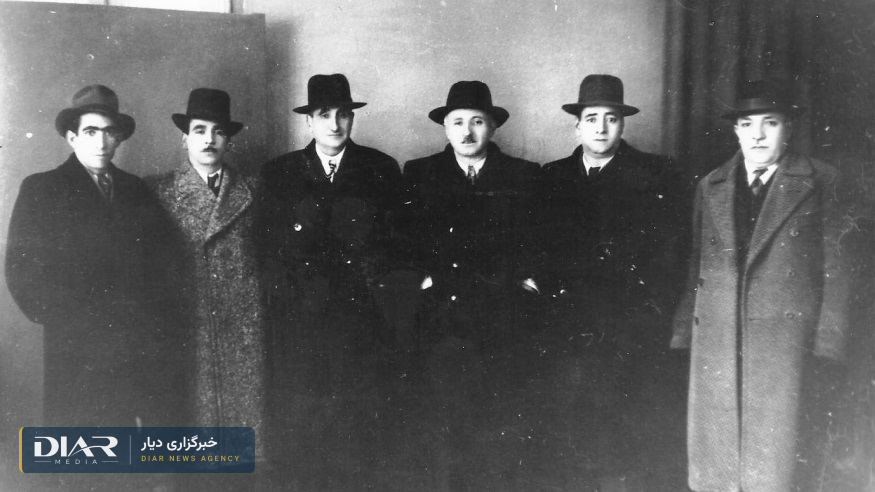
Russian Foreign Minister Sergei Lavrov's trip to Tehran on Monday, 19 October 2026, came with the message that Moscow sees itself as a mediator and backer of the Islamic Republic against America and Israel. In his meeting with Abbas Araghchi, Lavrov spoke of the gradual return of Russian specialists to the Bushehr power plant and of support for the Islamabad memorandum of understanding. But the history of Iran-Russia relations shows a pattern that this trip highlights once again: conditional support, political exploitation, and finally the abandonment of allies when larger interests are at stake.
Lavrov's trip to Tehran was his first since the war, and its declared aim was to prevent a return to wide-scale war. The main question, however, is how far the Islamic Republic can lean on a power that has repeatedly shown it treats its allies as bargaining chips.
The lesson of 1945 and 1946: Azerbaijan and Mahabad
The clearest example of this pattern goes back to the years after the Second World War. The Soviet Union, which occupied northern Iran, backed the "Azerbaijan Democratic Party" led by Jafar Pishevari and the "Republic of Mahabad" led by Qazi Muhammad; two separatist movements that could not have taken shape without the Red Army's umbrella. The Tudeh Party in Tehran also moved in step with Moscow.
But when pressure from America and Britain mounted at the United Nations and Ahmad Qavam's government entered talks with Moscow, promising an oil concession in the north, Joseph Stalin pulled his forces out of Iran in May 1946. The Iranian army returned to Azerbaijan in December of that year, Pishevari fled to the Soviet Union and died the following year in an incident that still raises questions, and Qazi Muhammad was executed in March 1947. Stalin's letter to Pishevari in those same days, according to historians, shows that Moscow saw that movement above all as a lever for extracting concessions from Tehran, and once it had reached its goal, no longer needed it.
This experience is only one example. Earlier, in the wars of the nineteenth century and with the treaties of Gulistan and Turkmenchay, Iran had already paid a heavy price for neighbouring an expansionist power.
A strategic pact with no defence commitment
Today the Islamic Republic has aligned its foreign policy with Moscow to a large extent: the Comprehensive Strategic Partnership Treaty signed in January 2025, military and economic cooperation under sanctions, and reliance on Russia's veto in the Security Council. Yet that treaty contained no mutual defence commitment, and in the recent war Russia's help to Tehran remained limited, to the point that Donald Trump said Russia is not helping the Islamic Republic much and America is also negotiating with Moscow about the Islamic Republic.
In the assessment of DIAR analysts, Russia, whether as the Soviet Union or as today's federation, places its national interests above any alliance. If the cost of backing Tehran outweighs its benefit, whether in talks with the West, in managing relations with the Arab states of the Persian Gulf, or in the equations of the Ukraine war, a repeat of the same pattern of withdrawal would not be unexpected.
An unequal relationship and the Islamic Republic's isolation
This cycle is the logical result of an unbalanced relationship. The weaker side, hoping for security and diplomatic backing, sacrifices its strategic independence, and the stronger side uses that very dependence to bargain. A government that for years chanted "Neither East nor West" now finds itself in a position where even its main ally thinks more about its own interests than about saving it.
The Islamic Republic's isolation is too deep to be covered up by a single diplomatic trip. For Iranians, the lesson of Pishevari and Qazi Muhammad is twofold: both a warning about the fate of those who tie their future to Moscow's decisions, and a reminder that Iran's independence and territorial integrity can be protected only by a national government that relies on the support of its own people.
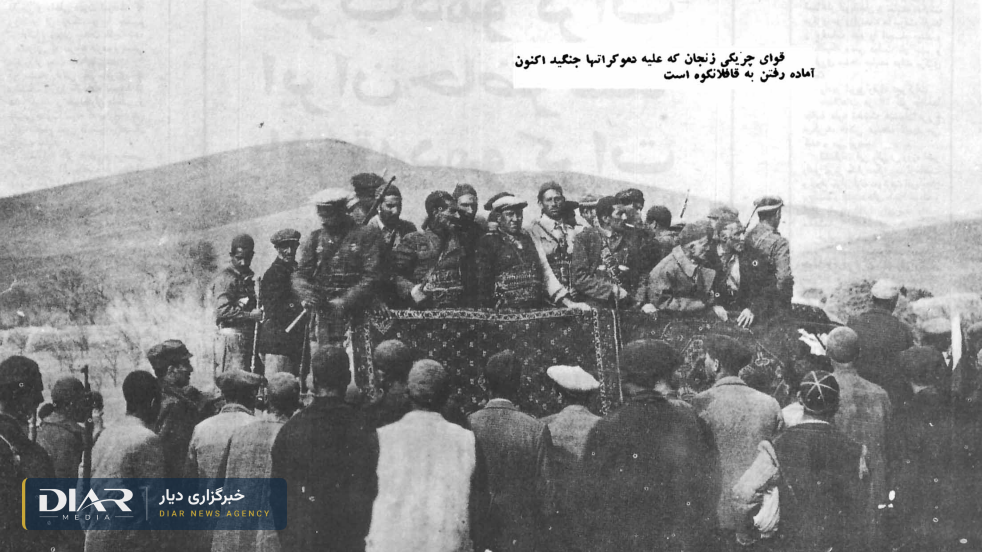
Russia has repeatedly shown that it supports its allies only as long as they serve its interests.
Comments
No comments yet. Be the first.