
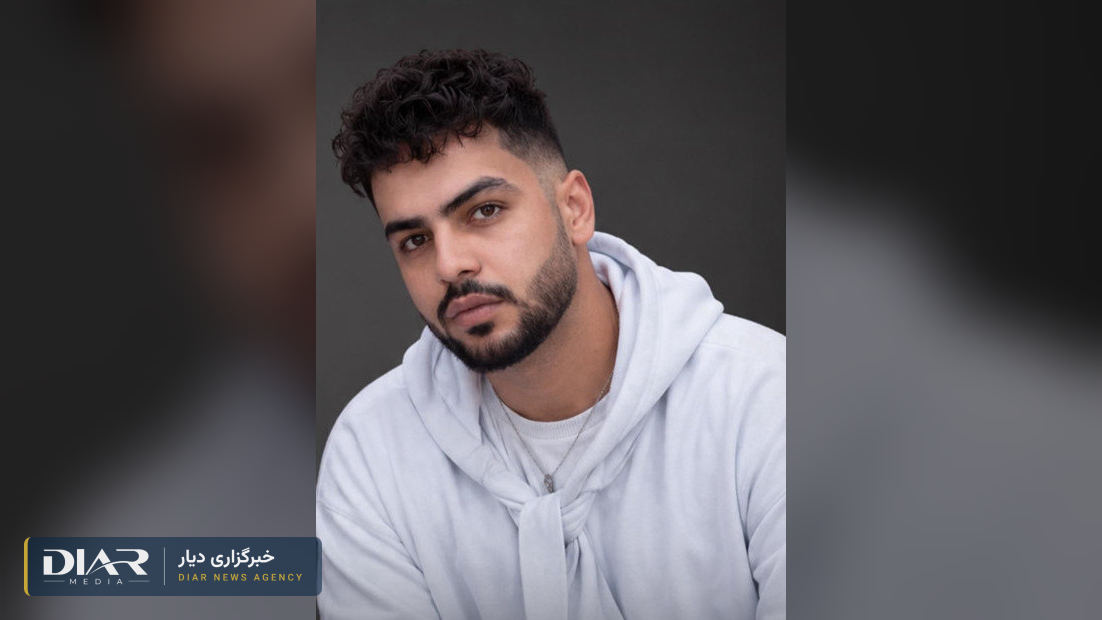
The family of Alireza Raisi, a 21-year-old protester of the January uprising whom the Islamic Republic executed in Isfahan at dawn on 5 October 2026, found his hidden grave in the Anarak desert in Isfahan province after two weeks without news. On the evening of Monday, 19 October, the media office of Prince Reza Pahlavi released a video showing family members at the grave; beside their son's grave they performed the “mourning dance” ritual and honoured his memory.
In the message accompanying the video, the office of Prince Reza Pahlavi called Alireza Raisi a “hero of Iran's Lion and Sun revolution” and wrote: “The name of Alireza Raisi will not be forgotten.” The office also stressed that light will ultimately triumph over darkness and justice will be established.
Secret burial and the family's lack of information
After the execution, security agents did not allow Alireza Raisi's family to bury him where they live. According to a source close to the family, his father was taken, together with two other people and without a mobile phone, blindfolded for about two hours to a desert area near a small village outside Isfahan; the body had been buried not in the village cemetery but in the desert, and the agents did not tell the family the exact location of the grave. Initial reports said he was buried in Natanz, but until today the family did not know the exact place of the grave.
Burying at night and in secret, withholding the body and restricting mourning ceremonies are known methods of the Islamic Republic for silencing the memory of those who have fallen for the nation. Mai Sato, the UN Special Rapporteur on the situation of human rights in Iran, had earlier criticised the pressure on the families of executed protesters, including the refusal to hand over bodies and the restrictions on the place of burial and mourning.
The Alikhani Square case in Isfahan
Alireza Raisi was one of the defendants in the so-called “Alikhani Square” case in Isfahan, linked to the protests of December 2025 and January 2026. In July, the Supreme Court upheld the death sentences of 12 defendants in this case. Alireza's death sentence had once been overturned on appeal and commuted to 20 years in prison, but on 5 July his family was told that the death sentence had been “reinstated”. At dawn on Monday, 5 October, he was executed together with Alireza Sepahi, another defendant in this case, in Isfahan Central Prison (Dastgerd); with the execution of the two, the number of those executed in this case reached seven.
According to people close to the family, Ramin Raisi, Alireza's cousin, was killed in Baharestan, Isfahan, during the January protests, and Alireza was arrested after his burial.
The execution of Alireza Raisi is part of the wave of executions of protesters of the January uprising; a wave that in recent weeks also took the life of Majid Nikandish in Mashhad, and the Revolutionary Courts continue to sentence protesters such as Homayoun Shabankar in Karaj to death.
Two weeks after his execution, Alireza Raisi's family found the grave that the Islamic Republic had hidden in the desert.
Comments
No comments yet. Be the first.