
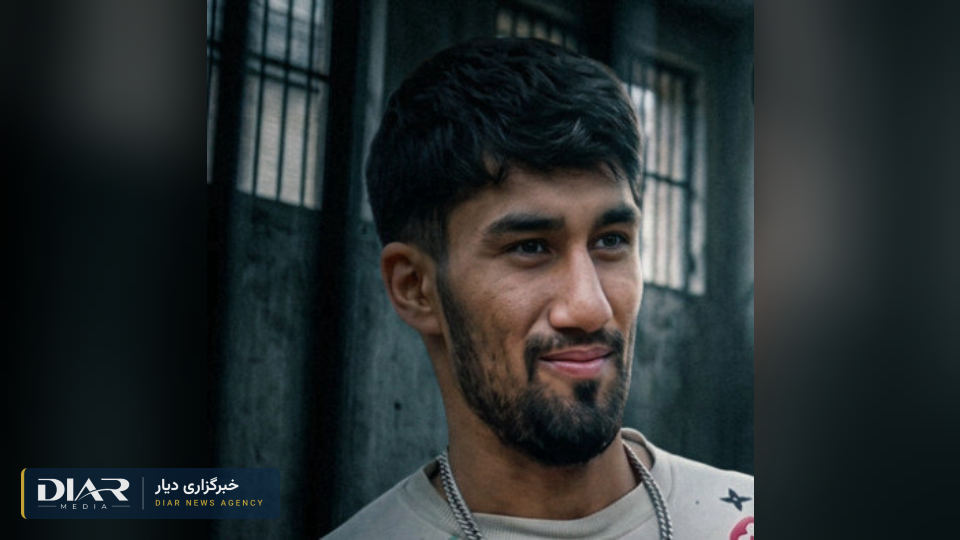
The handwritten will of Majid Nikandish, a young protester of the Dey uprising who was executed at dawn on 30 September 2026 together with Ali Hemmati Sistani in the so-called "Tabarsi" case in Mashhad, has been published, bearing his signature and fingerprint. Iran Human Rights published the will on Thursday, 16 October, and called his execution an "extrajudicial killing."
Majid Nikandish, a Kurdish compatriot from Quchan, was 23 years old according to Iran Human Rights; some reports give his age as 25. In the will, addressed to his mother, he wrote that on the night before the execution he had become like a child who is afraid of an injection and had only one question in his mind: "Why?" He asked his mother to be cheerful at his funeral, to look after his sisters and brother Mahnaz, Abolfazl and Razieh, and for his belongings in prison to be handed to the family as a keepsake.
From arrest to execution of Majid Nikandish
According to the Kurdistan human rights organisation Hengaw, Majid Nikandish was arrested on Saturday, 10 January 2026, and was subjected to torture for months to extract a forced confession. A source close to the case told Iran Human Rights that he was held for about three months in solitary confinement and then in a security ward, and that he always said he had not killed anyone and had only been present among the protesting people.
Branch 1 of the Mashhad Revolutionary Court, headed by Gholamreza Akbari-Moghaddam, sentenced him to death in April–May on the charge of "moharebeh," and the Supreme Court upheld the sentence in June–July. The Mizan news agency, the judiciary's organ, claimed he attacked a shop with a Molotov cocktail and a knife, set fire to a bank and stabbed a Basij member with a knife; yet apart from televised confessions aired on the state broadcaster's 20:30 programme, no evidence has been presented for these claims. The place of execution was not officially announced either, and Iran Human Rights considers it likely that the execution was carried out in Vakilabad prison in Mashhad.
Executions of Dey uprising protesters
According to published tallies, the Islamic Republic has so far executed at least 34 protesters of the Dey uprising. Human rights organisations have repeatedly warned that these sentences are issued on the basis of forced confessions and in courts without free access to a lawyer. The death sentence handed to Homayoun Shabankar, a 22-year-old protester from Karaj, and the transfer of Fatemeh Eyni to solitary confinement for the carrying out of her sentence show that the government's execution machine is still running.
In his last letter to his mother, Majid Nikandish had only one question: "Why?"
Comments
No comments yet. Be the first.