
The transfer of the Iran Prosperity Project from NUFDI (the National Union for Democracy in Iran) to a new body became, in recent days, the pretext for a wave of speculation about a "dispute" or "failure" in Prince Reza Pahlavi's camp. An examination of what has been officially announced, and a comparison with the usual practice of political and research institutions around the world, shows that this change is above all a sign of the project's expanding work, not a sign of a break.
What was officially announced
Prince Reza Pahlavi's media office announced that the transfer of the Iran Prosperity Project from NUFDI has been completed and that the project is continuing its work on preparing for the transition period in a new body. The announcement made no mention of a dispute, a resignation or a halt to the work; what was said was the continuation of the same mission in a new form.
NUFDI is a non-profit organisation in the United States that has worked with Prince Reza Pahlavi for years. The most important product of that cooperation was the Iran Prosperity Project, a scheme that took shape on the Prince's initiative and with NUFDI's support in order to draw up a practical plan for the emergency, transition and economic reconstruction of Iran after the Islamic Republic. NUFDI's relationship to the project was one of support: a body that provided the ground for a scheme to begin, not its permanent owner.
Why projects separate from their parent body
The separation of a scheme from the body that nurtured it is a common phenomenon in the world of policymaking and research. Schemes that begin inside a foundation or think tank usually acquire their own independent structure once the scope of their work grows beyond the host body's capacity: a separate budget, management and legal identity. This allows them to work with new partners, operate in other countries and keep their focus.
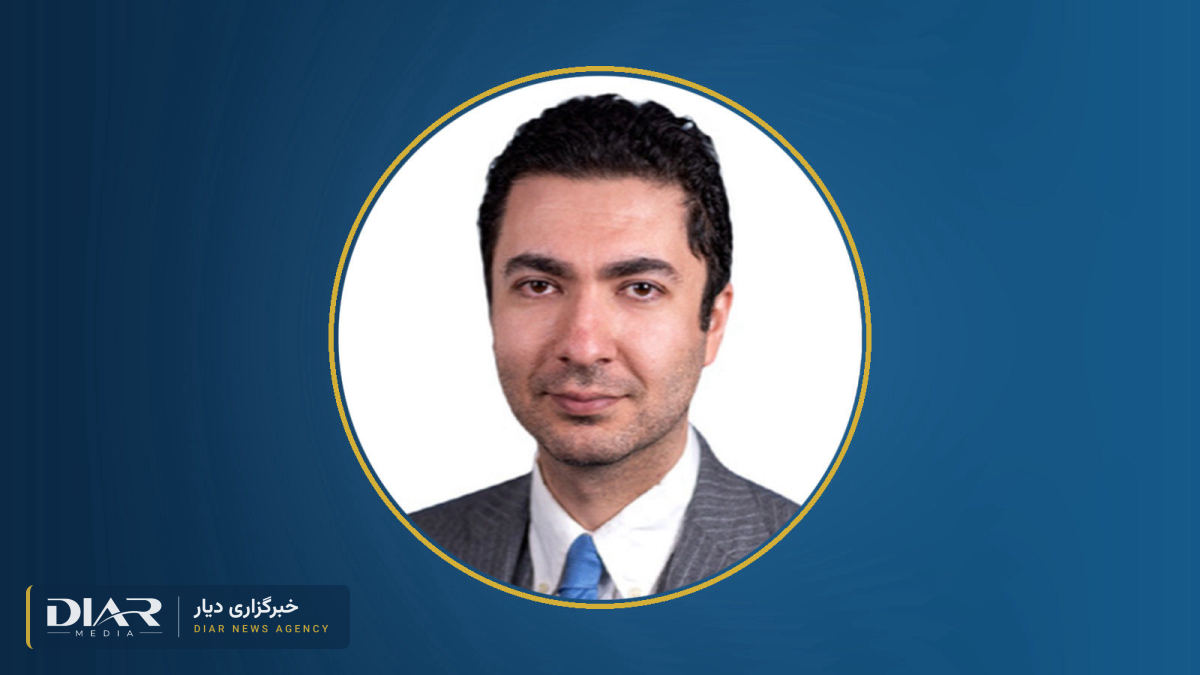
The Iran Prosperity Project has reached exactly such a point. According to Saeed Ghasseminejad, the project's director, nearly 200 specialists have written the emergency and transition plan, and the booklet for this period has been revised with thousands of comments. In recent months the project has had on its agenda everything from water and energy to money and currency, including alternatives to the rial, and has met Iranians in various cities in Europe and America. Work of this scale needs a structure that fits it.
Rumour-making, a repeated pattern
The reaction of some of Prince Reza Pahlavi's opponents to this news follows a familiar pattern: every administrative or organisational change around him is immediately interpreted as a "crisis" and a "collapse", without any document being offered for it. According to DIAR analysts, this approach rests less on reality than on the assumption that any news about the Prince's camp must be told to his detriment.
This pattern is not new. Earlier, too, labelling and narrative-building, as set out in DIAR's analysis of the "project" label, have been a low-cost tool for discrediting the Prince's supporters. Rumour about the structures planning the transition serves the same function: instilling the idea that the alternative to the Islamic Republic is not ready.
What this change means for Iran's national revolution
What matters for Iranians inside the country is that planning for Iran's tomorrow goes on. Civil servants, military personnel and the body of society need a clear picture of the future in order to join the people; a picture the Iran Prosperity Project is trying to provide with concrete economic and administrative plans. A more independent body with greater capacity, if what has been announced is realised, can carry this work forward faster and more widely.
The diversity of bodies and new collaborations is also a sign of the very pluralism that Prince Reza Pahlavi envisages for a free Iran: a division of labour among different institutions, instead of concentrating everything in one organisation.
Conclusion
On the basis of what has so far been officially announced, the transfer of the Iran Prosperity Project from NUFDI is a change within the normal course of organisational development, and no sign of a dispute or failure is seen in it. The real test of this change will be the project's record in the coming months: the publication of new plans and greater readiness for the day Iran moves beyond the Islamic Republic.
The Iran Prosperity Project's move out of NUFDI is a sign of the expansion of transition planning, not a sign of a rift in Prince Reza Pahlavi's camp.
Comments
No comments yet. Be the first.