
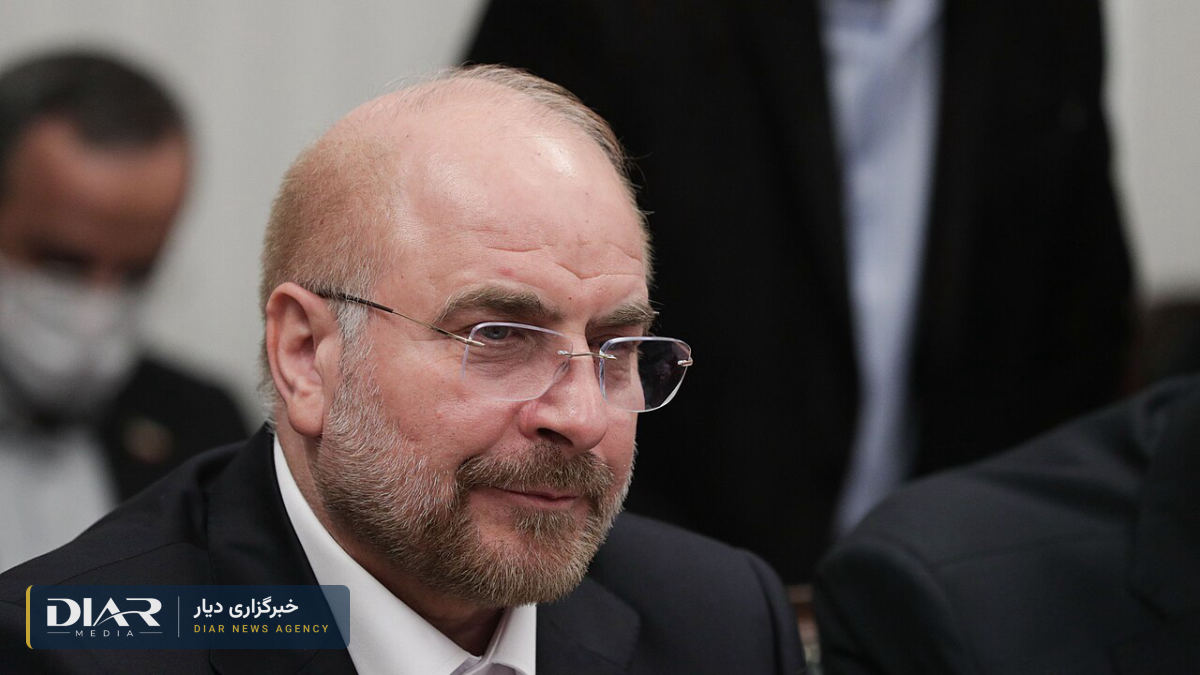
Mohammad Bagher Ghalibaf, speaker of the Islamic Republic's parliament, has declared in a letter to Masoud Pezeshkian that part of the government's regulation on applying terrorism-related financial restrictions is contrary to the law. According to Ghalibaf, the decision on who is recognised as a "terrorist" must remain solely with the Supreme National Security Council, and the government cannot hand that authority to its own working groups.
The cabinet had earlier approved a regulation that set up a national working group to review cases leading to the listing and asset freezing of individuals, groups and organisations. After initial objections, the government amended the text so that the working group would operate with the approval and under the direction of the Supreme National Security Council, but Ghalibaf says the amended text still leaves some decisions to the working group. Under the mechanism for reviewing government regulations, if the disputed part is not corrected within the legal deadline, it loses effect.
The FATF file and the blacklist
The dispute is part of the Islamic Republic's effort to respond to the demands of the Financial Action Task Force (FATF), the body that has kept the Islamic Republic on its list of high-risk countries since 2020. According to FATF, Tehran has not implemented most of the action plan it accepted in 2016, and one of the outstanding demands is an effective mechanism for identifying and freezing terrorist assets in line with UN Security Council resolutions.
In 2025 the Islamic Republic completed its accession to the Palermo Convention and the Convention for the Suppression of the Financing of Terrorism (CFT) with broad reservations, and at the same time declared that the Supreme National Security Council determines who is a terrorist. In June, FATF called these reservations "overly broad" and said domestic implementation was not yet in line with its standards.
One regime, two narratives
Ghalibaf's letter shows that even a regulation the government wrote in coordination with the Supreme National Security Council is unacceptable to the hardline parts of the regime, the same parts that fear the international definition of terrorism might one day cover the Islamic Revolutionary Guard Corps (IRGC) and the Islamic Republic's proxy groups. The dispute follows the open rifts between the Pezeshkian government and the IRGC and comes as new US sanctions have isolated the Islamic Republic's financial network more than ever.
The speaker of the Islamic Republic's parliament holds that the power to designate "terrorists" belongs only to the Supreme National Security Council, not the government.
Comments
No comments yet. Be the first.