
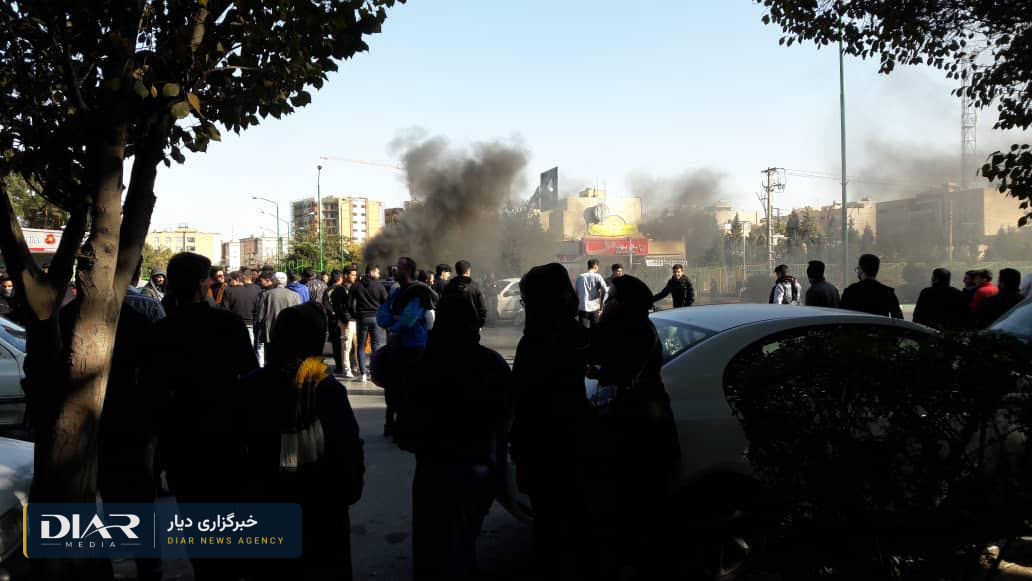
The Islamic Republic executed Alireza Sepahi and Alireza Raeisi, two of those detained during the January uprising in Isfahan, at Isfahan Central Prison (Dastgerd) at dawn on Monday, 5 October 2026. Mizan News Agency, which is affiliated with the judiciary, announced that the sentences had been carried out. The executions took place a few hours after the office of Prince Reza Pahlavi warned of the imminent execution of the two young men and urged governments and human rights bodies to act immediately.
According to Reuters, citing Mizan, the charges against the two included "membership in an armed rebel group", moharebeh (waging war against God) and "corruption on earth", and the judiciary accused them of involvement in the killing of four police officers during the protests in Isfahan. The Supreme Court had previously upheld their death sentences. According to Iran International, Alireza Raeisi was 21 and Alireza Sepahi was 24, and their execution brings the number of people executed in this case to seven.
Burial in their hometowns prevented
Sources close to the families of the two executed young men told Iran International that government forces did not allow them to be buried where they lived. According to these sources, Alireza Raeisi's body was buried in Natanz and Alireza Sepahi's in Kashan.
The execution of Alireza Sepahi had been halted once before; he suffered a heart attack before the announced date of his execution and was taken to hospital. According to HRANA, on Sunday, 4 October, a day before his execution, Sepahi had married Mahshad Keshani, a jailed student, by telephone from inside prison. According to Human Rights Watch, at least 12 defendants in the "Alikhani Square" case have faced death sentences.
Reactions
According to Voice of America, Mai Sato, the United Nations Special Rapporteur on the human rights situation in Iran, spoke of serious concern over the failure to respect fair-trial standards in the case and over allegations of torture of Sepahi and members of his family.
After the executions, the office of Prince Reza Pahlavi said on X that these state killings will not go unanswered and that all those responsible will be held to account. Nobel Peace Prize laureate Shirin Ebadi also called the execution of the two young men deeply shocking and referred to Sepahi's marriage on the eve of his execution. Israel's Foreign Ministry, on its Persian-language account, called the Islamic Republic the enemy of the Iranian people.
Human rights organisations say executions linked to the January uprising are carried out after hasty trials, with limited access to lawyers and on the basis of forced confessions. The two executions came two days after the execution of Siavash Jamshidi, a protester detained in Shahrekord.
With the execution of Sepahi and Raeisi, the Islamic Republic has raised the number of people executed in Isfahan's "Alikhani Square" case to seven.
Comments
No comments yet. Be the first.