
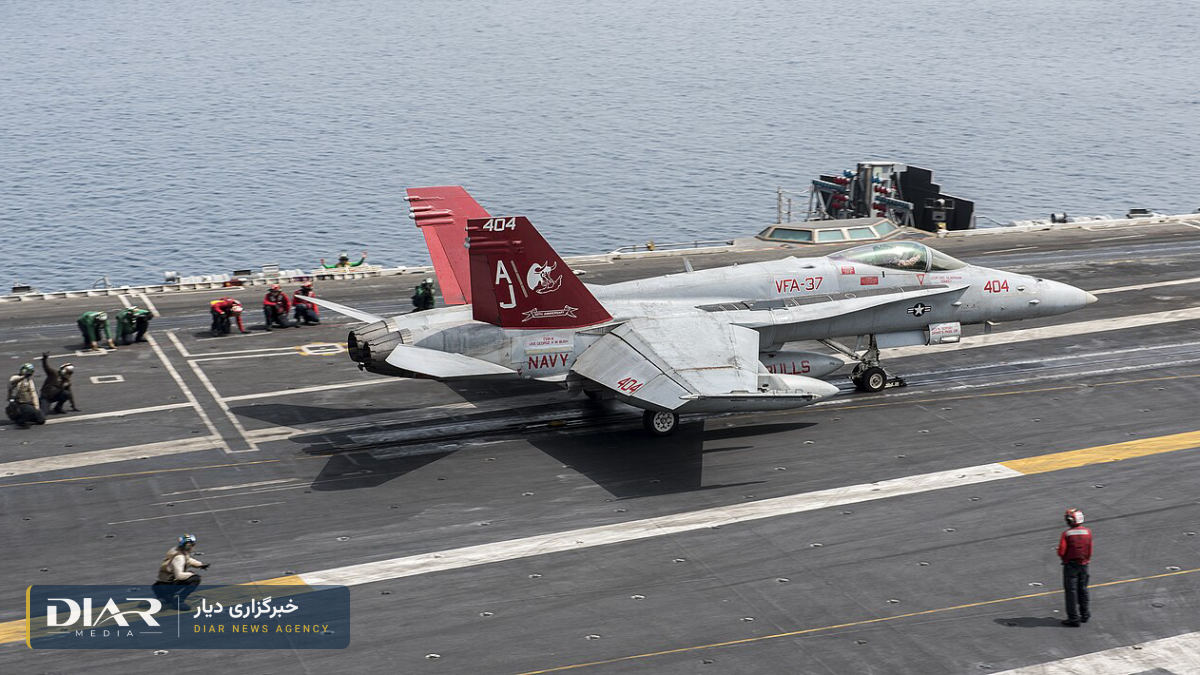
US Central Command (CENTCOM) confirmed on Thursday, 15 October 2026, that the aircraft carrier "George H.W. Bush" has returned to the Arabian Sea after a stop in Thailand. According to CENTCOM, the roughly 5,000 crew members and personnel embarked on the ship continue to support US operations in the Middle East as part of a scheduled deployment.
The carrier's return is announced as reports say the US military has drawn up new plans for possible strikes on the Islamic Republic; plans that, according to US sources, also include the option of using the MOAB, the largest non-nuclear bomb, against energy and nuclear facilities. Responding to these reports, the White House has said all options are on the table.
The Bush's long voyage in the war with the Islamic Republic
The Bush left Naval Station Norfolk in Virginia on 31 March 2026 and, on 23 April, after sailing around the southern tip of Africa without passing through the Red Sea or the Bab el-Mandeb Strait, entered CENTCOM's area in the Indian Ocean. With its arrival, three US aircraft carriers were present in the Middle East at the same time for the first time since the Iraq war. CENTCOM said at the time that the carrier's strike group had brought more than 200 aircraft and about 15,000 sailors and Marines to the region.
The carrier quietly left the region some time ago and went to the port of Phuket in Thailand for a scheduled stop. Its return coincides with the continuing US naval blockade and the Islamic Republic's attacks on ships in the Strait of Hormuz; attacks that in recent days led to the sinking of the bulk carrier "Cape Dao". Donald Trump also said recently that the United States will soon make a decision about the Islamic Republic.
The Bush's return to the Arabian Sea has once again increased US air power near Iran's coast.
Comments
No comments yet. Be the first.