
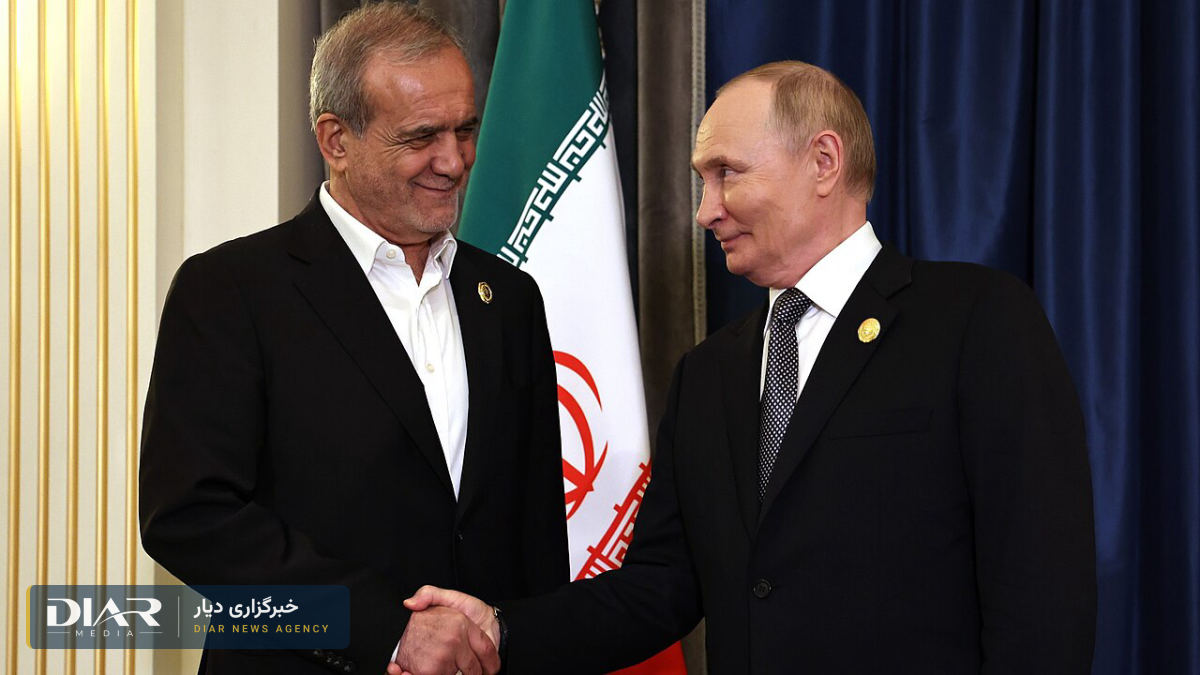
Masoud Pezeshkian, head of the Islamic Republic's government, said at a Nurses' Day ceremony in Tehran on Thursday, 15 October 2026, that if the government had money, it would put the payment of staff salaries and the covering of shortfalls ahead of petrol imports. He admitted that of the roughly 12 billion dollars' worth of petrol that should have been imported, only 2 to 3 billion dollars' worth has been bought so far.
Pezeshkian added that even with money, buying fuel is not easy because, in his words, the access routes are closed, an allusion to the US naval blockade that has cut the Islamic Republic's crude oil exports to zero. He also said the government has about four million employees when one million would be enough, and asked whether they could be dismissed. The head of the Islamic Republic's government urged households to use less gas so that more goes to production, and said Iran's energy consumption is three to four times that of European countries.
Pezeshkian's "silence" and the list of crises
In the same remarks Pezeshkian said: "I have a lot to say, but for now I have stayed silent." He described the reason for this silence as preserving "unity" and listed the authorities' crises: the budget deficit, the electricity shortage, the water crisis, the bankruptcy of pension funds and environmental problems. Without giving any figure for the budget deficit or the amount of unpaid wages, he claimed that "enemies" had been counting on economic and infrastructure problems.
These remarks come as point-to-point inflation has reached nearly 90 percent and Hojjat Abdolmaleki, a former labour minister, claimed on state television that the economy has no problem other than high prices and inflation. Citizens are also worried about electricity bills rising several-fold and shortages of basic goods in the cold months ahead.
Background to the petrol price rises
From late November 2025 the Islamic Republic introduced a three-tier petrol price system, and on 8 September 2026 it raised the price of the third quota tier from 5,000 toman to 10,000 toman per litre; the quota rates of 1,500 and 3,000 toman were unchanged. A few weeks later, Pezeshkian ordered civil servants to work from home because of the fuel shortage. The sudden petrol price rise in November 2019 led to nationwide protests that ended with the Islamic Republic's bloody crackdown and the deaths of hundreds of protesters.
The head of the Islamic Republic's government admitted that only a quarter of the petrol needed has been imported and that the authorities are caught between staff salaries and fuel for the people.
Comments
No comments yet. Be the first.