
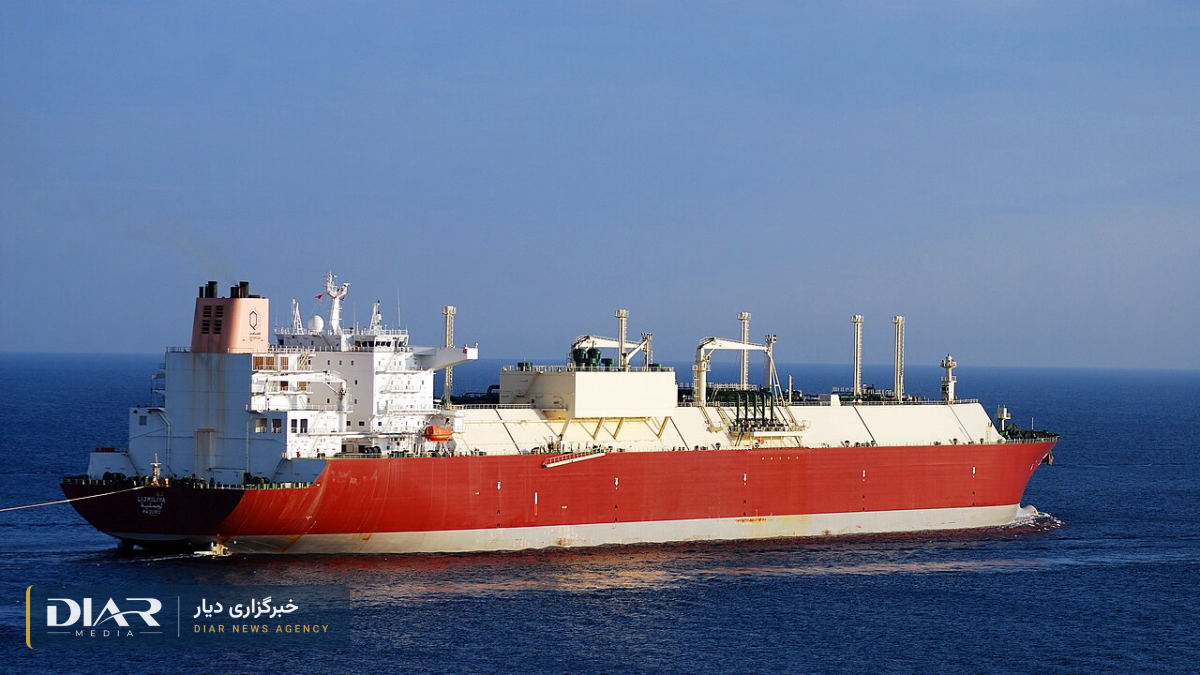
Qatar, which supplied nearly a fifth of the world's liquefied natural gas (LNG) before the war, has turned to the oldest tankers in its fleet and a new method to get its cargoes out of the Strait of Hormuz: a silent transit, with the automatic identification system and running lights switched off, under a US Navy security guarantee. The change came after Islamic Republic attacks on ships in Hormuz had brought the country's gas exports almost to a halt until late summer.
According to more than 24 traders and officials who spoke to Bloomberg, senior executives at QatarEnergy picked the 29-year-old vessel Al Rayyan for the mission after a projectile hit one of the country's tankers outside the strait. The ship had been stuck in the Persian Gulf for several days and was allowed to sail only on condition that it ran without an identification system and running lights. Al Rayyan passed through the strait on 10 September and headed for the port of Sohar in Oman.
Cargo transferred at sea, and back to Hormuz
A few days later, Al Rayyan's cargo was transferred at sea to the newly built tanker Al Mashabiya, under Qatari control, to be delivered to China, and Al Rayyan returned to Hormuz for its next voyage. Ship-tracking data also shows at least 12 empty LNG tankers owned by QatarEnergy or chartered by it waiting in waters near the country, a sign of Doha's plan to increase exports, although there is no guarantee that these ships will be able to pass through the strait once loaded.
Toby Copson, managing partner at Davenport Energy in China, has said Qatar's entire export model depends on moving large volumes of gas through Hormuz, and that in the short term the country has no choice but to adapt. In his assessment, if Qatar can build a more regular export route, one of the biggest bottlenecks in the global LNG market ahead of winter will be eased.
Islamic Republic attacks and the regional energy crisis
Qatar's effort comes as the Islamic Republic has widened its attacks on ships. Two senior Islamic Republic officials said this week that Tehran is trying to keep oil prices high until the US election with new tactics for attacking ships in the Strait of Hormuz. Warnings from the UK Maritime Trade Operations also point to 12 merchant ships being targeted in one week in Hormuz and the Persian Gulf.
Qatar is itself a direct victim of this war. Sheikh Tamim bin Hamad Al Thani, the Emir of Qatar, said in the country's Shura Council a few days ago that the Islamic Republic's attack flagrantly violated Qatar's sovereignty and disrupted the country's exports.
The Islamic Republic's de facto closure of Hormuz has forced the world's second-largest LNG exporter to move its cargoes covertly, aboard thirty-year-old ships.
Comments
No comments yet. Be the first.