
Some Islamic Republic officials have warned in non-public messages that if the United States resumes its attacks, Tehran may send its forces into neighbouring countries. The threat, which the Wall Street Journal revealed on Tuesday, 13 October, is the latest sign of the Islamic Republic's readiness to spread the war across the region. The names of these officials, the countries in question and the timing of the warnings have not been disclosed.
According to the same report, the Islamic Republic has told officials of Arab countries that Saudi Arabia's oil facilities may be targeted, and has told mediators that if the war resumes it will target US forces with greater intensity, including by trying to sink US warships in the region and kill their crews. In the attacks of late August–September, the Islamic Republic's missiles had reached close to US ships.
Mohsen Rezaei's public threats
These behind-the-scenes messages match the open threats of Islamic Republic officials. Mohsen Rezaei, secretary of the Supreme National Security Council, said on Sunday that the UAE, data centres and the region's internet cables could be targeted, and on Monday, 12 October, he claimed that in the event of war, cables, data centres and artificial-intelligence facilities worth two trillion dollars would be "within range". He had earlier also threatened the region's data and AI centres. At the same time, attacks on shipping continue, and 12 commercial vessels were targeted in one week in the Strait of Hormuz.
Fortifying nuclear sites and US readiness
Satellite images analysed by the Institute for Science and International Security (ISIS) show new earthen embankments around the Natanz nuclear facility and the Kolang Gaz La (Pickaxe Mountain) site. The Islamic Republic has used the pause in major fighting to rebuild its missile and drone production lines and refill its weapons stockpiles, and its officials have spoken of preparing airports, ports and power plants for wartime conditions. In Tehran, billboards also advertise training courses for civilians in shoulder-fired missiles and sniper rifles.
On the other side, a third US aircraft carrier strike group and another expeditionary Marine unit are on their way to the Middle East, and the Pentagon is considering sending more air-defence equipment and munitions to bases in the region. US President Donald Trump said last week that he would not order an attack on the Islamic Republic before the midterm elections on 3 November, but US officials say military options continue to be prepared.
On the night of Monday, 12 October, Trump also wrote on Truth Social that he does not believe China and Russia will help the Islamic Republic; according to him, any help would be at a very low level, the two countries have a lot to lose, and the United States would quickly learn of it.
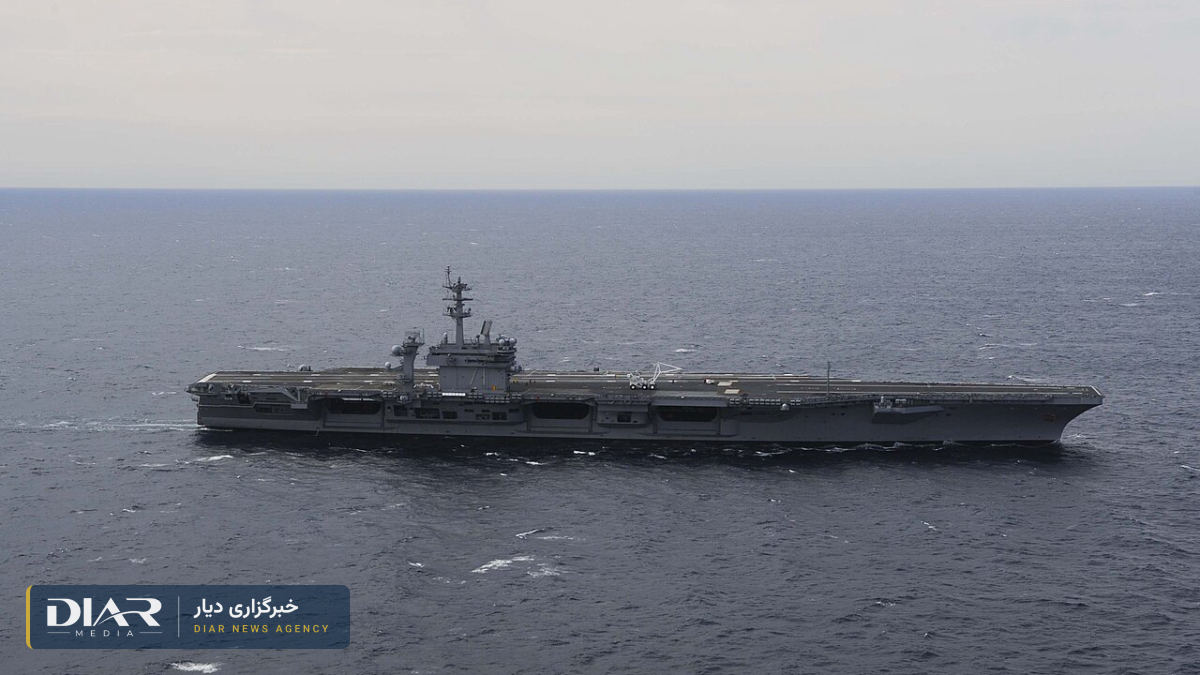
In behind-the-scenes messages, the Islamic Republic has threatened neighbouring countries and US warships with widening the war.
Comments
No comments yet. Be the first.