
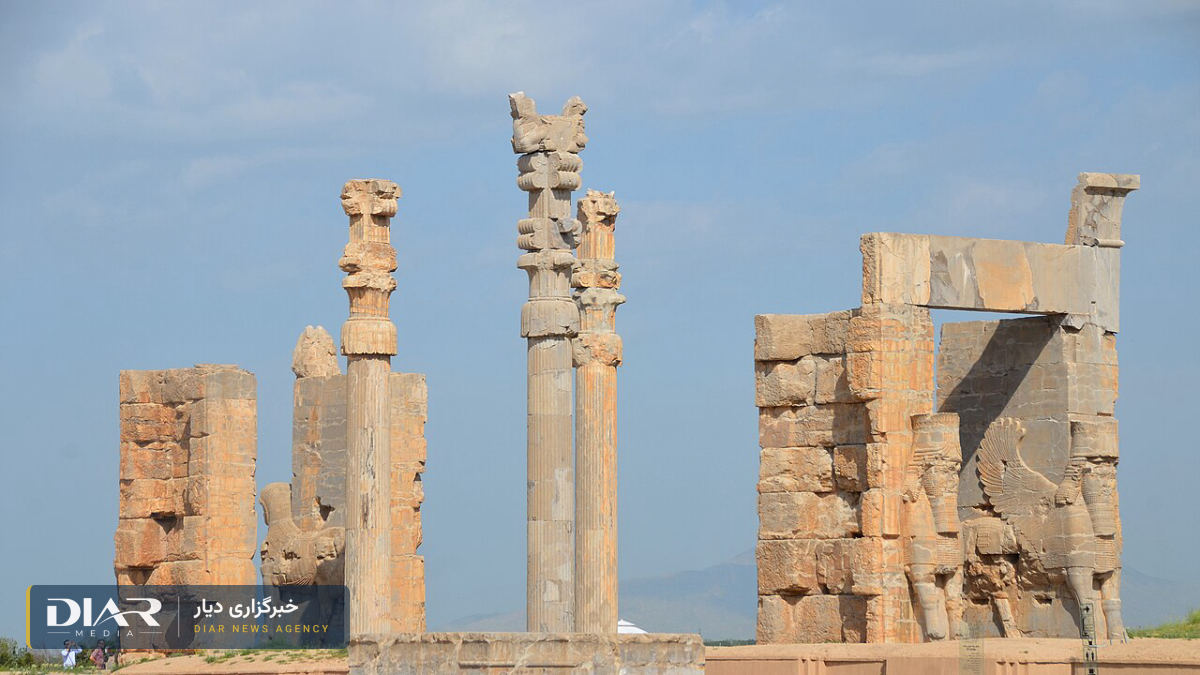
US Secretary of State Marco Rubio's speech in Athens, and his reference to Xerxes' campaign against Greece, gave Islamic Republic officials an opportunity to present themselves as defenders of the civilization of ancient Iran, a civilization the Islamic Republic's leader denounced for years. Iran International has examined this contradiction in a report.
Rubio spoke on Wednesday, 7 October 2026, on the Pnyx hill in Athens, where the assembly of citizens of ancient Athens met. In the speech he referred to the attack by Xerxes' army on Athens in 480 BC and the burning of the city's temples, and cited the rebuilding of Athens as an example of the West's resilience. According to Iran International, in the same speech he called the rulers of the Islamic Republic radical mullahs and contrasted the Western tradition of sacrifice with what he called these rulers' death cult.
Mohammad-Baqer Ghalibaf's reaction to Rubio's remarks
Mohammad-Baqer Ghalibaf, speaker of the Islamic Consultative Assembly, accused the enemies of the Islamic Republic of trying to erase ancient civilizations. On X, referring to the capture of the Roman emperor Valerian by the Sasanian king Shapur I, he warned that the followers of Alexander's legacy would suffer Valerian's fate.
Earlier, at his Senate confirmation hearing in January 2025, Marco Rubio had praised Iran's ancient civilization and said he knew of no nation as estranged from its rulers as the Iranians.
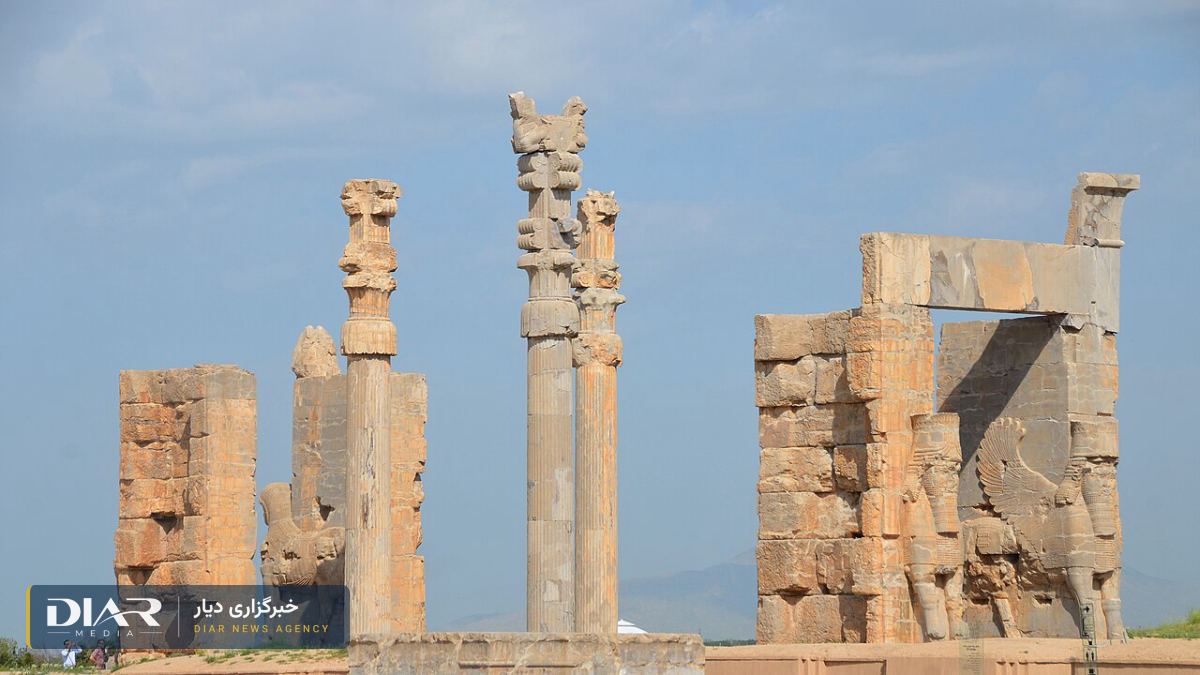
Khamenei and the denunciation of pre-Islamic Iran
The Islamic Republic officials' position today contradicts the record of the regime itself. According to Iran International, in March–April 2012 Ali Khamenei, the Islamic Republic's leader, described Xerxes' campaign against Greece as an example of military force being used to serve rulers' ambition rather than the national interest, and linked it to "Taghut". In 2018 he also called pride in the Kayanian and Achaemenid dynasties a hollow pride.
Yet in recent years, and especially during the war, the Islamic Republic has turned to symbols of ancient Iran: from the unveiling of a statue of Valerian kneeling before Shapur I in October–November 2025, to the statue of Arash the Archer in Tehran and a billboard showing Benjamin Netanyahu kneeling before an Iranian king.
Critics of the Islamic Republic say that opposing the rule of the clerics takes nothing away from Iranians' attachment to their ancient history. Last Friday, too, Foreign Ministry spokesman Esmaeil Baqaei was booed by spectators at a performance of the play "Arash" in Tehran.
A government that called Xerxes a symbol of "Taghut" now presents itself as the guardian of ancient Iran in response to an American speech.
Comments
No comments yet. Be the first.