
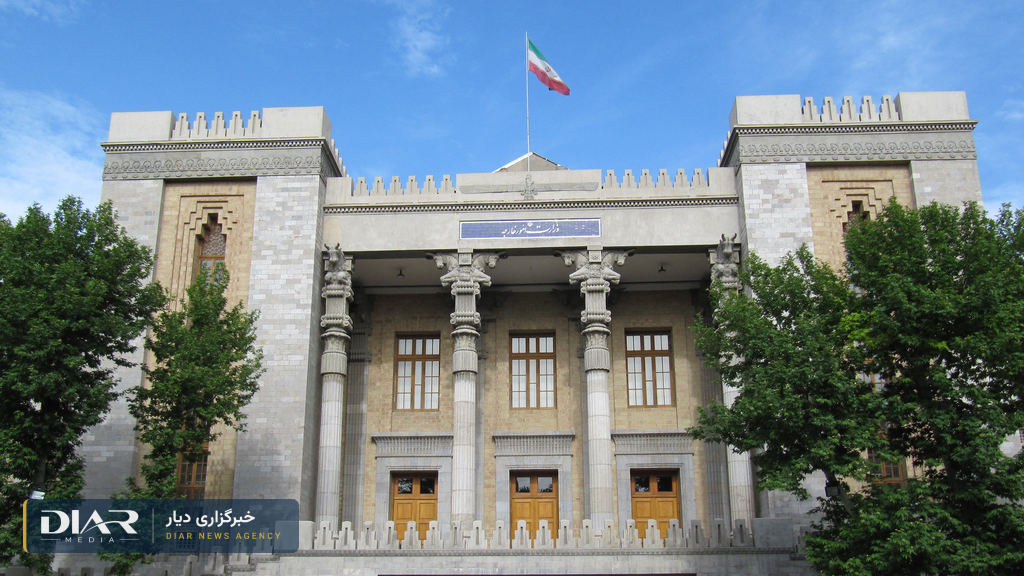
Esmaeil Baghaei, spokesman for the Islamic Republic's Ministry of Foreign Affairs, said on Sunday, 4 October 2026, that the US proposals more or less repeat Washington's earlier positions, particularly on the nuclear file. According to Reuters, he said Tehran had told the American side that its focus at this stage is the Strait of Hormuz, and that a return of security to the waterway depends on clear steps by the United States.
Baghaei also denied reports that the Islamic Republic had offered to let International Atomic Energy Agency inspectors carry out inspections in exchange for sanctions relief, and said Tehran has not entered nuclear negotiations with Washington. According to IranWire, he added that Tehran intends to convey “supplementary points” on the US proposals through a mediator.
The US response to the seven-day plan
Kazem Gharibabadi, the Foreign Ministry's deputy for legal and international affairs, also said, according to Iran International, that the seven-day plan Abbas Araghchi had presented in New York had reached Washington through mediators, and that the American side's response to it is now under review. He said that once the review is complete, Tehran will announce its final position through the appropriate channels, and that it is also prepared for “other scenarios”. Mizan news agency, which is affiliated with the judiciary, also published his remarks.
According to Iran International, Baghaei, responding to Donald Trump's remark that he does not know who his negotiating counterpart in Iran is, said a six-member committee under the supervision of the Supreme National Security Council is in charge of the negotiations.
Divergent voices in Tehran
Meanwhile, Islamic Republic officials are not speaking with one voice about the current stage of the talks. Hassan Ghashghavi, spokesman for parliament's National Security and Foreign Policy Committee, told Reuters that in his view they are now in a post-negotiation phase on both the Strait of Hormuz and the conditions. Alaeddin Boroujerdi, a member of the same committee, has said the US proposals were recently conveyed via Qatar.
These remarks come after Mohammad Bagher Ghalibaf, the speaker of parliament, said on Sunday that the Strait of Hormuz will not reopen until Tehran's seven conditions are met, and Donald Trump warned that he would decide on Iran either the easy way or the hard way. Trump has rejected the Islamic Republic's conditions and said Tehran must stop obstructing commercial shipping.
The Islamic Republic says it is not negotiating on the nuclear file and is focused solely on the Strait of Hormuz, while Washington continues to insist on the nuclear issue.
Comments
No comments yet. Be the first.