
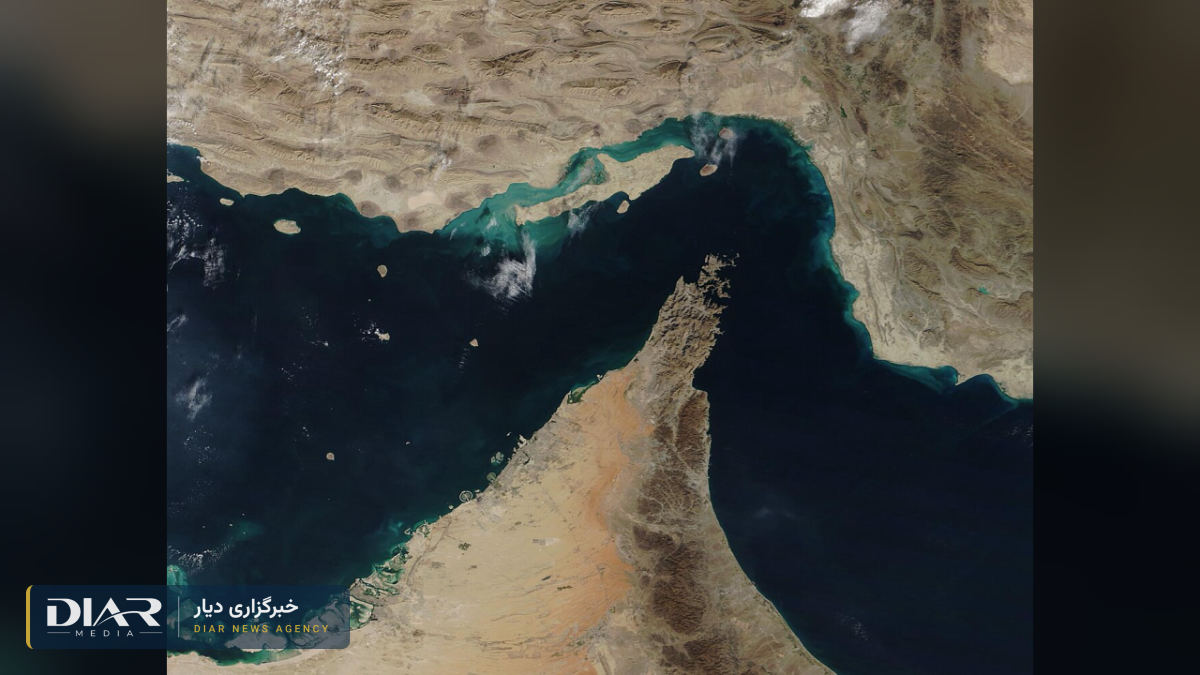
The United Kingdom Maritime Trade Operations (UKMTO) said in the early hours of Sunday, 11 October 2026, that a tanker leaving the Strait of Hormuz was hit on its port side by an unknown projectile and a fire broke out on its deck. The report came a few hours after the IRGC navy claimed that a supertanker in the same strait had struck a sea mine and exploded.
According to Anadolu Agency and Agence France-Presse, UKMTO, citing the ship's master, said the whole crew is safe, but the extent of the damage and the environmental consequences of the incident are not yet clear. The organisation urged ships to pass through the area with caution and said the responsible authorities are investigating. UKMTO has not given the tanker's name, flag or owner.
The IRGC's account and the UKMTO report
The IRGC navy claimed on the evening of Saturday, 10 October, that a supertanker with a capacity of about two million barrels struck a mine while leaving along a route the IRGC calls "unauthorised", and that its explosion was seen from the shore. The IRGC said the ship had switched off its navigation systems. The IRGC also did not name the ship, and its claim has so far not been confirmed by any independent source.
It is still unclear whether the UKMTO report and the IRGC's claim concern a single ship or two separate incidents. But the tanker master's account, which speaks of a projectile strike, does not match the IRGC's claim of a mine strike. The IRGC had also reported tankers striking mines twice earlier, in August–September, and last week it accepted responsibility for an attack on the liquefied gas carrier NV Sunshine.
UKMTO reported an unknown projectile hitting a tanker, while the IRGC had spoken of a mine strike.
Attacks on ships in the Strait of Hormuz
A day before this incident, the Panama-flagged tanker "Jam 2" was hit by a projectile and caught fire at anchor off Sharjah in the UAE; according to India's shipping minister, all 22 Indian crew members are safe. According to UKMTO, 11 attacks on commercial ships were recorded in the first week of October, 10 of them in the Strait of Hormuz, and ship traffic in the waterway is about 75 percent lower than before the war.
Since the war began in February–March 2026, the Islamic Republic has in effect restricted passage through the Strait of Hormuz by threatening and attacking ships. Meanwhile, the US naval blockade has all but halted Iran's oil exports, and 19 Iranian tankers have been left adrift near Sri Lanka. Shahin Modares, a security analyst, told Voice of America that closing the Strait of Hormuz has in practice hurt Iran itself more than anyone.
Comments
No comments yet. Be the first.