
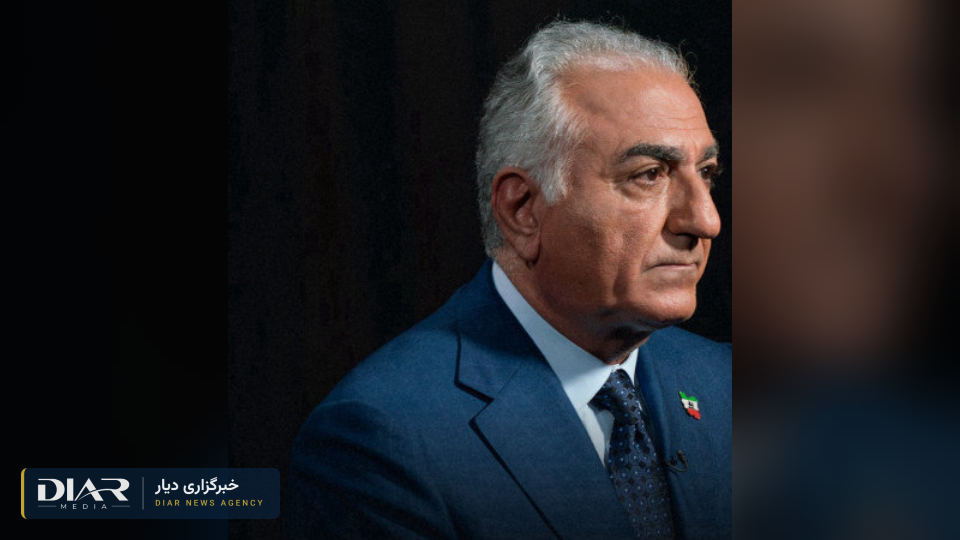
Prince Reza Pahlavi ended his speech to the gathering of Iranians in Frankfurt with a sentence that his press office reposted on Sunday, 8 November 2026: "You are the symbol of our country's Lion and Sun; rise like the lion and shine like the sun." On the surface it is an emotional closing line. Placed beside the language the Islamic Republic has used to address Iranians over the past 47 years, it reveals a fundamental difference: one sees the citizen as the owner of the country, the other as a threat to be contained.
The Islamic Republic's language about protesters
In every wave of protest, the Islamic Republic has gone after protesters with words before bullets and prison. In June 2009 Mahmoud Ahmadinejad called the millions who protested the election result "dust and debris". In the years that followed, words such as "rioter", "seditionist" and "foreign agent" became the official language of the regime's media and courts.
Since the Dey 1404 uprising of January 2026, and especially during the war, these labels have grown heavier. Indictments call protesters "spies" and "accomplices of Israel", and these very charges become the basis for death sentences. The execution of Hassan Divband, Hamid Kazemi and Reza Zanganeh in Karaj on the same day, and the 10 death sentences in the Shohada Square case in Isfahan, issued on the basis of confessions extracted under torture, show that in the Islamic Republic this language is not just propaganda; it is the preamble to a sentence.
The label "accomplice of the enemy" has a clear function: a citizen who protests is no longer counted as a member of the nation, and repressing him is presented as defending the country. The same logic appears in the Islamic Republic's new threat against Iranians abroad, whom it threatened with asset seizure and the loss of consular services.
The language of Prince Reza Pahlavi
By contrast, Prince Reza Pahlavi addresses Iranians in his speeches and messages as the true owners of the country and the symbol of its national identity. He described the 2026 Freedom Prize as held in trust for the Iranian nation and said he would return it to the people in Tehran. In Frankfurt, too, he identified his audience with the Lion and Sun, a symbol tied more closely than any other emblem to Iran's history and continuity, and one the Islamic Republic has tried for years to erase from public memory.
The difference in tone goes back to a difference in political outlook. A regime that draws its legitimacy from "velayat" (the rule of the jurist) sees the people as subjects who must obey and counts every act of disobedience as treason. A movement that draws its legitimacy from the vote and will of the people has no choice but to treat the people as sovereign. Prince Reza Pahlavi has said many times that the free vote of the people will decide the form of Iran's future system.
The link with the record of the Pahlavi era
In the assessment of DIAR's analysts, part of the broad support for Prince Reza Pahlavi inside and outside Iran comes from this very comparison. Many Iranians remember the years before 1979 as a time when Iran's culture, art and international standing were growing, and the four decades since as a time of isolation, poverty and repression. The slogan "this dark night", heard during the uprisings, springs from that experience.
That is why comparing the two sides' language matters. A citizen who is called "dust and debris" or a "spy" has no rights in the regime's eyes. A citizen who is called "the symbol of the Lion and Sun" owns the country and builds its future himself.
What this difference means for the national revolution
Alongside the political struggle, Iran's national revolution is also a struggle over the narrative. The Islamic Republic tries to portray protesters as foreigners and enemies in order to justify executions and confiscations. Prince Reza Pahlavi's answer is to restore dignity to the very people the regime humiliates. The execution of three protesters in Karaj on the same day the closing line of the Frankfurt speech was published put these two views side by side.
The Islamic Republic calls protesters "spies" so it can execute them; Prince Reza Pahlavi sees them as the symbol of the Lion and Sun.
Comments
No comments yet. Be the first.