
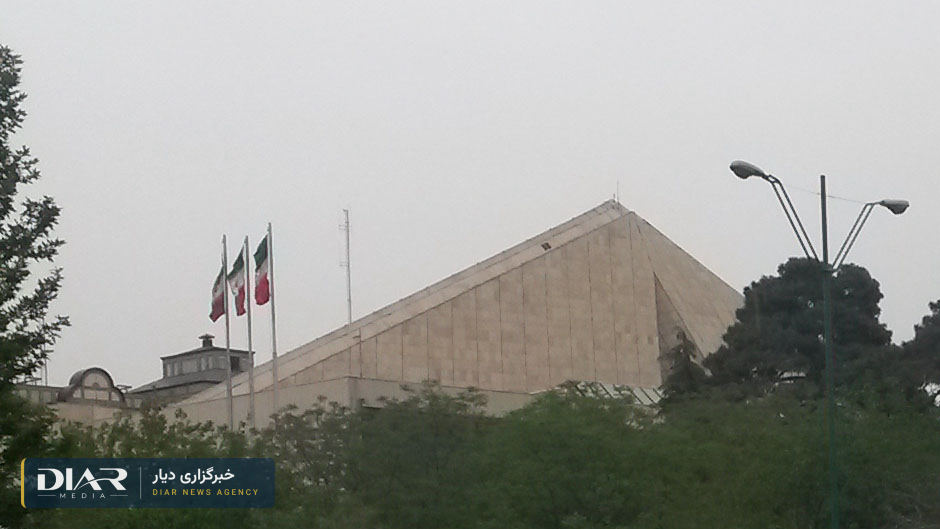
US President Donald Trump's pledge not to attack Iran before the 3 November midterm elections has fuelled a debate among hardline figures of the Islamic Republic about a pre-emptive strike. According to Iran International, a number of these figures see the roughly three-week window as an opportunity to escalate military operations and extract concessions from Washington.
On Thursday 8 October, Trump announced that the United States will not attack Iran until the midterm elections, but that the naval blockade of the Islamic Republic's ports will remain in place.
Calls for a pre-emptive strike
According to Iran International, Abdolreza Davari, a political activist close to the hardline camp, has been the most outspoken advocate of this view. He wrote on X that the Islamic Republic should intensify military operations right now to force Washington to accept Tehran's demands, arguing that Trump fears the electoral cost of war. According to the outlet, supporters of this view believe limited strikes could put pressure on the oil market and push Trump into accepting the Islamic Republic's terms.
By contrast, Heshmatollah Falahatpisheh, a former chairman of parliament's National Security and Foreign Policy Committee, wrote that US and Israeli war plans have nothing to do with elections, and described Trump's pledge as an attempt to stop the Islamic Republic from striking first. Alireza Taghavinia, a hardline analyst, also described Trump's remarks as a deception and pointed to US and Israeli military movements and their coordination with Saudi Arabia and the United Arab Emirates.
The Strait of Hormuz and the naval blockade
The debate comes as the Islamic Republic continues to keep the Strait of Hormuz closed except to its own authorised ships, making its reopening conditional on Washington accepting its seven demands. On Friday 9 October, the Islamic Revolutionary Guard Corps (IRGC) claimed responsibility for an attack on a ship carrying liquefied gas south of the strait and threatened to extend the attacks beyond the Strait of Hormuz.
Meanwhile, US Central Command (CENTCOM) announced that, as of Friday 9 October, American forces enforcing the naval blockade of the Islamic Republic had redirected 133 commercial vessels. According to Voice of America, Trump also wrote on Truth Social that with "complete control" of the Strait of Hormuz, diesel prices for Americans and the world would fall rapidly, and announced a deal with Vladimir Putin to supply more than 4.8 million tonnes of diesel. In the same message he repeated that the Islamic Republic will not obtain a nuclear weapon.
The call for a pre-emptive strike, alongside open disagreement over negotiating with the United States, including Kayhan's attack on Ghalibaf's role, shows that there is no consensus inside the Islamic Republic on how to get out of the war and the blockade.
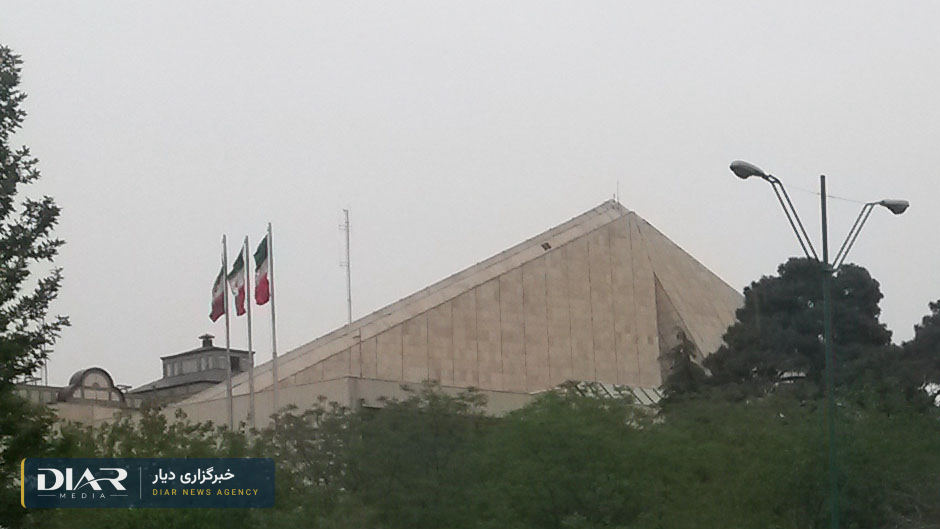
Hardline figures of the Islamic Republic see the three-week window before the US elections as an opportunity to escalate the war.
Comments
No comments yet. Be the first.