
A newer update of this story has been published: Prince Reza Pahlavi's office: those who ordered the executions of Maleki and Ebrahimi will be held to account
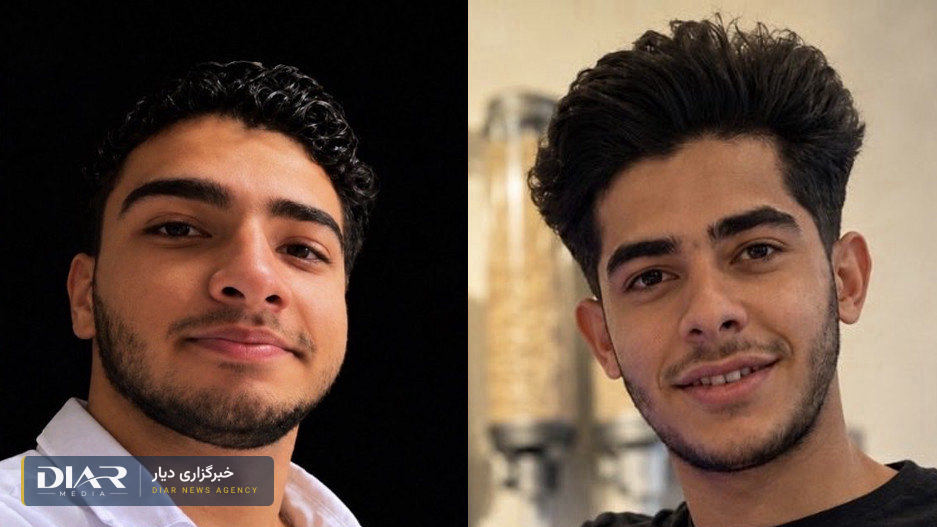
The execution of Amirhossein Maleki and Amirhossein Ebrahimi, two 20-year-old detainees of the Dey uprising of January 2026, in Isfahan in the early hours of Tuesday, 3 November 2026, brought the number of people executed in the Alikhani Square case to nine. A case that began with about 60 arrests and led to 12 death sentences is now the clearest example of how the Islamic Republic's judiciary deals with the Dey protesters: verdicts known before the trial, and a trial held only to sign them.
The judiciary's account and what is missing from it
Mizan news agency, the judiciary's mouthpiece, accused the two young men of involvement in the killing of four police officers during the protests of 8 January in Isfahan, and claimed they carried bladed weapons and took part in destroying property and attacking officers. For this claim Mizan cited "statements by the defendants and other detainees", camera footage and witness testimony.
But none of this evidence was made public. No transcript of the court hearing, no footage showing each defendant's individual role, no explanation of the conditions in which the confessions were obtained. In a case where twelve people were sentenced to death for a single event, the central question is what each person did; and that is precisely the question the judiciary has not answered.
The verdict of UN experts and Amnesty International
UN human rights experts had earlier called for these executions to be halted. According to them, the twelve defendants in this case were convicted in a closed session, no individual's responsibility was established, and the proceedings were opaque and unfair. They also voiced concern about reports of forced confessions and the denial of the defendants' right to a fair trial.
Amnesty International has also warned about vague charges and forced confessions, and has said that some of those convicted were under 18 at the time of the events they are accused of. Before the sentence was carried out, Prince Reza Pahlavi's office had warned of the imminent risk of execution of these two young men and called the proceedings a "show".
In the assessment of DIAR's analysts, a verdict issued on the basis of confessions extracted in custody, in a closed hearing and without any evidence shown, is a dictated verdict: one decided before the court sits, to which the court only lends a legal appearance.
Nine executions in four months
The order in which the sentences were carried out in this case also shows a clear pattern. Erfan Esfandiari and Gol-Mohammad Mohammadi were executed on 19 July. Abolfazl Sepahi and Amirhossein Safari were hanged in public, in Alikhani Square itself, on 28 July, an execution that provoked protests. Ghaem Hosseini, an Afghan citizen and Mohammadi's cousin, was executed on 20 August. Alireza Sepahi and Alireza Raeisi were executed on 5 October; before an earlier attempt to carry out his sentence, Sepahi had suffered a heart attack and was taken to Alzahra Hospital in Isfahan. The authorities did not even allow Sepahi and Raeisi to be buried in their home towns. And now Maleki and Ebrahimi.
The executions are carried out one or two at a time, a few weeks apart. This is the very method that Prince Reza Pahlavi described on this same Tuesday in an op-ed addressed to Europe: quiet executions of prisoners, one or two at a time. The method keeps the political cost of each execution low while keeping fear alive in society. Three other defendants in this case who have been sentenced to death are still at risk.
What these executions mean for the national revolution
The Alikhani Square case is not alone. Since January more than 70 political prisoners have been executed and hundreds more face execution. This very week the Supreme Court upheld Arman Marefati's death sentence only eight days after the first-instance verdict, and three protesters in Mashhad were also sentenced to death. The speed with which sentences are confirmed and the lack of transparency are the same in all these cases.
In the Alikhani Square case, twelve people were sentenced to death for a single event, but the judiciary never showed what each of them had done.
With these executions the Islamic Republic is trying to frighten the young generation that took to the streets in January. But just as the public execution in Alikhani Square brought protest rather than silence, every new name on this list becomes one more document in a case that will one day be heard in a real court, with public evidence and the right of defence; this time against those who ordered and carried out these sentences.
Comments
No comments yet. Be the first.