
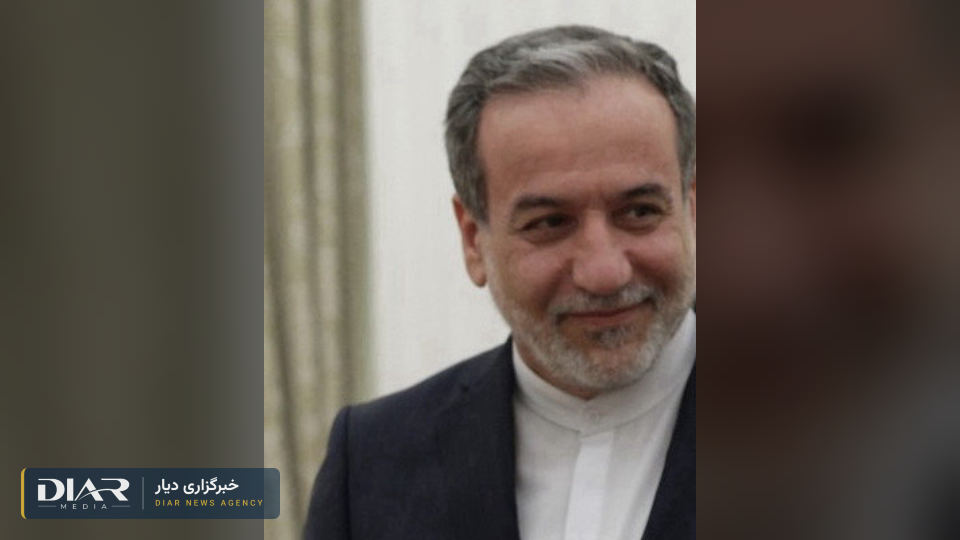
The US military's Central Command (CENTCOM) on the morning of Monday 2 November 2026 called “false” the recent claim by Abbas Araghchi, the Islamic Republic's foreign minister, that the Islamic Republic has not attacked civilians in neighbouring countries. In a statement also published in Persian, CENTCOM said the Islamic Republic has deliberately targeted civilian infrastructure, residential areas and other facilities in the Persian Gulf states, as well as civilian seafarers, and that more than 20 people have been killed in these attacks in recent months.
The claim
Araghchi has said repeatedly that the Islamic Republic's attacks in the region targeted only US bases and facilities. In February–March 2026, in an interview with the newspaper Al-Araby Al-Jadeed, he also denied targeting civilian and residential areas, accepted the possibility of “collateral damage” and proposed a joint committee with neighbouring countries to review the targets of these attacks. He even said some attacks attributed to the Islamic Republic might not be Tehran's doing. His new claim repeats the same narrative.
The facts
The recorded evidence contradicts this claim. Kuwait's Ministry of Electricity, Water and Renewable Energy announced on 21 July 2026 that several of the country's power plants and desalination facilities had been hit on the fourth consecutive day of attacks, which started fires and knocked several power-generating units offline. The same day, the Kuwaiti tanker “Kaifan” was hit in the Strait of Hormuz and several of its crew were injured. Kuwait's deputy foreign minister summoned the Islamic Republic's ambassador and called the attack on the tanker a “blatant aggression”.
Earlier, in February–March 2026, CENTCOM said the Islamic Republic had targeted 14 civilian sites in neighbouring countries in the first days of the war, and later raised that figure to more than 300 sites. The UK Maritime Trade Operations centre also recorded at least 35 attacks on ships in the Persian Gulf and the Strait of Hormuz in October alone, ships whose crews are civilians. On the morning of this same Monday, a tanker 72 miles from Ras al-Khafji in Saudi Arabia was hit by two unidentified projectiles.
Desalination plants and power stations that supply homes with water and electricity, and the sailors of merchant ships, are not military targets under international humanitarian law.
DIAR's verdict: False
Araghchi's claim contradicts Kuwait's official reports, CENTCOM's data and the record of attacks on merchant ships. Responding to European warnings, Araghchi had earlier said that in the event of another attack “there will be no red line left”.
Kuwait's government has recorded the attacks on its power plants and desalination facilities and summoned the Islamic Republic's ambassador.
Comments
No comments yet. Be the first.